
Obasanjo: Any govt that can’t secure lives has lost basis to exist
Former President Olusegun Obasanjo has declared that any government unable to protect lives and property has lost the moral and constitutional basis to remain in existence. Speaking during an interview on News Central, Obasanjo said the primary duty of any administration is the protection of citizens. He warned that the normalization of kidnapping and violent […]
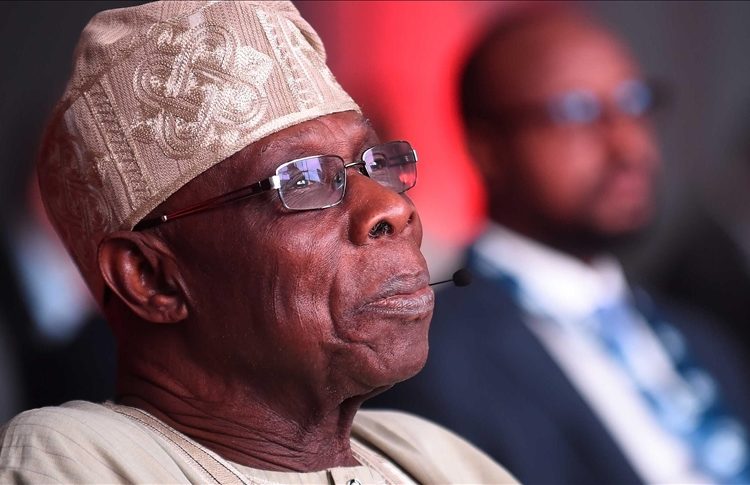
obasanjo
Former President Olusegun Obasanjo has declared that any government unable to protect lives and property has lost the moral and constitutional basis to remain in existence.
Speaking during an interview on News Central, Obasanjo said the primary duty of any administration is the protection of citizens.
He warned that the normalization of kidnapping and violent crime signals a dangerous collapse of state responsibility.
“A government that cannot give security of life and property to its citizens has forfeited the right of existence,” he said.
- Gov Yusuf summons those behind street underwear display
- Windstorm: Gov Bago directs immediate repair of damaged buildings at NYSC Camp
The former president said insecurity had reached an alarming stage where abductions were gradually being treated as routine.
He said the Nigerians must resist the development.
Recalling earlier decades when movement across the country was largely unhindered, Obasanjo said Nigeria’s security decline did not happen overnight.
He argued that the deterioration stemmed from years of poor governance, proliferation of arms after the civil war, and failure to confront emerging threats.
He linked the worsening crisis to the return of armed elements following the fall of former Libyan ruler Muammar Gaddafi, as well as the use of armed groups for political purposes.
Obasanjo also warned that Nigeria’s estimated 20 million out-of-school children represent a looming security emergency.
He described them as a vulnerable population that could be exploited by extremist groups if left unaddressed.
Aside from domestic insecurity, the former president raised concerns over “Nigeria’s declining relevance in international affairs”.
He said the country no longer exerts meaningful influence in regional or global decision-making.
“Today, Nigeria is not at the table,” he said, blaming weak leadership for the erosion of the country’s diplomatic standing.
He was particularly critical of Nigeria’s response to the coup in Niger, faulting President Bola Tinubu’s handling of the crisis as Chairman of the Economic Community of West African States.
According to him, sanctions, border closures, electricity cuts and financial restrictions imposed on Niger undermined decades of bilateral cooperation and weakened regional cohesion.
Obasanjo said the measures reflected a poor grasp of historical ties between both countries, noting extensive cross-border family links and strategic cooperation that had benefited Nigeria, including during the civil war.
He argued that Nigeria’s handling of the crisis contributed to strains that eventually culminated in the exit of Niger, Mali and Burkina Faso from ECOWAS.
“We took 50 years to build it and virtually destroyed it overnight,” he said.
The former president also expressed deep pessimism about the country’s present direction, saying when asked about his outlook under the current administration, he “sees nothing,” while blaming democratic decline and weakened accountability for the nation’s troubles.
He criticised “the replacement of a true electorate with a “selectorate,” saying the trend has distorted governance outcomes.
On the political front, he warned against the emergence of a one-party system, saying such an outcome would be harmful to democratic development.
He however said he would take Tinubu’s word that he does not support it.
“It will be a pity. Because it will not even serve its own purpose,” he said.
Despite the sweeping criticisms, the former president said Nigeria could still recover if leadership quality improves and governance is fundamentally reformed.
He said the country retains enormous potential, but warned that realizing it would require strategic thinking, political courage and a decisive break from the failures currently holding the nation back.