
Omoyele Sowore: Democracy and freedom of speech in Nigeria
As Nigeria marks nearly 25 years of uninterrupted democratic governance, it is important to reflect on one of the noblest pillars of democracy, freedom of speech. The right to freely express one’s opinion without fear or intimidation is not just a political privilege; it is the soul of a free society. The beauty of democracy […]
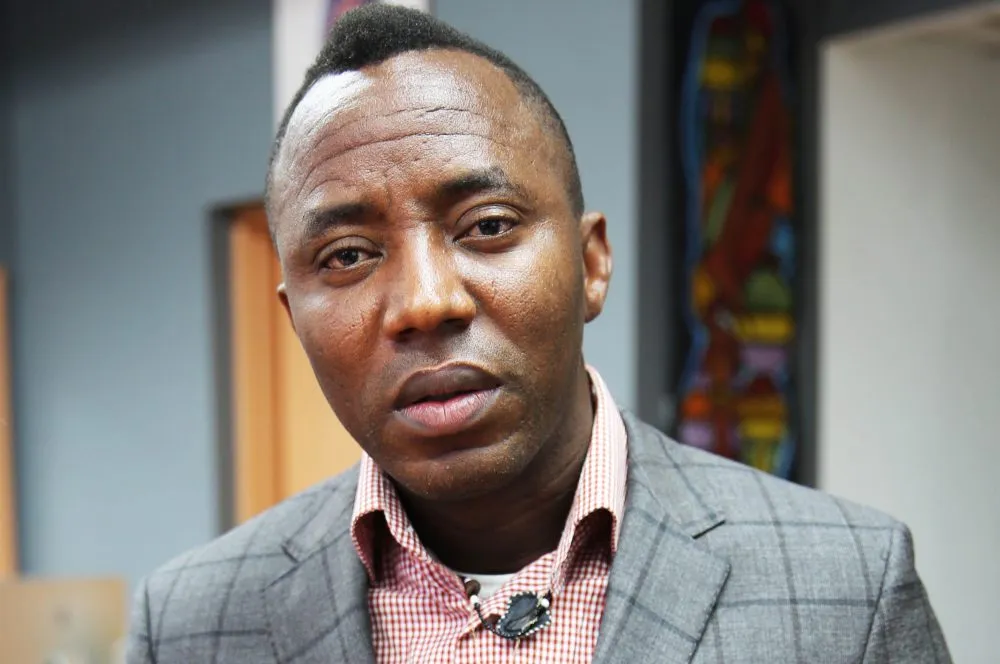
Omoyele Sowore
As Nigeria marks nearly 25 years of uninterrupted democratic governance, it is important to reflect on one of the noblest pillars of democracy, freedom of speech. The right to freely express one’s opinion without fear or intimidation is not just a political privilege; it is the soul of a free society. The beauty of democracy lies in its tolerance for dissent, its openness to criticism, and its respect for the diversity of thought that drives progress.
In the immortal words of John Milton, the 17th-century English poet and philosopher, “The liberty to know, to utter, and to argue freely according to conscience, above all liberties.” This enduring declaration captures the essence of democracy itself: that the right to speak and to question authority without fear remains the highest expression of human freedom. Without it, every other right becomes vulnerable.
Since 1999, Nigeria has made commendable progress in consolidating democratic institutions. The country has witnessed peaceful transitions of power, vibrant media engagement, and the growing influence of civil society. Yet, the true test of democracy is not merely the holding of elections but the space it creates for dissenting voices. Freedom of speech must not remain a constitutional formality; it must become a living practice, upheld both by law and by culture.
The Nigerian Constitution, under Section 39(1), guarantees every citizen the right to freedom of expression, including the freedom to hold opinions and to receive and impart information without interference. This provision is the backbone of every democratic society. However, it must operate within the framework of the law, respecting peace, order, and national unity. Still, within that lawful boundary, no citizen should be intimidated, detained, or silenced for expressing an opinion or for criticizing those in authority. A democracy that cannot accommodate dissent is a democracy in retreat.
In this light, Omoyele Sowore stands as one of the most symbolic figures of Nigeria’s ongoing struggle to protect civic space and uphold fundamental rights. His activism often controversial but undeniably patriotic, represents the resilience of citizens who insist that government must serve the governed. Sowore’s passion for justice, accountability, and reform has made him a voice of conscience in our public life. Rather than view such individuals as adversaries, state institutions, particularly the police, should regard them as contributors to national progress.
When security agencies treat rights activists with fairness and respect, it sends a powerful message to the world that Nigeria’s democracy is growing stronger. Activism and law enforcement are not enemies; they are both crucial to nation-building when guided by the rule of law. Constructive criticism is not rebellion — it is patriotism in action.
Sowore’s call for the release of Mazi Nnamdi Kanu, leader of the Indigenous People of Biafra (IPOB), under the #FreeNnamdiKanu campaign, must however be addressed strictly within the rule of law. Since the matter is before the courts, it is right that the judiciary is allowed to perform its duty without interference or political pressure. This respect for due process underscores the maturity of our democracy and strengthens the faith of citizens in the legal system.
No democracy can thrive in an atmosphere of fear or suppression. Nations that have progressed politically and economically did so by allowing ideas, even unpopular ones to flourish. From the civil rights movement in America to the anti-apartheid struggle in South Africa, freedom of expression has always been the catalyst for positive change. Nigeria, despite its many governance challenges, remains one of Africa’s freest societies in terms of speech and media vibrancy. Citizens debate issues openly, criticise public officials boldly, and hold leaders to account through various platforms. This openness must be preserved and expanded, not restricted.
Nevertheless, the frequent harassment of protesters, the intimidation of journalists, and the misuse of cybercrime laws to silence online critics remain worrisome trends. Such practices erode public trust in government and contradict the spirit of democracy. The government must recognise that the free exchange of ideas, however uncomfortable, is the lifeblood of democratic development. The true measure of democracy is not how a nation treats those who praise it but how it treats those who disagree.
It is therefore time for Nigeria to institutionalise peaceful civic engagement by establishing Freedom Squares in all state capitals, public spaces where citizens can lawfully assemble to express their views, hold rallies, or debate issues of national concern. Properly managed, these arenas would reflect our confidence in democratic principles and our respect for the rights of citizens to speak freely. They would also help prevent confrontations between protesters and security agencies by providing an organized setting for lawful demonstrations.
Freedom, of course, carries responsibility. Free speech is not a license for lawlessness or incitement. Citizens must conduct their advocacy peacefully and responsibly, while law enforcement officers must exercise restraint and uphold human rights standards. Both sides must understand that democracy thrives where mutual respect exists between authority and the people.
As Nigeria celebrates nearly 25 years of democratic continuity, it is vital to strengthen the legal and institutional framework that protects freedom of speech. The National Assembly should review ambiguous provisions of the Cybercrime Act and Public Order Act, which are sometimes used to stifle dissent. Modern democracies adapt their laws to safeguard civil liberties in a digital era; Nigeria must not be left behind.
After all, democracy is not defined by the absence of military rule, but by the presence of civil rights. The ability of citizens to speak freely, to question leaders, and to seek accountability is what distinguishes democracy from tyranny. Omoyele Sowore’s activism reminds us that a nation’s greatness is not determined by how loudly its government speaks, but by how freely its citizens do.
As I have often argued, Nigeria is already among the freest nations in Africa, with a vibrant media, outspoken citizens, and active civic organizations. But freedom, once gained, must be guarded jealously. The challenge before us is to protect and institutionalise it so that future generations inherit a democracy that is both strong and just.
In the spirit of John Milton’s timeless words, “The liberty to know, to utter, and to argue freely according to conscience, above all liberties,” we must never allow fear or intolerance to silence the Nigerian voice. Freedom of speech is not merely a democratic right; it is the foundation of national progress and human dignity.
A free people are not those without rules, but those whose rights are protected by the rule of law. That is the beauty of democracy, and Nigeria must continue to uphold it.
Adam, Ph.D wrote from Maiduguri