
On Bayo Onanuga’s amnesia
In the annals of the struggle for democracy in Nigeria, Bayo Onanuga, President Tinubu’s Special Adviser on Information and Strategy, is reckoned with in folkloric terms. He is rightly regarded as one of the icons of the media angle of the struggle with his serial publications on the military dictatorships of Generals Ibrahim Babangida and […]
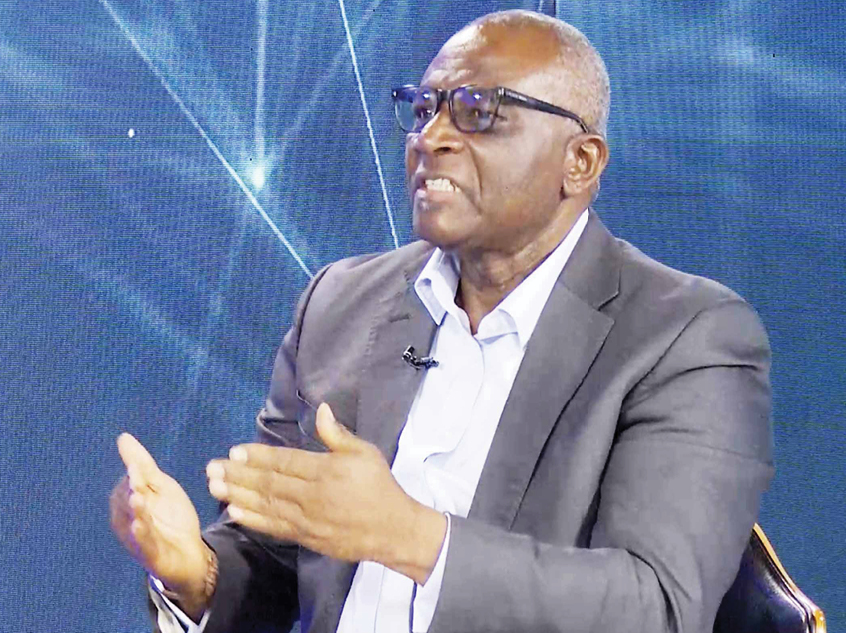
Mr Bayo Onanuga
In the annals of the struggle for democracy in Nigeria, Bayo Onanuga, President Tinubu’s Special Adviser on Information and Strategy, is reckoned with in folkloric terms. He is rightly regarded as one of the icons of the media angle of the struggle with his serial publications on the military dictatorships of Generals Ibrahim Babangida and Sani Abacha, which earned the ire of both regimes to the extent of his being declared a person of interest by various agencies of the state.
In those dark days, Onanuga prosecuted his media crusade against the military rulers with elan. In his efforts to stay one jump ahead of the authorities, he had to switch the production of his popular newsmagazine “The News” from its regular production premises to discreet production places in Ijebu dominated Somolu/Bariga area of Lagos. Although the tight and uncertain production schedules always resulted in the magazine turning out of lesser quality in terms of aesthetics, layout and other production errors, nevertheless, the magazine was always eagerly expected at the stands and routinely sold out faster than other publications.
As he was always on the run, Onanuga had to dispense with many of the luxuries and normal conveniences that a less challenging life could have offered him. But because he was wedded to the struggle for the enthronement of democracy in the country, he learnt to accept and live with the challenges entailed.
It is against this background that one finds Onanuga, one of the authentic heroes of the democracy we now enjoy, turning full circle to become one of the full time, unabashed enablers of the gradual slide of President Tinubu’s administration to monocracy.
Onanuga’s metamorphosis from an underground fighter and hero of democracy to a cheerleader and willing agent of monocratic policies has been evident since the coming of the Tinubu administration. At the advent of the administration, Onanuga was reported to have tweeted calling on Igbos resident in Lagos and the southwestern part of the country not to interfere in the politics of Yorubas. He pointedly said in his admonition to the Igbos that “Let 2023 be the last time that Igbos should seek to interfere in Lagos politics. Let there be no repeat in 2027”. Of course, one could say that in context Onanuga was probably reeling from the shock defeat suffered by his principal, Bola Ahmed Tinubu, in the presidential elections of 2023 in Lagos. But if anyone was in doubt that Onanuga actually made that statement Onanuga reiterated his views “let me make myself abundantly clear; the views I expressed are my personal views. I don’t owe anybody any apology for addressing the existential threats of our people (Yorubas). I am after all a Yoruba before being a Nigerian”.
Onanuga’s turnaround ran anti-clockwise with what we have known of his stance on democracy in the country. As head of the President Tinubu’s team of publicists, Onanuga has been seen promoting unacceptable vitriolic statements against President Tinubu’s perceived political opponents, which cast questions on his favourite reckoning as a hero of democracy.
His public statements in response to legitimate questions about President Tinubu’s policies often are vituperative. Onanuga appears to misread his brief as one that grants him licence to be abrasive instead of being persuasive and positively engaging. He probably often forgets that his brief entails persuasive in order to make smooth and clear the rough edges of presidential pronouncements and policies, thereby winning over the hearts and minds of Nigerians on behalf of the president.
It is sad to see Onanuga deploy this tone and posture in addressing opposition figures Peter Obi, Atiku Abubakar, Nasir El-Rufai and others who have had genuine cause to differ from Tinubu’s policies and pronouncements on issues affecting Nigerians, especially the administration’s tending towards monocracy. In place of persuasive reasoning to explain away issues, Onanuga throws in inelegant phrases that betray him not as one expected to provide the necessary shine and illumination to his principal.
Against this background, Nigerians have thus been asking whether the Onanuga who fought for democracy against military despots is the same as the one who is now strenuously defending and even seeking to browbeat Nigerians, in a tendency that seem to deny them of their rights to express their constitutional freedom of speech and association. Did Onanuga’s fight for democracy end with the election of President Tinubu? Was he motivated to fight for democracy simply because he saw IBB and Abacha as people who should be opposed rather than as aberrant interlopers in government? Is Onanuga on a mission to stop Nigerians from taking a cue from his fight against military despotism to also challenge emerging signs of monocracy?
Bayo Onanuga now ensconced as a key figure in the Tinubu administration has probably forgotten the example he set in the struggle to install democracy in the country against military rule must not stand in the way of Nigerians legitimately seeking to call out President Tinubu from going the way the monocratic leaders he opposed went, and which he and others helped to show the way out.
What is President Tinubu up to?
From the minute he was inaugurated, President Tinubu has been embarking on the systematic paring down on the foundations of Nigeria’s democratic structure. In some cases, he does that surreptitiously. And in others he takes the straightforward frontal approach, guessing that Nigerians in their dire economic and social condition will only grumble and not resist. He also seems to be relying on the deep divisions among Nigerians to push through his agenda.
But above all the fact that President Tinubu is able to find his way in most cases is due to the noticeable weakness in the Judiciary and the National Assembly, two of the three independent arms of government. Nigerians find it curious that few, if any, of the cases brought against President Tinubu’s administration so far have succeeded. Nigerians also observe with concern that with the leadership of both chambers of the National Assembly beholden to him he can always get his favourite bills through, and when necessary.
That explains how President Tinubu was able to get his way in his declaration of state of emergency in Rivers State. And just last week we have seen how the House of Representatives rushed through the passing of several bills which should have had the benefit of a robust debate and resolution. Some of these bills, if eventually passed, will change the constitution in fundamental ways without the contribution of the Nigerian people. Take, for instance, the provision for a Prime Minister. It is modelled along the French system where the President appoints the Prime Minister and the cabinet. This will abrogate the office of the Vice President in the present constitution. The bills for the selective creation of local governments and states have also been passed. This is happening in a country complaining about a lack of funds to run the government.
This is not the democracy we all fought for. This is the markings of Tinubuocracy where the present constitutional and institutional powers and structures give way to those that favour President Tinubu’s agenda for consolidating and exercising personal power over Nigeria.