
On Inside Sources, Odinkalu Says Tinubu Needs INEC, Judiciary—not Votes—to Win Elections
Professor Chidi Odinkalu, former Chairman of the National Human Rights Commission (NHRC), has delivered a blistering critique of Nigeria’s electoral process under President Bola Tinubu, arguing that electoral victories are no longer determined by the will of the voters but by the conduct of institutions meant to safeguard democracy. Speaking on Inside Sources with Laolu […]
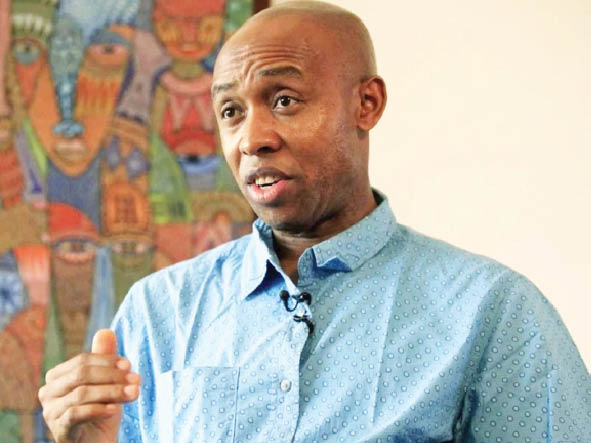
Professor Chidi Odinkalu
Professor Chidi Odinkalu, former Chairman of the National Human Rights Commission (NHRC), has delivered a blistering critique of Nigeria’s electoral process under President Bola Tinubu, arguing that electoral victories are no longer determined by the will of the voters but by the conduct of institutions meant to safeguard democracy.
Speaking on Inside Sources with Laolu Akande on Channels Television, Odinkalu contended that in contemporary Nigerian politics, winning elections has less to do with popular support and more to do with control over the Independent National Electoral Commission (INEC) and the judiciary. According to him, once these two institutions are aligned with those in power, votes cast by citizens become largely irrelevant
He argued that such behaviour reflects a broader disregard for Nigerian citizens, enabled by an electoral system where votes, in his view, do not truly determine power.
“If you need votes—if you need votes of your people to be president, he will not be… acting with this degree of irresponsibility and utter disregard for the worth and well-being of Nigerians,” Odinkalu said.
“It is because… what he needs are the judges and INEC. And my primary responsibility is as a Nigerian citizen. Now, under the Constitution, Section 14, the primary responsibility of government is the protection of its citizens, of public safety and security,” Odinkalu said.
While acknowledging Tinubu’s political skills, Odinkalu drew a sharp distinction between politics and the core responsibilities of the presidency.
“I’ll give President Tinubu credit. As a politician, he’s peerless. You know, the political dimensions of the presidency, he does not have any equal at all.
“But as a commander-in-chief, he is missing in action. He has been totally absent as commander-in-chief. And that is the biggest problem with his presidency,” he stated.
Odinkalu said his concern was not about the role of the United States but about Nigeria’s leadership vacuum at a critical moment.
“I’m not going to be worrying about what America can do when even my own president is unwilling or unable to exercise the responsibilities of the office,” he said.
“Right now, sadly, speaking only as a Nigerian citizen, I’ve got to say that Nigeria’s current president is unwilling—appears unwilling and unable to exercise the responsibilities of the office.”
He questioned the optics and symbolism of President Tinubu’s absence from the country during the New Year period, especially amid reports of foreign military action on Nigerian soil.
“Now, which African elder, properly brought up, actually wants to go and spend New Year outside their place with their own people?” Odinkalu asked.
“When you are the president… and then, on the eve of New Year, as New Year approaches, you take off and flee the country, missiles are raining on your territory from outside the country.”
Odinkalu expressed deep concern over claims by government officials that Nigeria invited the U.S. action and provided intelligence it could not act upon itself.
“You say you invited a foreign president to administer the missiles on the territory, and that you provided the intelligence—or at least that’s what his appointees are saying—that Nigeria provided the intelligence that Nigeria could not act upon to the United States,” he said.
He asked why the president could not remain in the country to address Nigerians directly.
“What prevents him, therefore, from spending the New Year in the country? And what was it that is so exciting in Europe that his reforms cannot persuade him to at least spend New Year’s Day in Nigeria?” Odinkalu queried.
According to him, the most troubling aspect of the episode was the complete absence of official communication from the president and the security establishment.
“In the midst of the U.S. missile strikes in Nigeria, President Tinubu has said absolutely nothing as commander-in-chief,” he said.
“Ministry of Defence has said absolutely nothing. Defence headquarters has not shown up.”
Instead, Odinkalu noted that commentary came from political figures outside the military chain of command.
“So who are the people articulating? The foreign minister, the minister of information, and Daniel Bwala. They are the people who are saying things about this situation,” he said, adding, “If people are not troubled by that… I don’t know what is.”
Drawing from his extensive experience working on conflicts across Africa, Odinkalu acknowledged that populations under threat often welcome help from anywhere.
“People who find themselves at the receiving end of a challenging situation do not mind where help comes from,” he said.
However, he stressed that foreign assistance involving missile strikes demands transparency from the nation’s leader.
“When that help involves something on the scale of a missile strike on your territory, you do expect that your president will be responsible enough to face his people and say, this is what transpired,” he said.
Odinkalu contrasted the president’s silence on the strikes with his visibility on other matters.
“They issued a statement on a $1 billion financing arrangement for the so-called coastal road. They found time to do that. They found time to attend Eyo in Lagos.
“They found time to commiserate with Anthony Joshua publicly. But the president has not said anything about the situation,” he noted.