
One country, two dates, Nkrumah: A personal story
On January 15, 1966 a coup d’etat took place in Nigeria. The next morning Ghana’s President Kwame Nkrumah made a major broadcast to the nation and to the rest of Africa on his external short-wave radio station. He believed Nigeria was too important to go that route. Addressing directly the coup leaders in Nigeria, President […]
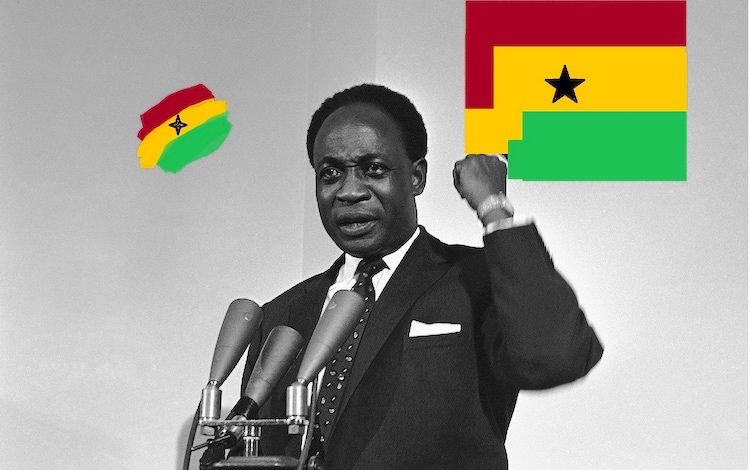
On January 15, 1966 a coup d’etat took place in Nigeria. The next morning Ghana’s President Kwame Nkrumah made a major broadcast to the nation and to the rest of Africa on his external short-wave radio station. He believed Nigeria was too important to go that route. Addressing directly the coup leaders in Nigeria, President Nkrumah said “soldiers have no role in governance. If there are crisis their role remains that of clearing the road block and getting back to their barracks.”
Many in Nigeria and Ghana believed the two countries shared a unique bond, with similar experiences and therefore believing that whatever happened in one was sooner or later going to happen in the other. A little over a month later a coup took place in Ghana.
A coup to remove Nkrumah was unbelievable. For many of us of secondary school age at the time, not only were we learning a new parlance in French- ‘coup d’etat’- but, staying glued to the radio, we heard for the first time nonstop martial music intermittently followed by dictatorial announcements ordering people to report. Some of us though young remained anxious about the unfolding coup.
President Nkrumah left Ghana a few days earlier on a Peace Mission to end the Vietnam War. The coup was announced while he had just arrived in China. Back in Ghana some people, despite the news, had doubts about the coup, given Nkrumah and his party CPP’s extensive network of control over the country. There were even whispers that it was only a trick to see those opposed to the government.
Ghana has two significant dates penciled down in its history. The first date regarded as most glorious is March 6, 1957 when the country gained independence as the first free Black nation with Nkrumah as its first leader. This unprecedented event, the first of the kind in Black Africa drew global focus on Ghana. In attendance were liberation movement leaders from Africa. At the dawn of that date Nkrumah declared that the independence of Ghana was meaningless unless linked with the total liberation of the Continent. Nkrumah championed Pan-Africanism and African independence.
The second date, February 24, 1966, is a date many people would rather forget. This was the date of the coup against Nkrumah. Memories of the Nkrumah years before the coup of February 1966, part of which touched many of us personally, were rekindled when a friend in London texted me these words, “today is a sad date in Ghana’s history. On this date 54 years ago that inglorious act was carried out against our leader and founder Nkrumah. This remains a sad date for Africa too yet to recover. Nkrumah Never Dies”.
The 24 February 1966 coup against President Nkrumah is where my personal story begins and ends at the same time. Few days after the coup two police officers came to the secondary school l attended looking for me. I was called and asked to surrender my passport which I had to collect from the safe-keeping of my mother. They asked me what we went to do as Nkrumah’s Young Pioneers on a previous Youth Summer Camp in the former Czechoslovakia. Why would security agents who just seized power have interest in a teenage boy schooling outside the national capital and having the membership of the Young Pioneers Youth movement?
The answer is clear and only proves the determination of the military authorities to remove Nkrumah’s influence from every sphere of life in Ghana. On the other hand this demonstrated how thorough Nkrumah’s rule and his activities had permeated most aspects of Ghanaian life.
To a large extent everything about Nkrumah struck fear among the coup makers. Many books have been written about Nkrumah’s rule and legacies besides the ones he and his associates wrote.
When Nkrumah clocked a century many public activities lectures, symposiums, radio and TV documentaries were organized to honor him yet still there were missing elements in the sense that the younger generation did not quite seem to be informed.
Very few who worked directly with Nkrumah appear to be around these days to talk about him. Some of us who were very young at the time may attempt talking about this Great Leader who must remain a model for every one of us.
I enrolled into the Kwame Nkrumah Young Pioneer Movement while in Primary school and remained a member eventually becoming a regional leader through to Middle School until my second year in Secondary school when the coup occurred. Precisely, the Young Pioneer Movement was the result of the expected radical change that naturally took place following independence. Pioneers were to replace the Boys Scout with the difference being to build the new Ghanaian youth imbibed with nationalism and pride of nationhood.
Only the brightest that were on the top of their class were recruited and trained for membership in the Pioneers Movement. We trained next door to the Military Academy at Teshie in Accra with training starting at the dawn hours. We received para-military training, pillow fighting, and obstacle jumping through fire, water and tires. The training gave us both physical fitness and courage.
With the initial training over we were sent back to our regional capitals as part of a network of Pioneers ready for national duty as youth cadres for the President. We attended classes three days in a week after school and activities included learning cultural dances of our different regions of origin, military drills and learning the names and history of other African leaders like Nyerere, Kenyatta, Kaunda and history of other African countries fighting for freedom. The one thing the Pioneers were noted for was studying the important speeches of Presidents and reciting them by heart to audiences on special occasions.
Our proudest moments included attendance at national occasions. Smartly dressed in our khaki uniform matched with red scarf, hats and black shoes we attended countless national events. We were at the airport to receive Queen Elizabeth. That was the day I learnt with the Queen speaking that you could use the simplest words for everyone to understand.
My proudest moments in the Pioneers were when some of us got selected to act as honour guards to President Nkrumah when he visited the Volta region. We received him at one end and remained with him until he left. The other was when as Pioneers we stood on the same stage when the President commissioned the Kaiser Alumimum Smelter in Tema. That was about the last event he attended.
There were close encounters with the President. He looked at your face intensely most times with his forehead folded in. He had bright eyes and a penetrating gaze. He was full of charm as he had charisma. He asked even the young ones questions.
Just as Nkrumah had plans for most aspects of Ghana’s social and economic life, recording great strides in expanding education and industrialization in the nine years of his rule, so too did he, by identifying with his Young Pioneer Movement commanded by the Ghanaian/Nigerian ZB Shadow, demonstrate his desire to mold young Ghanaians for leadership. Today you can find members of the former Pioneers in every sphere of life in Ghana.
To us March 6 Independence Day remains the only glorious date. Kwame Nkrumah lived ahead of his time.
Pan Asante [email protected]