
Osun LG crisis deepens amid legal, political deadlock
The protracted crisis over the control of local government councils in Osun State has deepened amid a legal and political stalemate, following reports that chairmen elected on the platform of the All Progressives Congress (APC) have resumed duties despite the ‘expiration’ of their tenures and pending judicial pronouncements. Although the Supreme Court has reserved judgment […]
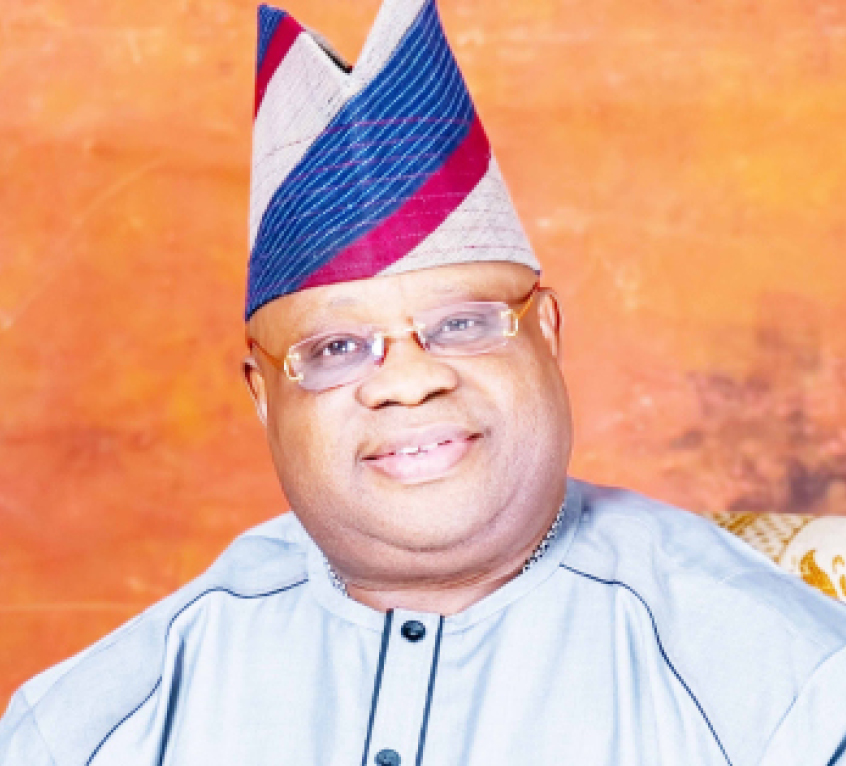
Ademola Adeleke
The protracted crisis over the control of local government councils in Osun State has deepened amid a legal and political stalemate, following reports that chairmen elected on the platform of the All Progressives Congress (APC) have resumed duties despite the ‘expiration’ of their tenures and pending judicial pronouncements.
Although the Supreme Court has reserved judgment in a suit bordering on the disbursement of local government funds in the state, the alleged reoccupation of council secretariats by APC chairmen has reignited tensions and reopened debates over the legitimacy of their mandates.
The dispute entered a more volatile phase last week when reports emerged that APC chairmen whose tenures had reportedly elapsed in October 2025 had returned to council offices across the state, allegedly under police protection. The development immediately drew condemnation from civil society organisations and labour unions, which accused the Nigeria Police Force of partisanship and enforcing the occupation of council facilities by officials with disputed authority.
Beyond the immediate political contest, the crisis has also taken a violent turn in the past. Clashes linked to the struggle for control of council secretariats reportedly claimed more than eight lives in different parts of the state in February 2025, heightening public anxiety and fuelling calls for restraint from political actors.
Observers say the Osun local government impasse has evolved into more than a routine inter-party dispute. At its core are fundamental questions about constitutional authority, the finality of court judgments, the limits of federal intervention in state affairs and the sanctity of electoral mandates within Nigeria’s democratic framework.
PDP, APC trade legal and political accusations
Reacting to the latest developments, the Peoples Democratic Party (PDP) dismissed claims by the APC that its council chairmen remain lawfully in office, describing the assertion as a legal fiction and an abuse of court process.
Speaking during a telephone interview with Daily Trust on Wednesday, the PDP Director of Media, Hezekiah Oladele Bamiji, said the APC’s position lacked any legal foundation, insisting that the tenure of the affected chairmen had expired by law and could not be revived by judicial manoeuvres.
He revealed that the PDP had not appealed the judgment being relied upon by the APC, arguing that “you cannot build something on nothing.”
According to him, once a local government chairman completes the constitutionally stipulated tenure after being sworn in, the office automatically becomes vacant unless renewed through a fresh election.
“There is no such thing as tenure elongation under our democratic system. Once your term expires, that is the end. You cannot go to court to extend a mandate that the people did not renew through the ballot,” he said.
Bamiji described the ongoing legal efforts by APC-backed chairmen as an attempt to cling to power through what he termed “judicial manipulation,” warning that such actions amounted to a dangerous assault on democratic principles.
The PDP spokesman also accused the Federal Government and the Attorney General of the Federation and Minister of Justice, Lateef Fagbemi (SAN), of emboldening the APC through what he described as ambiguous legal advice—an allegation the AGF has repeatedly denied.
Bamiji further alleged that the underlying motive behind the crisis was the control of local government funds and the disruption of Governor Ademola Adeleke’s political structure at the grassroots, noting that although the governor has formally defected to the Accord Party, he continues to wield significant influence within the PDP.
He rejected calls for a political compromise, insisting that illegality could not be negotiated.
On the rising tension and past violence linked to the crisis, Bamiji lamented that the state had already lost more than eight lives in earlier clashes, including incidents in Iragbiji and other communities.
The state’s Commissioner for Information and Public Enlightenment, Oluomo Alimi, on Wednesday also dismissed reports that the APC chairmen’s resumption was based on a court order.
Several calls to the APC Director of Media and Information, Kola Olabisi, were unanswered at press time.
However, the leader of the APC legal team, Kunle Rasheed Adegoke (SAN), accused the PDP of deliberately obstructing the operations of democratically elected local government councils, describing its legal actions as fraudulent and politically motivated.
Speaking with Daily Trust, Adegoke said the PDP government had ignored the Court of Appeal judgment of February 10, 2025, which reinstated APC chairmen and councillors, and had since sought to block their tenure and access to federal allocations.
He explained that under the local government law, the tenure of council chairmen and councillors begins only after the council holds its first official meeting.
According to him, that meeting was delayed due to the nullification of previous elections, meaning the councils only formally inaugurated their administration on February 19, 2025, with their tenure therefore expected to run until 2028.
Adegoke alleged that the PDP had filed no fewer than 16 cases aimed at preventing the release of funds to APC-led councils, including suits against the Federal Government and the Attorney General of the Federation, which he said were dismissed.
He further accused PDP elements of frustrating council operations through ex parte orders obtained in Ibadan and other courts to block salaries and funds.
“Every month, the Federal Government releases funds to the local governments, including ecological funds. Yet the PDP is preventing APC chairmen from accessing the money, claiming they should receive it. They are not fighting for the people; they are fighting for control,” he said.
On the role of the Nigeria Union of Local Government Employees (NULGE), Adegoke expressed surprise that the body aligned itself with the PDP.
“What happens if the APC eventually wins this legal tussle? Where does that leave them?” he asked.
Lawyer warns crisis may outlive current political cycle
Meanwhile, an Osogbo-based legal practitioner, Dawood Ajetunmobi, warned that the crisis might not be resolved until after the next general elections, describing it as a product of political mismanagement, conflicting legal interpretations and prolonged litigation.
He said the dispute could have been avoided through early political settlement and compensation, citing examples from Osun and Oyo states.
He recalled that during the administration of former Osun governor Rauf Aregbesola, PDP-led councils were managed without confrontation, while Oyo State Governor Seyi Makinde negotiated compensation with affected officials.
“Once a new governor assumes office and disrupts the local government structure, political wisdom demands negotiation, not confrontation,” he said.
Ajetunmobi referenced the case of former Oyo governor Rashidi Ladoja, who was reinstated after impeachment but denied tenure extension by the Supreme Court despite receiving salary arrears.
“The Supreme Court made it clear that collecting arrears does not entitle anyone to tenure extension. Once your tenure expires, that is the end,” he said.
He said the current situation had turned the dispute into a battleground of partisan legal interpretations, predicting that political outcomes would ultimately determine its resolution.
“This matter may drag on until after the elections. That is the unfortunate truth,” he said.
Responding to allegations of police bias, the Police Public Relations Officer in Osun State, Abiodun Ojelabi, said the command would only issue an official response if the allegations were formally communicated.