
Our human rights record needs polishing
As the world marks Human Rights Day today, it is imperative to reflect on the cardinal principle underlying the United Nations’ decision to dedicate December 10, every year to human rights issues. The philosophy behind the Universal Declaration of Human Rights in 1948 is encapsulated in Article 1 of the creed, which says, “All human […]
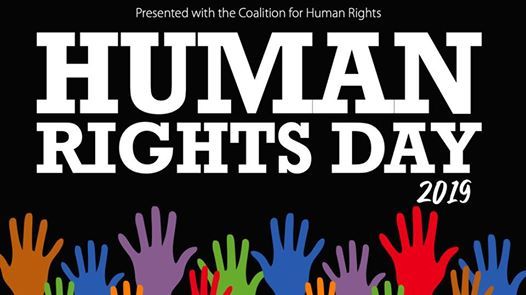
As the world marks Human Rights Day today, it is imperative to reflect on the cardinal principle underlying the United Nations’ decision to dedicate December 10, every year to human rights issues. The philosophy behind the Universal Declaration of Human Rights in 1948 is encapsulated in Article 1 of the creed, which says, “All human beings are born free and equal in dignity and rights. They are endowed with reason and conscience and should act towards one another in a spirit of brotherhood.”
Many activities are scheduled for today to mark Human Rights Day, with focus on various thematic areas enunciated in the Universal Declaration of Human Rights. For instance, Article 3 says: “Everyone has the right to life, liberty and security of person.” Therefore, all unlawful killings violate this provision. Article 4 forbids slavery. It says: “No one shall be held in slavery or servitude; slavery and the slave trade shall be prohibited in all their forms.” Article 5 frowns at torture, saying “No one shall be subjected to torture or to cruel, inhuman or degrading treatment or punishment.” Also, Article 19 guarantees freedom of opinion, expression and press. It says: “Everyone has the right to freedom of opinion and expression; this right includes freedom to hold opinions without interference and to seek, receive and impart information and ideas through any media and regardless of frontiers.”
In recent years, this country’s human rights record has come under increasing scrutiny despite the operation of a liberal democratic political system. This has led to the proliferation of civil society organisations that advocate for compliance with UDHR provisions. In its 2018 report, Human Rights Watch published a long list of human rights violations in Nigeria. The report isolated killings by Boko Haram, bandits, communal violence, excessive use of force by security agencies as sources of human rights abuses. Human Rights Watch specifically referred to the detention of Sheikh Ibrahim El Zakzaky as an abuse of the preacher’s rights. It said, “Authorities have failed to implement a December 2016 court order for the release of Ibrahim El Zakzaky, leader of the Shia Islamic Movement of Nigeria, IMN. Zakzaky and his wife Zeenat, as well as hundreds of IMN members, have been in detention without trial since December 2015…”
Another major facet of rights abuse in Nigeria in 2019 is related to threats to freedom of expression, media and association, a violation of Article 19. For instance, data from Nigeria Press Attack Tracker website show that over 70 journalists have been assaulted, arrested, and detained by security operatives in 2019 alone, mainly for alleged cybercrime. However, most of them only published stories or commentaries critical of government. Some were arrested and clamped into police cell for posting “injurious comments” about influential politicians on social media.
In this dispensation, most critical opinions against government have a new name – hate speech. In some instances, government has invoked the Terrorism Prevention Act 2013 to curtail or silence critical voices. It is even suspected that the “Protection from Internet Falsehood and Manipulations Bill, 2019” before the National Assembly is designed to silence civil society organisations. If the Bill is passed into law it might deal a deadly blow to freedom of expression in Nigeria.
Some security operatives are agents of rights violation. Therefore, we call on government to rein in these operatives. The essence of democracy is for citizens to voice out their support or opposition to government. Any government that criminalizes contrary opinions will stumble from error to error and is ultimately doomed to fail. As former US President Thomas Jefferson put it, “the only security of all is in a free press.”
Without doubt, human rights are violated daily in Nigeria, as violent killings and dehumanization of the people are carried out by state and non-state actors in spite of loud outcries. We urge the three tiers of government to remedy their poor human rights records, in line with international conventions to which Nigeria is signatory.