
Overview of dissenting Kogi governorship tribunal judgement
It is no longer news that the Kogi State Governorship Election Petition Tribunal on 23rd May, 2020 delivered it’s judgment in respect of the Petition filed by Engr Musa Itayi Wada and his Party, the Peoples’ Democratic Party (PDP) against the return of Governor Yahaya Bello of the APC as the winner of the November […]
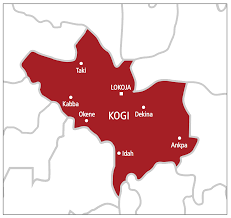
Kogi State Map
It is no longer news that the Kogi State Governorship Election Petition Tribunal on 23rd May, 2020 delivered it’s judgment in respect of the Petition filed by Engr Musa Itayi Wada and his Party, the Peoples’ Democratic Party (PDP) against the return of Governor Yahaya Bello of the APC as the winner of the November 16th, 2019 Kogi State Governorship election.
The judgment of the Tribunal was a split decision as 2 of the 3 Justices which made up the panel delivered the majority judgment which affirmed INEC’s return of Governor Yahaya Bello as winner of the said election and accordingly dismissed the Wada/PDP’s Petition. Honourable Justice Ohimai Ovbiagele however differed with his brother Judges with respect only to the merit of the Petition by delivering a 16 paged dissenting judgment.
It is pertinent to point out at the outset that a dissenting judgment, however powerful, learned and articulate, is not the judgment of the court and therefore not binding. Indeed, the judgment of a Court/Tribunal is the majority judgment, which is the binding judgment: see the Supreme Court case of Orugbo V. Una (2002) 16 NWLR (Pt. 792) 175 SC, hence, the majority Judgment read out by Honourable Justice Kaigama, the Chairman of the Tribunal, is the judgment of the Kogi Governorship Election Petition Tribunal. Despite the foregoing, the dissenting judgment has been celebrated by many as legally and factually correct while some have even taken it to be the majority decision of the tribunal. This write-up seeks to dispel those insinuations.
Justice Ovbiagele in his dissenting judgment formulated 1 issue for determination upon which he based his judgment and it is to wit:
Whether from the totality of the evidence adduced by the Petitioners’ particularly the PW19, this Court can safely hold that the 2nd respondent, Yahaya Bello, was duly elected by a majority of the lawful votes cast in the election.
According to the dissenting Judgment, the crux of the Petitioners’ case is that while 282, 612 ballot papers where reportedly used for the election, Exhibits P95(A) P107(K) and P193(a) shows that 324,745 votes were cast. In addition, it was the evidence of PW19 that 159,957 ballot papers were products of multiple thumbprinting while 67,297 other votes were plagued by other irregularities. According to Justice Ovbiagele, these allegations were borne out by Exhibit P185A (Forensic Examiner’s Report) prepared by the ‘Expert’ Professor Tanko Ishaya. Justice Ovbiagele believed that these alleged irregularities were captured by the Petition and Exhibits P205 to P213(A), Exhibit P164, Exhibit P189(A-P), P95(A)-P107(K) which were tendered through PW1 an INEC staff.
According to Justice Ovbiagele, the Expert Report of PW19 i.e. Exhibit 185A clearly show wrong computation of results and multiple thumbprinting of ballot papers. With regards to the Expert Witness’s Evidence (PW19), Justice Ovbiagele specifically found and held as follows:
- That PW19 is indeed a well-qualified expert with regards to forensic examination and that Exhibit P184(E) was a Certificate in Forensic Examination.
- That his credibility and professional competence was not impugned under cross examination.
- That he relied on the order of the tribunal made on the 15th day of January 2020 to carry out the forensic examination of electoral materials.
- That the Respondents failed to controvert PW19’s testimony hence its stands unchallenged as no witness was called to controvert his testimony.
- That PW19 did not work with the Petitioners hence he is an independent witness who is not interested and is thus detached from the outcome of the litigation hence not a ‘person interested’ in view of the definition of the Evidence Act to exclude the Report prepared by him from admission as evidence.
- That there is nothing to show that he has any relationship with the Petitioners.
- That he was not paid for the job done.
- That in Olamaboro, 13, 104 ballot papers were invalid.
Justice Ovbiagele further held that based on the evidence of other Witnesses, there were tons of corrupt practices which bedeviled the election. In support he relied on the Evidence of PW1, PW3, PW4, PW6, PW7, PW8, PW9, PW10, PW11, PW13, PW14 and PW20. He also relied on Exhibits P146A and P146C tendered by PW18 which were videos played from discs showing a helicopter in the sky and a man lying down in a pool of blood, respectively. He relied on the evidence of PW22 from Unit 09 in Geregu Ward and a Video showing an INEC staff Mr. Soyebi giving his opinion of the election which he described as flawed.
The Judge consequently found that Governor Yahaya Bello was not duly elected by the majority of the lawful votes cast at the election and therefore found and declared as invalid 257,254 votes cast during the conduct of the election, nullified the election, set aside the certificate of return issued to Governor Yahaya Bello and ordered the conduct of ‘fresh election’ not later than three months from the date of the judgment in the aforesaid seven Local Government Areas of Kogi State.
OPINION ON THE DISSENTING JUDGMENT
It has now being settled beyond peradventure that to succeed in a claim that the Respondent was not elected by the majority of lawful votes cast, the Petitioner must adduce credible evidence that prove that the Respondent did not score the majority of lawful votes at the election. The Petitioner must plead and prove the votes cast at the various polling units, the votes illegally credited to the declared winner, the votes which ought to have been deducted from that of the supposed winner in order to find out if it will affect the result of the election. See Gboms & Anor v Ogundu & Ors (2019) LPELR-49026(CA) Pp. 50-52, Paras. B-C.
The Petitioner must not only tender the electoral forms used in the election, he must call witnesses, eyewitnesses who witnessed all the alleged irregularities and or crimes. Establishing the above position, the Supreme Court in Abubakar V. Yar’ Adua (2008) 19 NWLR (PT. 1120) 1 Tobi JSC held as follows:
The witnesses are those who saw it all on the day of the election not those who picked the evidence from an eye – witnesses. No. they must be eye witnesses too. Both forms and witnesses are vital for contesting the legality or lawfulness of the votes and subsequent result of the election. One cannot be a substitute for the other.
The questions which arises therefore are (1) Whether in line with the above cited authorities, the Petitioners discharged the burden of proof placed on them by calling credible eye witnesses from the various polling units of the 7 LGAs where it was alleged that the 2nd Respondent did not score the majority of lawful votes cast (2) If the answer to question 1 is No, whether the evidence of a Forensic Expert can substitute the evidence of eye witnesses who saw it all on the day of the election? (3) Whether Justice Ovbiagele was right to have relied principally on the evidence of an expert witness who was not an eyewitness to the allegations of over voting, multiple thumbprinting and alteration of results.
On question 1 above it is clear that the Petitioners did not discharge the burden of proof placed on them, while they tendered tons of documents majorly through two INEC Staff and PW32, those documents were dumped on the tribunal without tying the documents to their case or allowing witnesses to give life to the documents by speaking to them. This in law is indeed fatal. Furthermore, the Petitioners did not call any credible eyewitnesses from the polling units of the said 7 LGAs. Specifically, the Petitioners did not call one single polling unit agent or voter from a polling unit in Adavi LGA, Okene LGA, and Okehi LGA. With respect to Ajaokuta LGA, the Petitioners called only one Witness i.e. PW22, a Polling Unit Agent who contradicted Wada’s case by testifying that election in her polling unit went on smoothly and that she was given the pink copies of her result whereas Wada’s case with regards to Ajaokuta LGA was that due to violence, elections did not hold in her Polling Unit.
On the 2nd and 3rd questions formulated at paragraph 1.8 above, it is submitted that honourable Justice Ovbiagele was wrong to have relied on the evidence of an expert witness as a substitute for the type of evidence required by case law as settled by the Supreme Court. Placing reliance on the lone evidence of an expert witness (PW19) in proof of an allegation of failure to win by the majority of lawful votes cast, negates the settled position of the Supreme Court as demonstrated in Abubakar V. Yar’ Adua (Supra) and a host of other decisions. It is standing the law on its head!
From PW19’s testimony and Report (Exhibit P185A), it is clear that he was nowhere near Kogi State on the 16th day of November 2019 when elections held, he is therefore not an eyewitness capable of discharging the burden of proving the allegations made in respect of the 7 Local Government Areas.
Assuming but not conceding that Justice Ovbiagele was right to have relied on the evidence of the lone expert witness, the question is whether his evidence was indeed credible and unchallenged to warrant a reliance thereon to void elections in those 7 LGAs? The answer to this, it is submitted is NO! The reasons are not farfetched, and they are stated below in the order established under Justice Ovbiagele’s holdings reproduced at paragraph 1.4 above:
- Prof. Tanko does not have and did not present a degree certificate in forensic examination or science. He admitted under cross examination that ‘None of my Certificates carries the word ‘Forensic Science’. Exhibit 184 which Justice Ovbiagele relied on in describing Professor Tanko as an expert is a Professional membership certificate of a Nigerian Association of Forensic Examiners which is not a certificate of proficiency in forensic examination.
- From the report of the ‘Expert’ (Exhibit P185A) and his oral testimony, the job he did primarily is the examination of finger impressions or fingerprints pattern as it relates to multiple thumbprinting of ballot papers allegedly carried out by the 2nd and 3rd Respondents in the election. It is submitted that this is the work of a Dactylographer. The evidence of PW19 clearly shows that he is not a Dactylographer, PW19 himself admitted under cross examination thus: “I do know who a dactylographer is. He is a person who carries forensic examination of fingerprint impression. My certificates do not show that I am a dactylographer.”
- The above testimony of PW19 indisputably shows that he lacks the special knowledge on the science of dactylography. Thus, he is not an expert in this field and therefore has no expertise/capability/proficiency to carry out forensic examination of fingerprint impression. The conclusion on this matter is that the fingerprints analysis carried out by PW19 on ballot papers allegedly used in the election in the seven (7) LGAs mentioned in his Report were done by a person not qualified to scientifically analyze fingerprint impressions.
- On the independence and credibility of Professor Tanko, Justice Ovbiagele’s findings and holdings ignores the evidence on record before the tribunal. While PW19 gave the impression and stated under cross examination that he ‘relied on the order of this Tribunal to do this job’, paragraph 2.1, page 9 of his Report contradicted his testimony before the Tribunal. The Report reads:
The Forensic team arrived Lokoja on the 5th January 2020 to commence work on Monday 6th January 2020. The team reported to INEC Office Lokoja, Kogi State on Monday 6th January 2020, but could not commence the exercise until Friday 10th January 2020.
The contradiction is in the date(s) PW19 commenced his forensic job. From the reproduced portion of his report, the dates mentioned predates the subpoena ordering forensic examination which was made on 15th January 2020. This points out that PW19 got his instruction to carry out forensic examination from other sources other than the Tribunal. This conclusion can further be reached by inference from his testimony under cross examination that his assignment requires a form of letter of instruction and that he has one. In his words he stated that ‘To carry out the assignment I did, somebody has to instruct me to do so. The brief is to instruct me to do what I should do so that I don’t veer off the time(sic). I have a letter instructing me to do the job. I don’t have the letter here. I did not state in my witness statement who instructed me to do the job. I did not state in my statement who gave me the instruction.’
- From the above, it is clear that PW19 was engaged by other persons other than by the Tribunal to carry out the forensic examination and that the procurement of the subpoena issued on the 15th of January 2020 was just a façade to hide the identity of the real employers of PW19. This is further confirmed by the testimony of PW19 that: “I was paid my out of pocket expenses for doing…. ….”. The big question is who paid PW19’s out of pocket expenses as it was definitely not the Tribunal.
- Another fact confirming that PW19 was instructed by persons other than the Tribunal who has interest in the Petition and that Exhibit P185A was a report produced during litigation is obvious from the testimony of PW19 where he said: “I was given the copy of the Petition to do the job. That was in December…this Petition gave rise to the report.”. It is also instructive to note that the Petitioners filed two Witness Statement on Oath which they prepared for PW19, one of which is dated 7th April 2020 and adopted by PW19 before the Tribunal. There is no better evidence than this to show that the Petitioners employed PW19 and worked hand in hand with him.
- It follows from all the above that Prof Tanko’s Report ought not to have been admissible in evidence not alone relied upon by Justice Ovbiagele in proof of the allegations in Adavi, Ajaokuta, Kabba/Bunu, Lokoja, Okehi, Okene and Olamaboro LGAs as it was a document made in anticipation or during litigation by a person interested in the outcome of the Petition. See Ladoja Vs. Ajimobi & Ors (2016) LPELR-40658(SC) Pp. 94-96, Paras. B-E.
- While Justice Ovbiagele harped on the ‘failure’ of the Respondents to refute PW19’s testimony or call their own rebuttal evidence, the myriad of contradictions and the worthlessness of PW19’s testimony and Report highlighted above show that there was indeed no need for the Respondents to have called any further evidence other than those elicited under cross examination to refute his testimony/report.
- The figure stated by Justice Ovbiagele in his judgment as being the invalid votes in Olamaboro LGA is contrary to the figure contained in PW1’s Report. Paragraph G, page 2 of the Report clearly shows that the total number of the alleged invalid ballot papers in Olamaboro is 6,433 and not 13,104.
Perhaps the type of numerical error made in paragraph 1.11(9) above, led Justice Ovbiagele to wrongly arrive at 257, 254 votes which he invalidated at page 16 of his dissenting judgment. That figure with respect is not borne out by the pleadings of the Petitioners or the evidence led at trial including the Expert’s Report which he purportedly relied upon. The sum of alleged unlawful votes also calculated/identified by the Petitioners (also without basis/evidence) is 25,534 (from Petitioners votes) and 253,317 (from Respondent’s votes) respectively. These do not sum up to 257, 254 arrived at in the dissenting judgment. The figure equally exceeds the total figure of 227, 254 (159,957 + 67,297) contained in the Forensic Expert’s Report (Exhibit P185A) hence not borne out by the evidence before the Tribunal.
The correctness of the dissenting opinion of Justice Ovbiagele to invalidate the entire results from the 7 LGAs and order a rerun is also questionable on the score that there are Wards and Polling Units within those LGAs where no multiple thumb printing were discovered e.g. Iruvucheba Ward of Adavi LGA and Old Ajaokuta Ward of Ajaokuta LGA, yet, elections in the entire LGAs were invalidated. His decision on this point therefore grossly contradicts laid down judicial precedents on invalidation or cancellation of lawfully cast votes.
Another point which belies the dissenting judgment and the reliance on PW19’s testimony and his Report is that PW19 exceeded the confines of the orders of the Tribunal granted on 15/01/2020 by proceeding to count and recount ballot papers which was never part of the orders of the Tribunal made on 15th January 2020. To make matters worse, PW19 further proceeded to conduct an unauthorized enquiry into alleged computational disparities, absence of serial numbers on ballot papers, unstamped and/or unsigned electoral materials by the INEC official that conducted the elections. PW19 fixed the affected votes at 67, 297 which votes were consequently (and wrongly in this Writer’s view) invalidated by Justice Ovbiagele. In as much as the ‘Expert’ exceeded the express orders of the Tribunal (Justice Ovbiagele inclusive) by counting the ballot papers and identifying other irregularities as stated above, his Lordship ought not to have relied on that aspect of the Report and invalidated those figures.
Finally, all the pieces of evidence upon which Justice Ovbiagele sought to corroborate or support the evidence of PW19 in arriving at his decision were neither credible nor cogent evidence, e.g., the death certificate of the two alleged dead voters whose pictures were tendered through PW32 were not provided to confirm cause of death; the Videos played and tendered by PW18 were admitted to have been edited on a laptop whereas the laptop used in editing same was not tendered in evidence; the video of the Helicopter tendered did not show the Helicopter doing anything else than flying, what more, it was never said that the 2nd and 3rd Respondents flew the helicopter.
CONCLUSION
It is respectfully submitted from all the above that the dissenting judgment of Justice Ovbiagele is indeed not rooted in factual or legal basis.
Felix Are is a lawyer and he writes from Abuja, Nigeria.