
Personal Financial Planning – Income Management
We have so far defined what income is, brought out the major types of income sources; principles of income earning; and the benefits of making income. Today, we will take up income management before we begin to take up expenses. Most of us are aware of individuals who have made reasonably good income at some […]
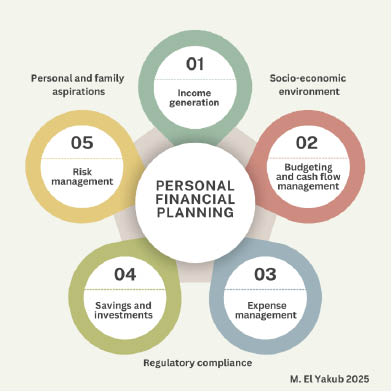
personal financial planning
We have so far defined what income is, brought out the major types of income sources; principles of income earning; and the benefits of making income. Today, we will take up income management before we begin to take up expenses.
Most of us are aware of individuals who have made reasonably good income at some stage in their lives but later ran into financial difficulties. Perhaps it is us who made good income in the past and later ran into financial difficulties. The financial difficulties such persons fall into after opportunities of making income are always the ‘effects’ arising from certain ‘causes’. Sometimes there are personal errors of judgment while at other times difficult stuff happens in life as a result of countless possibilities like hostile economic situations, natural disasters, etc. Understanding such causes of financial difficulties, whether internal, external or a mix, is the first step towards avoiding them entirely or managing them when they occur.
Causes of financial difficulties: As mentioned above these can be grouped broadly into two groups, personal factors and environmental factors.
Personal factors: There are many personal factors that can make it possible for us to not make sufficient income in the first instance or lose part or all of what we make. The major reason, I would say, is taking the income for granted. This may be due to insufficient mental and emotional preparation on what it takes to earn, manage and grow income into wealth. Specifically, personal factors could be poor financial planning arising from lack of financial literacy, knowledge and behaviour; Poor lifestyle choices like bad habits and addiction to substance abuse; Bad attitude to debt and its management; Poor self-leadership such as procrastination on seizing opportunities or handling problems; Spending above income and poor investment decisions; Overconfidence and taking risks without regard to the possibility that they can crystallise; etc.
Environmental factors: Stuff does happen in our lives that are out of our control. Often, all we can do is to try to respond wisely and to the best of our ability. External or environmental factors could be economic challenges like runaway inflation and exchange rate deterioration. If exchange rates deteriorate our foreign currency-denominated investments can take a terrible hit or our import-reliant businesses could be under enormous stress; Family and cultural pressures if not pragmatically managed can lead to poor spending and investment habits; Unexpected problems such as natural disasters can lead to damage to or loss or income-earning sources. For instance, floods can destroy business farmlands or fires can gut business premises.
Given the risk factors, what can we do to protect our incomes, get the most out of them and use them to build wealth?
Develop your financial literacy: The first thing to do is to ensure that you learn as much as you need to on financial matters. Financial literacy is key to understanding business and financial opportunities. It is also required to understand contemporary financial services such as savings, insurance, and credit. Financial literacy is built on three main tenets. These are:
- To earn more money than what is spent over a period
- To attain financial success and freedom
- To develop readiness for unexpected events, some of which have been mentioned above
Financial literacy is key to understanding tracking expenses, budgeting, retirement planning, etc. Unfortunately, the level of financial literacy across the world, including otherwise high-income nations is generally low. This was brought out in many studies including a 2019 Conference Report on “Financial Literacy and the Need for Financial Education: Evidence and Implications”. Financial literacy can be improved gradually over time by learning about economic developments locally and globally as well as attending relevant training, conferences, etc.
Be financially disciplined: The above point correctly stresses the importance of being financially literate. But knowledge without requisite discipline doesn’t help much. Hence, there is a need to not only be financially literate but to also behave financially right.
Financial behaviour refers to a person’s conduct in managing their money. This covers the scope of how they earn; how they spend; how they borrow, save and invest, etc. Financial behaviour encompasses spending habits, investment choices, saving and debt management practices. It also includes the proclivity of the person to come up with financial goals, develop personal financial plans, budget, and carry out financial decisions thereon. Personal financial discipline is crucial to personal financial success.
Always protect your income sources: Protecting personal income sources is important if the individual is to attain and maintain financial growth and security. There are many ways this can be achieved, and basically, this revolves around managing risks and expected returns. Protecting income sources involves amongst other things:
- Legal protection of assets such as through appropriate contracts and intellectual property rights
- Insuring critical assets wherever appropriate
- Diversifying income sources without thinning out resources
- Wise spending and investment decisions
- Continuous personal development through monitoring and following market and economic developments as well as through upskilling
Another measure to protect your income and grow your wealth is to ensure that you build emergency funds that can see you through rough times. One of the factors that hurt people the most during difficult periods is the inability to operate optimally. Emergency funds will ensure that you are able to operate until the skies clear up. Taking care of your physical and mental health is, obviously, important in ensuring that you remain productive and at your best always.