
Peter Obi: Nnamdi Kanu Shouldn’t Be In Prison
Peter Obi, Presidential Candidate of the Nigeria Democratic Congress (NDC), has renewed his demand for the release of Nnamdi Kanu. He argued that the continued imprisonment of the Indigenous People of Biafra (IPOB) leader is unwarranted and does little to address the grievances fuelling agitation in parts of the country. Speaking during an interactive session […]
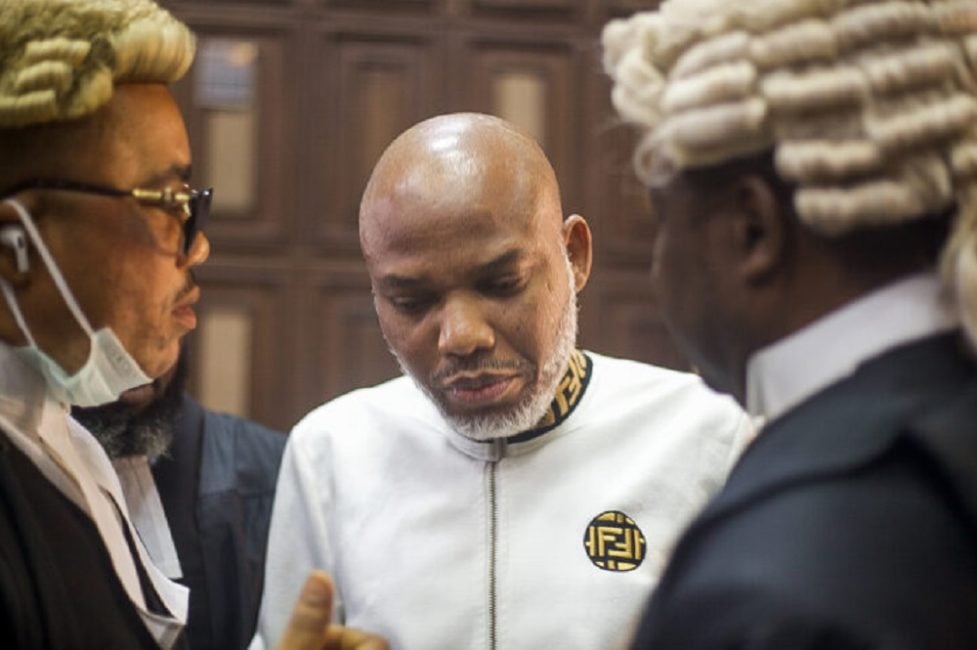
FILE PHOTO: Nnamdi Kanu in court
Peter Obi, Presidential Candidate of the Nigeria Democratic Congress (NDC), has renewed his demand for the release of Nnamdi Kanu.
He argued that the continued imprisonment of the Indigenous People of Biafra (IPOB) leader is unwarranted and does little to address the grievances fuelling agitation in parts of the country.
Speaking during an interactive session with Nigerians in Washington, D.C, United States, Obi maintained that his position on Kanu’s case has remained unchanged.
His comments come as Kanu continues his legal battle against a life sentence imposed by a Federal High Court in Abuja after his conviction on terrorism related charges in November 2025.
The court found him guilty on multiple counts linked to incitement, membership of a proscribed organisation and activities connected with separatist operations in the South East.
Following the judgment, Kanu rejected the verdict and filed an appeal seeking to overturn both his conviction and sentence.
His lawyers have consistently argued that the proceedings were unfair, while the case remains a subject of intense public and political interest across the country.
But Obi insisted that there is no justification for keeping him in custody.
The former Anambra State governor said the expression of controversial opinions or criticism of public figures should not automatically be treated as a criminal matter.
“I said it repeatedly that there’s no reason for keeping Nnamdi Kanu. As far as I’m concerned, there’s no reason, no reason whatsoever,” Obi said.
“You cannot arrest somebody because he was speaking on the radio or calling people’s names. It doesn’t make sense”, he added.
Drawing parallels with his own experience in public life, Obi noted that politicians routinely face criticism and verbal attacks from citizens without resorting to criminal proceedings.
“I’m a politician. People call me all sorts of names. And I don’t think calling me names has anything to do with it. It’s not an offence,” he said.
Obi also outlined how he would approach separatist and other aggrieved groups if entrusted with leadership.
Dialogue, he stressed, remains the most effective route to resolving conflicts.
According to him, governments must seek to understand the motivations behind agitations rather than relying solely on coercive measures.
“Even all agitators, if I’m in government today, I will discuss with them. I will engage with them.
“I will consult with them. Because I believe that they have a reason for whatever they want to do. It’s only by engaging them that we’ll learn and see how we can solve it”, he noted.