
PMB: Say that again!
Last week perhaps to the surprise of many, President Muhammadu Buhari (PMB) spoke like a statesman and populist, rather than a typical outdated African leader. The last time the Nigerian President made populist statements was in the run up to the 2015 elections. Back then he said all the right things and re-instilled hope that […]
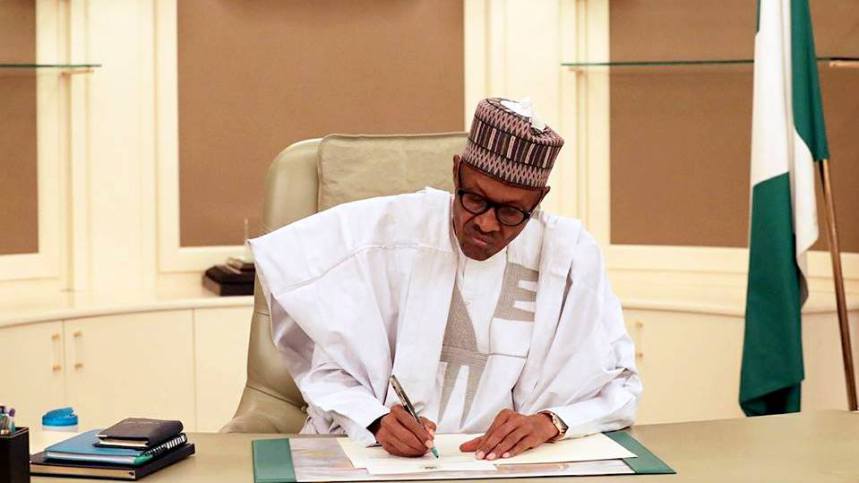
Muhammadu Buhari
Last week perhaps to the surprise of many, President Muhammadu Buhari (PMB) spoke like a statesman and populist, rather than a typical outdated African leader. The last time the Nigerian President made populist statements was in the run up to the 2015 elections. Back then he said all the right things and re-instilled hope that finally Nigeria would have a people-oriented government that would not compromise the rule of law and respect for human rights. After the elections it became a different story all together. Ill-considered statements about treating those who voted for him differently from those who didn’t, and women belonging to the “kitchen and other room” drew the ire of many.
It may just be that in the run up to the 2019 elections the President has re-discovered his populist touch. After the National Working Committee (NWC) of the All Progressives Congress (APC) ordered its members to cease all litigations with respect to the rancorous party primaries, PMB distanced himself from this order. The NWC threatened to sanction any member who didn’t withdraw their suit from the Courts. Expressing faith in both the judiciary and the Courts, PMB reportedly said that “we can’t deliberately deny people of their rights”. His position that there is no litigation which is unacceptable, even though justice dispensed by Nigerian Courts is excruciatingly slow, is commendable. The Courts should always be the last resort for the dissatisfied and nobody is entitled to abridge another person rights, nobody should arrogate to themselves the right to dispense justice.
The problem is that the President appears not to believe in his own advice. His words, actions and inactions in the cases of former National Security Adviser (NSA) Sambo Dasuki and Shi’ite leader Ibrahim el-Zakzaky directly contradict this stance. Dasuki has refused to re-appear in Court because orders for his release on bail have been ignored, and he feels unjustly treated in the process. The matter of the Shi’ite leader el-Zakzaky is well documented and many unnecessary deaths have resulted from the legal imbroglio his case has become. Having previously said that human rights have to take a back seat to national security, these contradictions between the President’s words and actions should come as no surprise. The Nigerian President is apparently torn between the requirements of being statesmanlike and those of what he has obviously been advised are the requirements of national security. All the talk about respecting the rights of the disaffected and disenchanted was not for the consumption of the generality of Nigerians, but specifically aimed at aggrieved APC members who pledged to fight the Party to death, accusing the Party Chairman of running their affairs like a personal fiefdom. The internal workings of any political party really only concerns its members. Citizens are free to join or leave any Party they as they please, and if they don’t like what is going on they should leave.
As far as history is concerned PMB has to decide whether he wants to be remembered as simply another deified African leader who believed primarily only in himself and not in any laudable principles, or a democrat and human rights adherent who entrenched legality and respect for the rule of law. The problem is that if ever there was a country in which the law could truly be described as “an ass”, its Nigeria. There have been far too many misdemeanors by Judges and judgements belatedly overturned on appeal when the guilty party has enjoyed the advantage of a perverse judgement, to have any faith in the judiciary. Ensuring the rule of law in Nigeria doesn’t mean simply respecting Court pronouncements, it also means sanitizing the judiciary and modernizing court processes rather than court premises. Unfortunately, was done in this regard in the past three years apart from an initial embarrassing of judges and revelations of corruption.
There is no doubt that PMB has started to reposition the country, even though he hasn’t espoused any political philosophy or expressed any direction in which he hopes the nation will move other than to be less corrupt after his tenure is over. The real problem for PMB as far as history is concerned is that he is either half way through his term or about to round up. Most of Nigeria’s castigated former leaders started out as political heroes. In Nigeria, heroes of yesterday become villains of today and villains of yesterday become heroes. History may not be favorable to PMB in determining whether or not his words were matched with deeds. He will continue to navigate the waters of making statements which don’t really conform with his actions. It’s important to remind all African leaders of statement which they make that contradict their actions by simply telling them to “say that again”!