
Postpartum depression isn’t just in women’s heads
Grace Ajuma has had three children, and the third time wasn’t merry. The separation of the new infant from her body brought on something known as the baby blues-the feeling of moodiness and unhappiness that makes new mothers want to cry after having a baby. But it was more than just the blues. “I hated […]
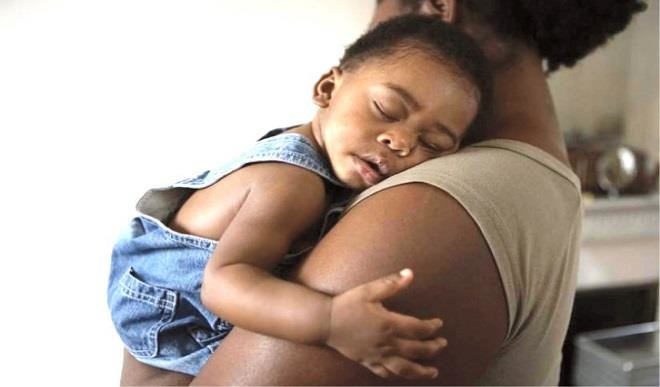

Grace Ajuma has had three children, and the third time wasn’t merry.
The separation of the new infant from her body brought on something known as the baby blues-the feeling of moodiness and unhappiness that makes new mothers want to cry after having a baby.
But it was more than just the blues. “I hated myself, my child. I kept feeling like I wasn’t doing enough,” the mother of three recalls.
“My whole life had changed in the twinkle of an eye. I became responsible for someone and that someone defined all that concerned my life.
“My child decided when I would sleep, wake up, and eat, when I go out, where I go too. My time and how I spent it, revolved around him. It was like I was going nuts.”
She couldn’t talk to anyone about her state of mind, not even her mother. But she went back to the private clinic where she had given birth and sat down with her doctor.
“He was the one who told me I was suffering from postpartum depression,” Ajuma says of the moment she was diagnosed with PPD.
“But he couldn’t help me because he is not a psychologist; he just advised that I shake it off.”
Therein lies the difficult part. Many women attending antenatal clinic get told about postpartum depression, but nothing really prepares them for when the condition actually hits. As with many mental health problems, the heights and lows of PPD are not well understood or communicated.
“The question now was, how do I shake it off, it was so burdening that I contemplated taking my own life.”
Her conclusion today is that PPD is real, not just a condition that’s all in the mind. By hindsight, medical workers know it is common among women who end up with depression, says clinical psychologist Dr Samuel Jinadu, who deals in mental health.
“Most women who have depression later in life are most likely to have had postpartum depression which wasn’t treated.”
PPD risk lies in three factors: hormones, stress and social environment. They are the biopsychosocial factors that determine whether a woman could come down with depression, says Jinadu.
It begins from pregnancy. When a woman is pregnant, her body is flooded naturally with hormones that prepares her to go the nine-month haul carrying another life inside her.
“The hormones and everything adjust themselves to accommodate the baby,” explains Jinadu. “After childbirth, there is a significant drop, an imbalance. Such changes can trigger the hormone imbalance in the system.”
The hormone flood drying up after a baby’s birth is the biological factor. Psychological factors include stress.
“You have been living a life, carrying a baby, and suddenly the baby is not there,” says Jinadu. “You are having a new role to play as a mother, breastfeeding, taking care of the baby and all that. That’s a big stress.”
On the social front, the sort of social network and support around a woman count, and combined with the other factors, their absence increase the probability of her coming down with PPD, says Jinadu.
Halima Adamu’s child turns one this February. She recalls feeling relief she moment her baby came out of her, followed by a deep feeling of instant loss.
“I would look at him and ask myself, did I really just give birth to that?” In the coming weeks of baby blues, her life changed. Long days of battling fatigue and nights battling a crying infant.
“I regretted having my baby, and it was a baby I always wanted. I didn’t understand what was wrong with me. I would just sit and cry. My mother was on maternity visit then, and she would talk to me, tell me to not think negative thoughts. Maybe it was just the blues, but I am much better now,” Adamu says.
First-time mother Eloho Roy had more than just the blues, and got even more scared when she lost her appetite for food.
“I thought I was going to die, I felt my world was crumbling and coming to an end. I didn’t hate my child but felt he changed my life. I cried uncontrollably, my emotions became a roller coaster,” Roy recalls.
“The most annoying part of it all was that, when I tried talking to old mothers of what I was experiencing, they simply said, it’s normal, you will get over it. But sincerely, it didn’t feel normal, I felt like I was going to lose it one day.
“Sometimes I thought I wasn’t doing enough for my child, not feeding him well and not being a good mother. It became so bad I started withdrawing from my responsibilities and pushing them to my mum. I didn’t want to carry him and feed him because I had to.
“It was a trying time for me, till I met a friend who had the same experience, she told me how she overcame it and advised that I avoid alone times. She said I should mingle with people, go out, join activities in church and generally keep myself busy. That it helped her a lot. I heeded her advice and sincerely I have started seeing the changes. I am currently learning to drive, something I had consistently procrastinated.”
Three experts found significant evidence that women who have given birth had more chances of depression than women who haven’t.
Their research diagnosed depression in 128 postpartum women, compared with 55 non-postpartum women, they reported in the International Journal of Psychiatry and Clinical Practice.
In general population, up to four in 20 women could suffer depression of any sort. Among those four, a large number may have experienced PPD or childbirth may have triggered some form of mental health issue, experts say.
PPD is only among a range of depressive disorders, but it strikes after a woman gives birth-hence the name postpartum (after birth). It strikes men too-oh, yes it absolutely does.
And it has also been difficult to diagnose in some cases. A separate hospital study involving 72 obstetric staff, including midwives and doctors, backs the findings.
At least 43% of the staff admitted “difficult to recognize PPD” and 19% of them doubted their obstetric team’s ability to manage it, the researchers reported in the East Africa Medical Journal.
Nearly nine in 10 of them would rather refer PPD cases to a psychiatrist, but saw stigma as a militating factor.
Getting help is important. Psychologists use the biopsychosocial treatment model which considers how different factors responsible for PPD.
“If there are biological factors, we use medication; if there are psychological factors, we use psychotherapy; if there are social factors, we use family therapy or couples’ therapy,” says Jinadu. “We combine biopsychosoical models for treatment and it has been very effective.”
Research is helping to simplify diagnosis of PPD to the point where a simple blood test can predict a woman’s risk of developing the condition.
One is based on the level of a hormone, known as corticotropin-releasing hormone, produced by the placenta (the bag that holds the baby) around the 25th week of pregnancy.
Using a blood test, researchers in a study correctly identified 75% of women who had future PPD symptoms, according to findings published in the Archives of General Psychiatry.
Ajuma didn’t see it coming, even with her third pregnancy and third baby. “I cried when he cried, I couldn’t just control my emotions anymore. It was a very hard time for me, until one day I looked at my child, thought of how I had longed for him and how much I loved him. Then I decided to help myself,” she remembers.
“I started going out, doing things to shape both me and my child’s time, I talked more and did things that would make me laugh more. It wasn’t easy, but I overcame it.
“I think nursing mothers, especially first time mums, should be educated on postpartum depression and its effects. The hospitals during antenatal can use the medium to preach it. In short I don’t know if there is provision for psychologists in Nigeria who could help mothers, because it is a serious issue and should be treated as such.”