
Preaching laws must follow due process
In a move to tackle bigotry under the guise of religious preaching, the Niger State government recently announced its intention to regulate preaching in the state. Speaking on TVC’s “Politics on Sunday” live television programme to clarify some aspects of the law seeking to regulate preaching in the state, Governor Mohammed Umaru Bago said it […]
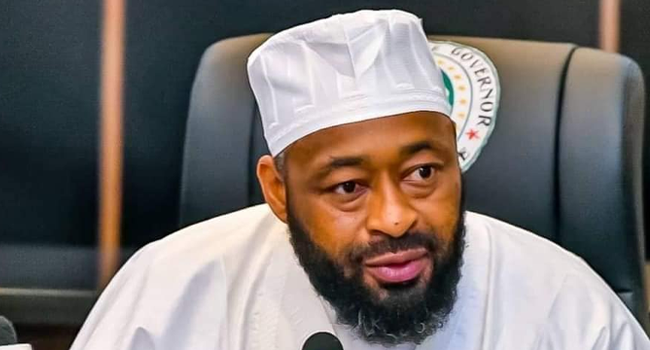
Bago
In a move to tackle bigotry under the guise of religious preaching, the Niger State government recently announced its intention to regulate preaching in the state. Speaking on TVC’s “Politics on Sunday” live television programme to clarify some aspects of the law seeking to regulate preaching in the state, Governor Mohammed Umaru Bago said it is mandatory for preachers to henceforth submit their sermons for approval.
“I didn’t ban evangelism… For everyone going to deliver sermon on Friday, he should bring his scriptures for review, and it’s normal. Even in Saudi Arabia, this is done,” Bago explained. Responding to a question on whether the move was out of the fear of indoctrination, the governor said, “It’s in that direction.”
The Director General of the Niger State Bureau for Religious Affairs, Umar Faruq, said anyone interested in preaching in Niger must obtain a license, emphasising that preachers had two months to obtain their licenses. “It is true, the State Government has banned preaching. Any preacher who wants to preach must secure a license between now and the next two months,” Faruk said.
Reacting to the development, the Chief Imam of the Federal University of Technology, Minna, Bashir Yankuzo, said, “My opinion is that preaching is a command. The government is not paying anyone for doing the job; people are preaching in order to earn the pleasure of God. So, the government cannot dictate who to preach and who not to preach.
Another Islamic scholar, Uthman Siraju, described the measure as an infringement on religious rights. The ban on preaching, according to Siraju, is an infringement on the freedom of worship and religion. He also said, “The best thing for the government to do is to invite and penalise any preacher who incites the public in the course of his preaching.’’
Meanwhile, the Secretary of the Christian Association of Nigeria (CAN) in Niger State, Raphael Opawoye, said the Christian body was not aware of the ban. “The CAN is not aware of the ban. We shall come up with a statement when we are officially informed,” Opawoye said.
While citizens have the right to freedom of worship as alluded above by some clerics, we remind them that every right goes with a responsibility. Besides, the point where an individual’s right ends is where the right of others begins. Previous experiences of how the use of inciting language by some insensitive preachers led to devastating religious crises in the past is a reason to support Governor Bago’s resolve to regulate preaching. The continuous rise or resurgence of extremist groups such as Mamuda in parts of Niger and Lakurawa in neighbouring states, which are part of the challenges of insecurity that the state has been contending with, is another justification for Governor Bago’s decision to regulate religious preaching.
Nonetheless, the attempt by Governor Bago to compare what obtains in the Kingdom of Saudi Arabia (KSA) with Nigeria in terms of government scrutiny of the weekly Friday sermons delivered by Imams lacks any germane basis to validate the imperatives for regulating preaching in the state. KSA and Nigeria are two separate countries founded and run on distinct political systems and laws.
As much as Bago’s move finds strong justifications to regulate preaching in the state, such requires adhering strictly to due legislative processes with every sense of responsibility and due diligence. The governor’s approach to regulate preaching through a fiat would only create more problems rather than solve or avert any remote or looming crisis. Subjecting the regulation of preaching to conventional legislative procedures including a public hearing is a better way of doing it. Making or enforcing laws through a fiat is undemocratic.
Public enlightenment and advocacy campaigns are also required to precede the implementation of the law even when it is passed by the Niger state government. In the absence of an empowering law, asking Imams to seek approval of their weekly sermons would be premature and a source of needless controversies. Monitoring of compliance by government, too, would seem for now to be a cumbersome task.
It would be recalled that a bill to regulate religious preaching was passed into law by the Kaduna State House of Assembly on Friday, June 7, 2019 during Governor Nasir Ahmed el-Rufai’s tenure in Kaduna State. The Executive Bill, which was brought to the Assembly in 2016, was passed three years after it was introduced. The law was an amendment to an existing law of 1984 that existed in the state.
Daily Trust, therefore, implores Governor Bago to send an executive bill on religious preaching to the state assembly. When passed, the proposed law shall empower an Interfaith Regulatory Council to license preachers through a cross-examination process. The process of issuing licenses to credible and deserving religious preachers would not only help to forestall provocative excesses of some religious preachers but shall further exclude those with insufficient knowledge from preaching activities.