
Presidency, stakeholders seek comprehensive response to needs of women, girls in IDP camps
The presidency and other stakeholders have called for comprehensive response to the needs of women and girls in Internally Displaced Persons ( IDP) camps. They made the call yesterday in Abuja during the national Internally Displaced Persons ( IDP) conference organised by Stand With A Girl (SWAG) Initiative in collaboration with the United Nations Population […]
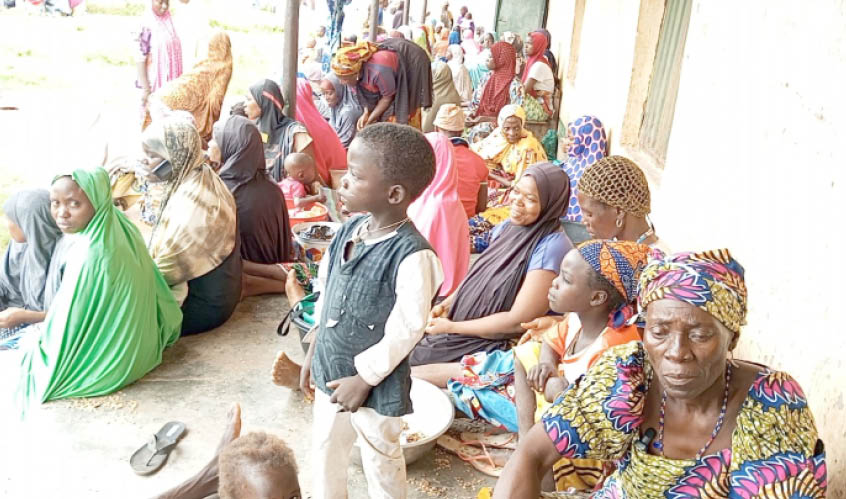
FILE PHOTO: IDPs
The presidency and other stakeholders have called for comprehensive response to the needs of women and girls in Internally Displaced Persons ( IDP) camps.
They made the call yesterday in Abuja during the national Internally Displaced Persons ( IDP) conference organised by Stand With A Girl (SWAG) Initiative in collaboration with the United Nations Population Fund (UNFPA), and other stakeholders. The conference was themed ‘Restrategising Investment: Amplifying the Voices of Women and Girls in Internally Displaced Communities’
The Senior Special Assistant to the President on Community Engagement, North Central, Abiodun Essiet, said the majority of IDPs are women and children, who are often forced to flee their homes with little more than the clothes on their backs.
She said the crisis of internal displacement in Nigeria is a complex and multifaceted issue, driven by insurgency, insecurity, and natural disasters. Quoting the United Nations High Commissioner for Refugees (UNHCR), she said Nigeria is one of the countries with the highest number of internally displaced persons (IDPs) in the world.
- Marketers, experts welcome naira-for-crude policy
- 2 labourers ordered to sweep Abuja police station for 2 weeks
While saying that the impact of displacement on women and girls is particularly devastating, she said they are often subjected to sexual and gender-based violence, exploitation, and abuse.
She said, “ The psychological trauma and emotional distress caused by displacement can also have long-lasting effects on their mental health and well-being. Women and girls in IDP camps often face significant challenges in accessing basic services such as healthcare, education, and sanitation. They are also at risk of early marriage, child labour, and human trafficking.”
She added that it was imperative to amplify the voices of women and girls in IDP camps, to ensure that their needs and concerns are heard and addressed. “
Executive Director, Stand With a Girl (SWAG) Initiative, Margaret Bolaji-Adegbola said it was important for partners providing responses for IDPs to collaborate to ensure integrated services.
She said there was also need for a gender transformative approach integrating IDPs in leadership and providing the right resources they need to be able to make decisions.
“So when we are talking about IDPs, let’s not just focus on the men and boys, it is very important to make sure that women are also at the forefront,” she stated.
She added that 27 girls girls have benefited from her organisation’s education programme.
She added that through the the WELEAD Project of the organisation, it equipped women and girls with life-changing knowledge about sexual and reproductive health and rights (SRHR).
She said, “We helped create safe spaces where they could learn about family planning, menstrual hygiene, maternal health and STI prevention—topics that were once considered taboo or simply out of reach.”
The Coordinator of the African Health Budget Network (AHBN), Dr Aminu Magashi Garba, called on all stakeholders to work with the government to ensure that IDPs are protected, reunited with their families and also reconnected with the society in general.
He said there was need for domestic resources mobilisation from governments at the national and sub-national levels and not just depending on donors.
He highlighted the need for stakeholders to establish a humanitarian intervention trust fund, and social protection fund in order to protect IDPs and ensure that they have quality life and future.
UNFPA Country Representative, Dr. Gifty Addico, said , “We also know that if all the 10-year-old girls in poorer countries completed secondary education, a $21bn annual dividend would be triggered. Governments, NGOs and multilateral organisations must make investments in girls an urgent priority.”
She said efforts must go beyond immediate relief. “We must re-strategise investments to create long-term, gender-responsive solutions that empower displaced women and girls. This means strengthening health systems, ensuring inclusive education, supporting economic resilience and fostering meaningful participation in decision-making processes.”
The Minister of State for Humanitarian Affairs and Poverty Reduction, Dr. Yusuf Tanko Sununu, said his ministry is working to develop a National Humanitarian Response Plan and establish a National Council on Humanitarian Affairs and Poverty Reduction to coordinate efforts across the country.
He said,”The Federal Government of Nigeria under the leadership of President Ahmed Bola Tinubu (GCFR) is dedicated to protecting IDPs’ fundamental human rights.
“To this end, We remain committed to establishing a harmonised response to internal displacement, ensuring durable solutions for displaced populations.
“With that, I declare the National Internally Displaced Persons Conference open. Let us work together to create a brighter future for Nigeria’s IDPs.”
One of the displaced persons at the Wassa IDP camp in Abuja , Mary Musa Naga said she has been at the camp for 10 years following her family’s displacement from Gwoza Local Government of Borno State.
Mary said the conditions of women and girls at IDP camps are dire, with no access to school, water and nutrition, adding that three years ago she became one of the beneficiaries of SWAG’s education programme and is now in senior secondary school , awaiting writing her examination.
She said she wants to be a nurse in future and called on the government to provide basic amenities in IDP camps and also help resettle them.