
Prof Kongi’s GCON harvest from President Tinubu: Is Wole Soyinka still Nigeria’s moral compass?
Same award. Two presidents. One rejection, one acceptance. What changed? The principles or the person? This is not just about Soyinka… It’s about the integrity crisis of our national icons. There was a time in this country when the moral compass of the nation pointed to one man—Prof. Wole Soyinka. Fearless. Incorruptible. Always ready to […]
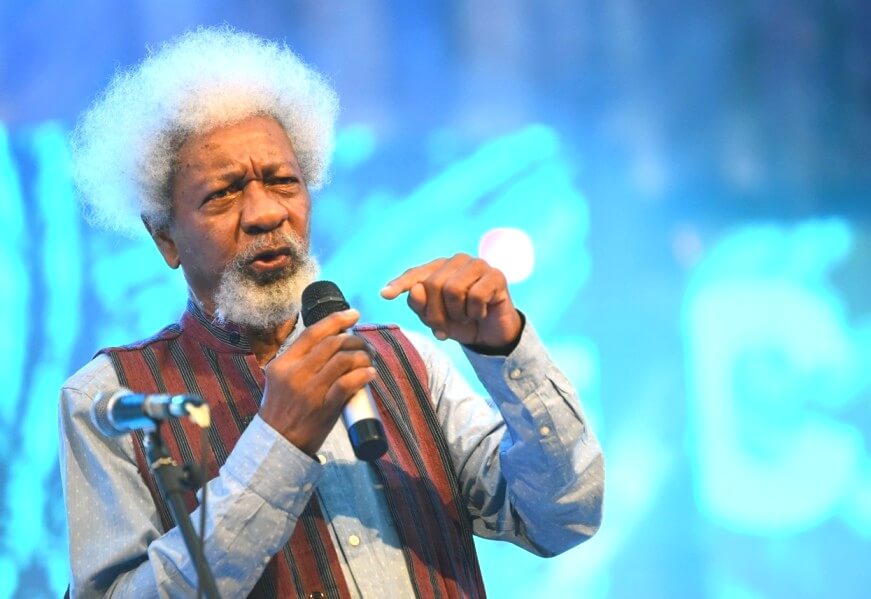
Wole Soyinka
Same award. Two presidents. One rejection, one acceptance. What changed? The principles or the person? This is not just about Soyinka… It’s about the integrity crisis of our national icons.
There was a time in this country when the moral compass of the nation pointed to one man—Prof. Wole Soyinka. Fearless. Incorruptible. Always ready to draw his sword of truth against tyranny, dictatorship, or democratic rot. He was Kongi—the cultural custodian who reminded us that silence in the face of injustice was complicity, and who taught us that intellectuals had a duty to speak when others bowed.
In 2014, Prof. Soyinka exemplified that conviction by publicly rejecting a national honour from President Goodluck Jonathan, citing concerns about the administration’s democratic lapses and lack of principled governance.
Many hailed it as a masterclass in moral consistency and national integrity.
But in 2025, that same Kongi accepted the Grand Commander of the Order of the Niger (GCON) from President Bola Ahmed Tinubu—an administration many Nigerians have accused of doing far worse in one year than Jonathan did in five.
So, naturally, I am compelled to ask the hard questions:
-Is the election that brought Bola Tinubu to power in 2023 more credible and democratic than the one that brought Jonathan to office in 2011?
-Were the corruption allegations against President Jonathan more damaging than those surrounding Tinubu, who has long faced questions over his murky past—including serious accusations of drug-related dealings, even though his defenders curiously claim “it was the bank accounts that did the drugs, not the man’’?
-Was the economy, security, or general well-being of Nigerians under Jonathan worse than what we are witnessing today under Tinubu’s leadership?
-What new moral benchmark suddenly makes Tinubu’s government more deserving of Prof. Soyinka’s honour than Jonathan’s ever was?
In the face of these glaring contradictions, I ask: What exactly changed, Prof?
Did Nigeria become less corrupt under Tinubu? Or more democratic under Tinubu, considering what we saw with BVAS failure in 2023 and a rubber stamp NASS in 2025, that is more focused on allegations of sexual harassment than holding the executive accountable or a judiciary that the common man cannot get to give a judgement on simple cases in seven years?
Has corruption suddenly become more sophisticated and therefore more acceptable?
Has your pride in your Yoruba heritage become a pass for silence as a sheep, where you once roared as a lion when it comes to issues of corruption, oppression and undemocratic issues in our nation?
Some of us grew up reading of your exploits where you actually took a gun to a radio station to try to make them announce the correct election results when the powers that be tried to rig elections?
Youths draw inspiration for their anger at oppression on their lands because they read about how you initially started the Pirate Confraternity in Nigeria to fight against corruption and oppression in the land.
Sir, what happened between then and now? Where was your moral outrage against GEJ and Buhari when Nigerians needed it most during the morally draining elections of 2023 and the failed BVAS travesty? Yet, today you are collecting the GCON award that you proudly rejected to national applause 11 years ago.
What changed sir? Those of us who digested your cutting essays in the past are heartbroken about your sudden volte-face and most respectfully demand an explanation, sir.
In the premises, It is difficult not to perceive Kongi’s silence and acceptance of a GCFR in his 89 year on earth as a stunning act of selective outrage—or worse, ethnic sentiment disguised as principle all to reap a harvest of the GCON Award that will do nothing to improve his legacy but only put a stain on it?
Even Charly Boy, never known for diplomatic language, summed up the sentiment on the streets:
“In 2014, this man rejected an award from President Goodluck Jonathan citing democratic principles. Today, he accepted the same award from Tinubu who is far more undemocratic. You decide if this man lives on his own principles or is an overrated ethnic bigot.”
Now, I wouldn’t go that far in my own description of the man. Prof. Soyinka remains a national treasure, a literary colossus, and a historic voice for justice. But that is exactly why his actions today cut so deeply. We expected better. We were trained by his words to demand better. Now, it feels like the teacher has abandoned his own lessons.
If the bar for national honour in 2014 was integrity, democracy, and moral leadership—then what is the criteria today?
In my humble view, this is Kongi’s inexplicable dilemma—and perhaps ours too as a nation: When the icons of resistance begin to rationalize repression, who then will speak for the people? When our loudest moral voices go mute in the face of power—what hope is left for truth?
I know many of my patriots, especially my Yoruba brothers and sisters will condemn me for the audacity to question the morality or ethics of a man many of us grew up idolising, but we can’t condone what we condemn in others. I don’t believe any kind of blind tribal fealty and I don’t accept that anyone, especially those we see as leaders and conscience of the nation, is beyond being called out for seemingly selective moral outrage.
In my books, no one is above being called out for their inexplicable actions. We ALL deserve an explanation from Prof. Soyinka on this patent inconsistency in his posture as a moral conscience of the nation.
Banwo is the Mayor of Fadeyi and founder, Naija Lives Matter