
Ramadan, month of assorted windfalls
Today is the fourth day of Ramadan for the Islamic year; 1447 AH. It is a month full of Allah’s forgiveness and mercy; a month during which prayers are answered fast. On every night of the month of Ramadan, Allah (SWT) commands: “Where are those asking for my forgiveness? I’ve forgiven them; where are those […]
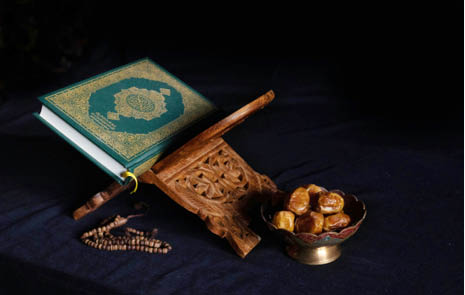
ramadan
Today is the fourth day of Ramadan for the Islamic year; 1447 AH. It is a month full of Allah’s forgiveness and mercy; a month during which prayers are answered fast. On every night of the month of Ramadan, Allah (SWT) commands: “Where are those asking for my forgiveness? I’ve forgiven them; where are those who have repented? I’ve pardoned them; and for those who have demands, I’ve granted their requests.” Ramadan is always full of virtuous occasions.
Ramadan is a period for believers to purify themselves and seek divine intervention in matters that trouble their peace and wellbeing. Ramadan is a month of mercy during which prayers of devoutees are specially answered. Allah (SWT) in Qur’an 2:186 affirms, “When my servants ask thee concerning me, I am indeed close (to them). I listen to the prayer of every supplicant when he calls on me: let them also with a will, listen to my call and believe in me: that they may walk in the right way.”
Given our national challenges and individual predicaments, Ramadan is a golden opportunity for us to remorsefully request Allah to rescue us from the huge socio-economic difficulties bedeviling us as a nation. In our attempt to achieve this, let us start this Ramadan on a good note. Repenting from our brazen disobedience to Allah’s injunctions and excesses against fellow mankind would be a good note for starting this year’s Ramadan. After all, the Prophet (SAW) already told us that the first ten days of Ramadan is full of forgiveness. Let us make every hour and every minute in this sacred month to count in our favour; leaving no space in our hearts for the Shaytan (devil) to take-over, mislead, manipulate or toy with.
Ramadan fast in Islam is different from fasting under medical instructions because in Ramadan, there is no malnutrition or inadequate calorie intake. Ramadan fast is not a prescription from a physician. Moreover, the types of food taken during Ramadan do not have any selective dietary criteria such as restricting a devoutee to go on protein only or fruit only. In Ramadan, everything that is permissible (halal) to be taken by Muslims should be in moderate quantities.
Fasting promotes healthy diet. It reduces the rate of craving for processed foods. It promotes desire for natural foods, especially water and fruits. This is one way by which fasting promotes healthy lifestyle. When individuals take fruits to break a fast, they increase the body’s store of essential vitamins and minerals. Vitamins A and E are good antioxidants that are readily available in fruits, which help to boost immunity.
Similarly, fasting promotes detoxification. The liver, kidneys and other organs in the body help in discharging toxins. Fat is substantially burnt during fasting especially when it is over a period of time as in Ramadan. During fasting, the digestive organs also rest; helping to maintain balance of fluids in the body. Fasting is equally said to reduce blood sugar.
Talking about early morning meal called Sahur, it was the practice of the Prophet (SAW) to take at least water. He never fasted without taking something for Sahur at dawn, before daybreak (fajr). Thus, it would be un-prophetic, for whatever reason, to abandon Sahur. While some Muslims forgo Sahur in order not to “disturb” their sound sleep, others forsake it because they feel they are strong enough to withstand the exhaustions that may be occasioned during the day when they are required to abstain from eating and drinking.
Imam Muslim relates from Amr bn al-As (RA) who reports that the Prophet (SAW) said, “The difference between our fast and that of the People of Book is the eating of Sahur”. All the six compilers of hadith relate from Anas (RA) that the Prophet (SAW) said, “Take Sahur for there’s blessing in it”. Similarly, it is Sunnah to delay Sahur until the last part of the night. The wisdom in this timing is to forestall fasting Muslims from missing their early morning (Subhi) prayer if they were to take Sahur at midnight or hours before fajr because they could fall back to deep sleep and consequently wakeup late for the Subhi prayer. Imam Bukhari relates that when Zaid bn Thabit was asked about the length of time between the prophet’s time for Sahur and Subhi prayer, Zaid replied, ‘it’s equivalent to the time it would take to recite fifty verses of the Qur’an’, at a moderate speed of recitation.
If a Muslim ignorantly eats or drinks at dawn without knowing that it was already fajr when eating and drinking should have stopped, scholars opine that his fast for the day yet remains valid as long as the eating or the drinking was not deliberate. Imam Bukhari relates that Asma’u, daughter of Abubakar (RA) said, “We ate Sahur during the time of the prophet (SAW) on a cloudy day and the sun suddenly appeared. The Prophet (SAW) however never asked us to pay back the fast for that particular day.
Breaking of fast (called iftar in Arabic) is encouraged to be hastened. The Sunnah of the Prophet (SAW) recommends that Muslims should break their fast with dates or with ordinary water where the former is not available. It is also a prophetic practice to break the fast before observing Maghrib (dusk) prayer. Among the supplications offered by the Prophet (SAW) when breaking his fast is “Allahumma Laka Sumtu Wa Ala Rizkika Aftartu”, meaning “O Allah! I fasted for you and (it is) with your wealth, I’m breaking the fast”. Based on the hadith related by Tirmidhi, the acceptance of supplications from the person fasting is guaranteed. The Prophet (SAW) said the supplications of three persons are (accepted and) never turned down. The three persons are: a man or woman fasting until he or she breaks the fast; a just leader; and a person who was unjustly wrongly.
In order to preserve the sanctity of our Ramadan fast, let us strive to shun everything that seeks to vitiate or downplay it. Let us remember that fasting is not all about abstaining from eating, drinking and conjugal relationship during the day time. It extends to avoiding every act that constitutes a sin. We must remain righteous; preventing our senses and body from engaging in acts of disobedience. Our eyes, tongue, hands and legs must all be chained from treading the devil’s path. May Allah put us among those to be forgiven their sins, big and small, in this sacred month of Ramadan, amin.