
Refineries not for sale – NNPCL
The Nigerian National Petroleum Company Limited (NNPC) Ltd has ruled out sale of the Port Harcourt Refining Company and the other three national refineries it operates. The Group Chief Executive Officer (GCEO) of NNPC Limited, Bashir Bayo Ojulari, announced this at a company-wide town hall meeting in Abuja, reaffirming its commitment to completing high-graded rehabilitation […]
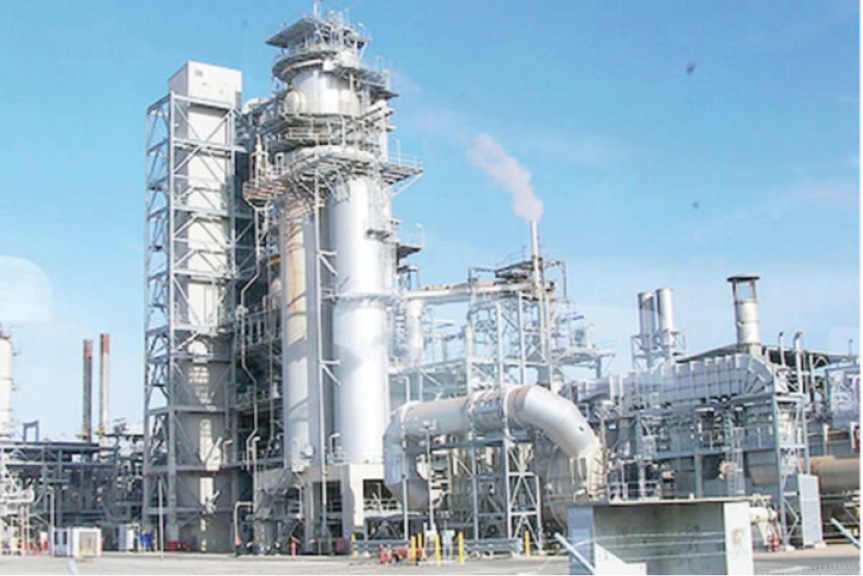
The Nigerian National Petroleum Company Limited (NNPC) Ltd has ruled out sale of the Port Harcourt Refining Company and the other three national refineries it operates.
The Group Chief Executive Officer (GCEO) of NNPC Limited, Bashir Bayo Ojulari, announced this at a company-wide town hall meeting in Abuja, reaffirming its commitment to completing high-graded rehabilitation and retention of the plant.
It would be recalled that the President of Dangote Industries Limited, Aliko Dangote, had previously called for sale of the refineries while Ojulari had in an interview in Switzerland also hinted at the sale of the refineries if they do not function well.
But in a statement yesterday, Ojulari said that his new position isn’t a shift but informed by ongoing detailed technical and financial reviews of the Port Harcourt, Kaduna and Warri refineries.
He said the ongoing review indicates that the earlier decision to operate the Port Harcourt refinery prior to full completion of its rehabilitation was ill-informed and sub-commercial, Ojulari said.
While progress is being made on all three, he said the emerging outlook calls for more advanced technical partnerships to complete and high-grade the rehabilitation of the Port Harcourt refinery, thus selling is highly unlikely as it would lead to further value erosion.
“The announcement comes in the wake of widespread speculation following his remarks at the 2025 OPEC Seminar in Vienna, Austria earlier this month, where he said during an interview with Bloomberg that “all options are on the table.
The comment sparked speculation about the future of the nation’s refining assets.
“The declaration was received with applause from hundreds of staff attendees, who described the position as a renewed sense of business-focused direction across the organisation,” he added.
The statement said the town hall served as more than a performance update but “an opportunity for candid and constructive engagement.”
The Executive Vice Presidents presented progress reports from the Upstream, Downstream, Finance, Business Services, Gas, Power, and New Energy businesses, highlighting operational achievements, ongoing reforms, and areas requiring attention.
“In a tone marked by honesty and leadership, challenges and earlier missteps were acknowledged, and a clear roadmap was outlined for the journey ahead.”
“The announcement reinforces NNPC’s mandate as a strategic custodian of national energy infrastructure and reflects a firm resolve to deliver on the complete rehabilitation and long-term viability of Nigeria’s refineries. It also signals continuity in the Federal Government’s broader energy security objectives and a commitment to retaining critical assets under national control.”
“Feedback during and after the session revealed a workforce energised and aligned with the leadership’s vision. Described as “reassuring,” “transformational,” and “sustainable,” the atmosphere reflected an optimist outlook among employees and hopefulness about the company’s evolving strategic direction.”
“NNPC Ltd will continue to reposition itself as a commercially driven, professionally managed national energy company, grounded in transparency, focused on performance, and unwavering in its responsibility to its number one stakeholder group, Nigerians,” Ojulari concluded.
What Ojulari said before
Speaking with Bloomberg at the sidelines of the 9th OPEC International Seminar in Vienna, Austria, Ojulari said a strategic review of NNPC’s refinery operations is underway and is expected to be concluded before the end of the year.
He said the company is, among other options, considering selling the refineries because the rehabilitation works were not yielding the desired results due to how obsolete the facilities have become over the years.
“We’re reviewing all our refinery strategies now. We hope before the end of the year, we’ll be able to conclude that review. That review may lead to us doing things slightly differently,” he stated.
Asked if that could include selling off the refineries, Ojulari said, “What we’re saying is that sale is not out of the question. All the options are on the table, to be frank, but that decision will be based on the outcome of the reviews we’re doing now.”
He attributed some of the setbacks to outdated infrastructure and underperforming technologies.
“On refineries, we made quite a lot of investment over the last several years and brought in a lot of technologies, but we’ve been challenged.
“Some of those technologies have not worked as we expected so far. But also, as you know, when you’re refining a very old refinery that has been abandoned for some time, what we’re finding is that it’s becoming a little bit more complicated,” he said.
Dangote’s pessimism on refineries
A day earlier, Dangote, who is the President of the Dangote Group, had said the NNPC refineries might not resume operations despite having gulped about $18bn.
While addressing members of the Global CEO Africa from the Lagos Business School at his refinery located in Ibeju-Lekki, Dangote expressed pessimism over the functionality of the refineries. He doubted the possibility of the state-owned refineries working again.
Dangote said the refineries under the management of the Nigerian National Petroleum Company Limited had gulped up to $18bn, yet they have refused to work.
According to Dangote, the 650,000-capacity refinery he built after the government of late Umar Yar’adua aborted his acquisition of the government refineries now has over 50 per cent of its output dedicated to Premium Motor Spirit (petrol), saying that even government refineries committed just 22 per cent of their production to petrol.
Dangote recalled how he and his team had to return the refineries to Yar’adua, a few months after former President Olusegun Obasanjo left office in 2007.
According to him, the former managers of the refinery had told Yar’Adua that Obasanjo sold the facilities below their costs as a parting gift to him and his colleagues.
“The refineries that we bought before, which were owned by Nigeria, were doing about 22 per cent of PMS. We bought the refineries in January 2007. Then we had to return them to the government because there was a change of government. And the managing director at that time convinced Yar’adua that the refineries would work.
“They said they just gave them to us as a parting gift or something. And as of today, they have spent about $18bn on those refineries, and they are still not working. And I don’t think, and I doubt very much if they will work,” he said.
Dangote emphasised that the turnaround maintenance of the refineries was like trying to modernise a car built 40 years ago, when technology has advanced.
“(The turnaround maintenance) is like you trying to modernise a car that was built 40 years ago, when technology and everything have changed. Even if you change the engine, the body will not be able to take the shock of that new technology engine,” he stated.
Dangote’s comment buttressed Obasanjo’s comments last year about the refineries, two of which were shut down again after they were declared operational by the former NNPC Group Managing Director, Mele Kyari, in Q4 2024.
Obasanjo had stated that the NNPC was aware that it could not operate the refineries, saying international oil companies like Shell once refused to run the facilities when he requested them to do so.
According to Obasanjo, some Nigerians, including Aliko Dangote, once paid $750m to take over the refineries; however, his successor, Yar’adua, aborted the deal.
“I ran to him (Yar’Adua), I said, ‘You know this is not right’. He said, ‘Well, NNPC said they can do it.’ I said, ‘NNPC cannot do it,’ I told my successor that ‘the refineries, from what I heard and know, will not work and when you want to sell them, you will not get anybody to buy them at $200m as scrap’. And that is the situation we are in.
“So, why do we do this kind of thing to ourselves? NNPC knew that they could not do it, but they knew they could eat and carry on with the corruption that was going on in NNPC. When people were there to do it, they put pressure. In a civilised society, those people should be in jail,” Obasanjo had stated.
Calls for the privatisation of the government-owned refineries, under the management of NNPC, intensified following the recent shutdown of the 60,000 barrels-per-day old Port Harcourt refinery, six months after it was declared operational.
The Warri refinery was also shut down one month after the former Group Chief Executive Officer of the NNPC declared it open in December.
The Manufacturers Association of Nigeria said the refineries were a drain on the country’s economy, calling on the Federal Government to sell off the facilities.
Crude refiners also advised the government to sell the refineries as scrap and use the proceeds to fund modular refineries, saying the facilities were a burden and liability to the government.
The Federal Government has consistently expended resources on the refineries, which went moribund many years ago. It was gathered that $1.4bn was approved for the rehabilitation of Port Harcourt refinery in 2021; $897m was earmarked for Warri and $586m for Kaduna refineries.
N100bn was reportedly spent on refinery rehabilitation in 2021, with N8.33bn monthly expenditure. $396.33m was spent on Turnaround Maintenance between 2013 and 2017. Despite all the financial allocations, the refineries remain unproductive at the moment.
Speaking with Daily Trust, Wumi Iledare, Professor Emeritus of Petroleum Economics & Director, Emmanuel Egbogah Foundation said while the Port Harcourt, Warri, and Kaduna refineries have consistently underperformed, the issue has never been about ownership but inefficiency rooted in poor governance and institutional weaknesses.
He said selling the assets outright, without addressing the fundamental challenges that crippled them, risks repeating the mistakes of the past and jeopardizing Nigeria’s energy security.
“Privatization, if it becomes necessary, should not translate into elite capture or unchecked monopoly. The process must be transparent, competitive, and structured to serve the public interest. A hybrid model—such as performance-based concessions, public-private partnerships, or equity restructuring—could offer a more prudent path. These alternatives align with the commercial ethos of the PIA and allow for accountability and performance tracking.”