
Reflections on Speaker Abbas-led House’s action against insecurity in 2025
The year 2025 was a remarkable one for the 360 members of the House of Representatives in several ways. It was a year that the lawmakers spoke in one voice, setting aside political affiliations and cladding themselves in unmatched patriotism. A major issue of concern to the lawmakers, and indeed to every well-meaning Nigerian, in […]
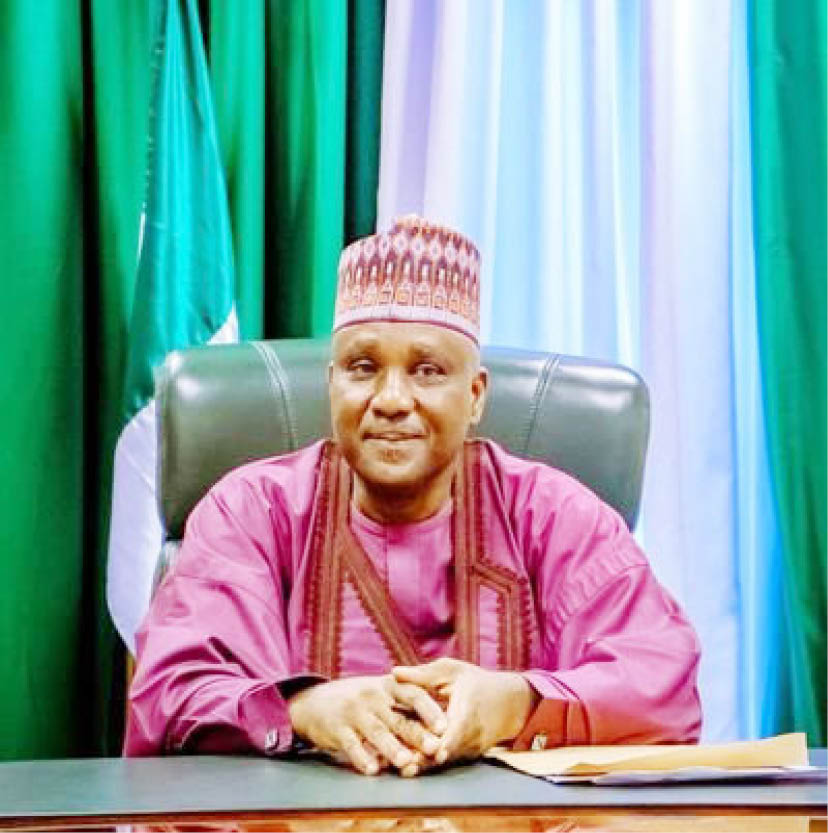
Hon Abbas Tajudeen
The year 2025 was a remarkable one for the 360 members of the House of Representatives in several ways. It was a year that the lawmakers spoke in one voice, setting aside political affiliations and cladding themselves in unmatched patriotism.
A major issue of concern to the lawmakers, and indeed to every well-meaning Nigerian, in 2025 was insecurity. From January to December of 2025, members of the Green Chamber raised many security-related motions with hundreds of resolutions reached. Disturbed by the situation, the House rose in unison searching for solutions to the menace, at least legislatively.
Thus, members of the Green Chamber, led by the Speaker, Rt. Hon. Abbas Tajudeen, dedicated an entire legislative week at plenary to the issue—from Tuesday, November 25, to Thursday, November 27, 2025—tagged ‘Special Plenary Session on National Security.’ In the end, the representatives of the Nigerian people adopted some far-reaching resolutions—over 50 of them—aimed at arresting the situation.
Apart from the members of the House, the session also had in attendance officials from the United States Embassy in Nigeria, as well as the Speaker of the Parliament of Saint Kitts and Nevis, Rt. Hon. Lanien Blanchette, along with members of Parliament and Cabinet Ministers. Some members of the civil society organisations were also in attendance.
The special session began with a poignant speech by Speaker Abbas Tajudeen, who set the tone of the all-important legislative business. He said the moment required calm heads, careful judgment and thoughtful action, not rushed or sensational responses. He pointed out that the decision of the House to focus on national security reflected the seriousness of the moment and the duty to speak for their constituents.
“The last few weeks have been difficult for our country. Communities have suffered severe attacks, including killings and multiple abductions targeting civilians, security personnel, and other vulnerable groups. These incidents occurred in rapid succession and affected different parts of the country, underscoring the scale and coordination of the threat we face.”
Though there were several security issues prior, the abduction at the Government Girls Science School, Maga, in Kebbi State; the unfortunate invasion and abduction of students at the Saint Mary’s Catholic School, Papiri, in Niger State and the kidnapping of worshippers in Kwara State, seemed to be the last straw that broke the camel’s back. The lawmakers felt compelled to act urgently with a purpose.
The purpose of the perpetrators of insecurity, the Speaker said, “is to instill fear, weaken public confidence, and give the illusion of being everywhere at once. Nigeria must reject this tactic. We must resist fear and stand firm against those who rely on cruelty and spectacle to advance their evil ideologies.”
The Speaker’s remarks resonated well with his colleagues. Thereafter, members took turns to highlight issues around insecurity as they relate to their respective constituencies. The House received briefings from the regional leaders, with the Chairman of the House Committee on Women Affairs and Social Development, Hon. Kafilat Ogbara from Lagos State, kick-starting what became a session packed with revelations. She lamented the security situation around the country, particularly the spate of abductions and kidnappings, which she described as acts of terror.
Lamenting the situation, Hon. Sada Soli, the leader of the North West Caucus, described the perpetrators of insecurity as criminals, arguing that reversing the trend would require a holistic approach involving social, economic, and environmental strategies, as well as strengthening institutions.
Similarly, the leader of the North East Caucus, Hon. Muktar Betara Aliyu, submitted that Borno State became the cynosure of insurgency and terrorism for over a decade, spreading to other parts of the region. He called for more funding of the security agencies as well as better welfare for the troops fighting the scourge.
Also, speaking for the North Central, Hon. Ahmed Idris Wase, a former deputy speaker, bemoaned attempts to give a religious coloration to the wave of insecurity in the country. He revealed that at some point, some security agencies were infiltrated by criminals and former members of the Boko Haram group.
The Deputy Chief Whip, Hon. Isiaka Ibrahim, who spoke for the South West, lamented that insecurity has brought about barriers and divisions among the people, calling for urgent actions to be taken.
For the South East, Hon. Iduma Igariwey Enwo noted that the situation called for a rethink, citing poor policy implementation as a major albatross in tackling insecurity.
Hon. Solomon Bob, who spoke on behalf of the South South, argued that the perpetrators of insecurity should be appropriately addressed as terrorists, as they criminally disturb the peace in the society.
Key Resolutions
After exhaustive deliberations on the security situation, the lawmakers adopted the resolutions, major among them was on terrorism financing, calling on the federal government not only to publicly identify individuals and organisations funding terrorism but also to sanction and prosecute them, rather than the occasional announcements on freezing the accounts of such people/organisations without naming them.
The House equally urged the Executive arm to create dedicated courts to attend to issues around terrorism, banditry, and kidnapping for transparent and speedy dispensation of justice.
The lawmakers also called for a total ban on ransom negotiations, as well as penalising government officials who engage in such practices.
Additionally, they asked the federal government to decisively overhaul the country’s security architecture by providing better remuneration and welfare for security personnel.
The House also called for the strengthening of intelligence and technology to institute better intelligence sharing among security agencies, as well as enhance the use of drones and satellites for border surveillance, among others. The lawmakers were also particular about community policing and illegal arms control.
Another major resolution passed was calling on the government to address the root causes of insecurity, such as poverty, unemployment, and weak governance, by creating jobs and massive investment in the education sector. There was also a resolution calling for the establishment of military bases in volatile regions, high-risk areas, and strategic locations.
They, in addition, recommended immediate massive recruitment into the Armed Forces, the Police and other security agencies in line with recent presidential directives, as well as enhancing the welfare for security personnel through improved salaries, insurance, housing, medical care, and compensation frameworks.
There were other specific resolutions, which included fiscal measures for security enhancement: all security expenditure should be placed on ‘First Line Charge’ to guarantee predictable and timely funding, and all approved security budgets must be fully and promptly disbursed; a phased strengthening of cashless transaction frameworks nationwide; security coverage for schools, worship centres, markets, and other soft targets should be strengthened; all public CCTV systems should be reactivated, upgraded, and, where necessary, complemented with new installations and integrated into a national and sub-national surveillance grid.
Other resolutions also noted that intelligence gathering should be strengthened at the community level and systematically linked to national systems; border security should be treated as a national emergency, with deployment of modern technologies; and a central Joint Intelligence Fusion Centre be established for real time interagency coordination, among others.
Having ended the year 2025 with a resolve to contain insecurity in Nigeria, the Speaker Abbas Tajudeen-led House is set to resume legislative business in 2026 on the same trajectory – with a renewed hope that the security situation in the country will improve tremendously.
Krishi is the Special Adviser on Media and Publicity to the Speaker, House of Representatives