
Relishing athletics spectacle in Abeokuta
The flurry of international sporting competitions taking place in Nigeria under the new leadership of the National Sports Commission (NSC) continued with the combined African U-20 Athletics Championships, which ended on Sunday, July 20 in Abeokuta. The successful hosting of the event once again underlined the sports commission’s organisational ability. Furthermore, it was a testament […]
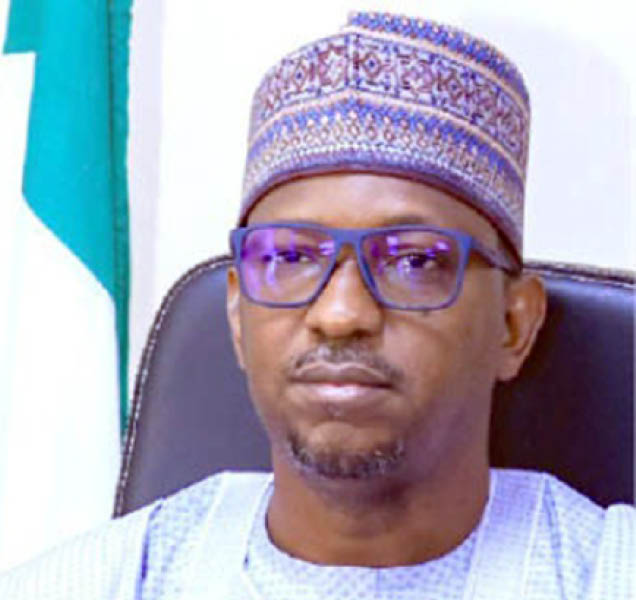
nsc chairman, malam shehu dikko
The flurry of international sporting competitions taking place in Nigeria under the new leadership of the National Sports Commission (NSC) continued with the combined African U-20 Athletics Championships, which ended on Sunday, July 20 in Abeokuta. The successful hosting of the event once again underlined the sports commission’s organisational ability. Furthermore, it was a testament to the NSC’s commitment to its earlier promise to make Nigeria the sporting hub of the continent.
Personally, it was truly pleasing to watch the country’s young athletes compete energetically against their rivals from other African countries, showing flashes of what the future holds for Nigeria in athletics. Even as the mission to upstage South Africa wasn’t accomplished, most of the budding athletes presented by the Athletics Federation of Nigeria (AFN) made the country proud.
Indeed, the great spectacle that unfolded at the fully-packed main-bowl of the Moshood Kashimawo Abiola (MKO) Stadium, Abeokuta on the final night of the athletics event when the highly motivated and determined members of Team Nigeria swept the gold medals in both men and women’s U-20 4x400m relays will linger a long time in the memories of athletics fans. That was the most special moment for many because in both races, Nigeria’s runners came from behind to clinch the gold medals in style.
Before the 4×400m relay show, Team Nigeria had already demonstrated its undisputed dominance of the sprint races by making a clean sweep of medals in the U-18 women’s 100m when the trio of Miracle Ezechukwu, Rosemary Chigozie Nwachukwu and Miriam Adefunke Jegede proved too fast for their rivals. Nigeria nearly repeated the same feat in the U-20 women’s 100m final where Chioma Cynthia Nweke and Success Oghene Oyibu blazed to gold and silver respectively. Nigeria’s other finalist in the race, Chiamaka Nwankwo, finished in fourth place after Cote d’Ivoire’s Lou Yonan Chantal Djehi snatched the bronze medal from her with a better time. However, it was another clean sweep of medals for Team Nigeria in the U-20 Women’s 200 meters and 400m.
Propelled by multiple medalists like Anita Enaruna, Success Oyibu and Chioma Cynthia Nweke, Team Nigeria maintained its well-known dominance of the sprints and hurdles. However, the impressive outings in the short distance races didn’t conceal the fact that Nigeria is yet to overcome her poor record in other track events like 800m, 1500m, 3000m, 5000m walk and 5000m. Furthermore, Team Nigeria was its old wretched self in field events like pole vault, discus throw, javelin, hammer throw, long jump and triple jump.
As a matter of fact, the disappointing performance of Team Nigeria in almost all the field events contributed greatly to the failure to topple South Africa. This means Nigeria will have to take deliberate steps to develop athletes who would compete and make podium appearances in these events that have become the country’s albatross in athletics.
However, another interesting thing at the championship in Abeokuta was the superiority of Team Nigeria’s female athletes over their male compatriots. The athletes once again proved clearly that the future of athletics in the country is feminine as their medals haul almost doubled those of their male athletes. The high-spirited female athletes produced 23 of the 36 medals (including the mixed U-20 4x400m relay gold) won by Team Nigeria in Abeokuta.
A further breakdown of the medals shows that the U-20 women’s athletes won seven gold, four silver, five bronze for a total of 16 medals, while the U-18 girls recorded three gold, two silver and two bronze medals, bringing their total to seven medals. Meanwhile, the men’s U-20 team earned three gold, one silver and three bronze to finish with seven medals, just as the U-18 boys didn’t win a single gold as they settled for three silver and two bronze medals. Therefore, female athletes successfully retained their position as Nigeria’s best performers in athletics at the moment.
Without a doubt, Team Nigeria’s performance in Abeokuta has proved again that the country is blessed with abundant talents in athletics. However, the bane remains the lack of adequate training facilities – a major hindrance to discovering and developing the immensely gifted athletes. Meanwhile, other countries like South Africa with world-class sporting facilities have continued to dominate in certain events. East African countries like Kenya, Ethiopia and Uganda have also turned their mountainous terrains into training grounds for their long-distance runners.
Unfortunately, Nigeria is yet to get serious with facility development. Most times, Nigerian athletes depend on their individual brilliance and sheer determination to win. There seems to be no scientific approach in the development and preparation of our athletes for local and international championships.
In a related development, it is necessary to commend the efforts being made by the NSC to make Nigeria the centre of sports in Africa and keep Nigerian athletes busy with international competitions. This is highly commendable because, apart from its socioeconomic benefits, sports are a powerful tool for international diplomacy.
It is, therefore, heartwarming to note that in less than two years since the return of the NSC, Nigeria has hosted at least 11 local and international sporting events. However, what is a bit worrisome is that most of these events were sponsored by the federal government through the NSC, state governments and some buoyant federal government agencies. For instance, the NSC supported the government of Ogun State to host the 22nd National Sports Festival; Nigeria Customs Service (NCS) substantially sponsored the African Women’s Volleyball Inter-Club Championship; the Nigerian Army bankrolled the 2024 African Military Games, just as the recently concluded African Junior Athletics Championships certainly gulped public funds.
This is a disturbing trend because, in other climes, sports funding is not entirely government’s business. The critical sector is usually driven by corporate organisations that support it with sponsorship funds. Meanwhile, government’s primary role is to provide sporting infrastructure and incentives in the form of tax rebates to boost corporate investment in sports. Once this is in place, sports development and regulatory bodies like the NSC don’t resort to using government allocations meant for sports facilities development to train athletes and sponsor local and international tournaments. These are effectively taken care of by the funds from corporate sponsors.
This is not to condemn what the NSC is doing, but it is necessary to urge it to keep to its earlier pledge to create the National Sports Development Fund to tackle the perennial problem of funding.
The chairman of the NSC, Alhaji Shehu Dikko and the director-general, Bukola Olapade, are marketing experts. Before their present appointments, they had proved their mettle by convincing notable corporate organisations in Nigeria to sponsor international sporting events. This was one of the reasons they received overwhelming acceptance when they were appointed by President Bola Ahmed Tinubu to lead the sports sector.
Unfortunately, it seems they are taking too long to come out with the delicious meal they have been cooking since they went into the kitchen. Going by their rich background in marketing, by now, corporate organisations should be scrambling to sponsor these events the NSC is funding or co-sponsoring. The commission must get sponsors in order to save government allocations for the construction of sporting facilities as promised.