
Resignation, agenda, and tribalistic appointments
In Nigeria, voluntary resignation is an anomaly. And the Tinubu administration was free from it until Dr Hakeem Baba-Ahmed made the front pages last week. It has turned out to be a big blow for them, especially at a moment when they desperately need their northern administrators to do a whitewashing campaign in the midst […]
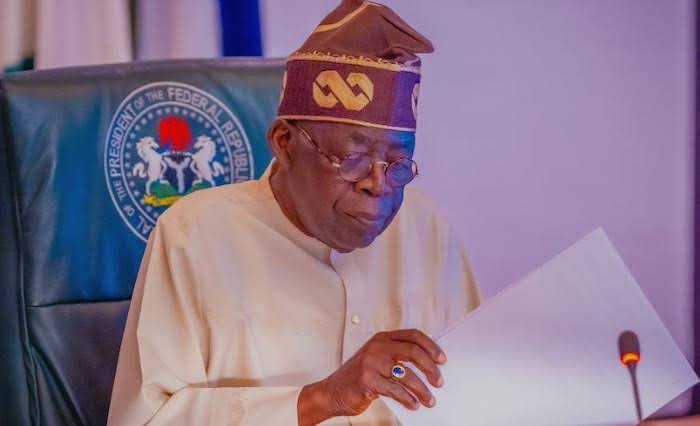
tinubu
In Nigeria, voluntary resignation is an anomaly. And the Tinubu administration was free from it until Dr Hakeem Baba-Ahmed made the front pages last week. It has turned out to be a big blow for them, especially at a moment when they desperately need their northern administrators to do a whitewashing campaign in the midst of economic hardship, rising insecurity and deep regional dissatisfaction.
Those who understand the ideologies of Baba Hakeem—as we call him—were relieved he left the Tinubu administration. Some argued he should never have joined in the first instance. Others ask, “What took him this long to cut ties with the dark side of Nigerian politics?”
It was not surprising for me to hear about it; I knew it was inevitable. Dining with the devil is too risky; using a long spoon will not save you. I have not spoken with Baba Hakeem, and I do not speak for him. But given his principles, one thing is certain: Nigerians will hear about his time under Tinubu. Losing a legendary mouthpiece like this is a big blow for any political party, especially when the APC is losing popularity nationwide, and controversies against the president keep springing up.
Aside from Baba Hakeem’s resignation, which will haunt them for the rest of their tenure, two other issues will linger until the 2027 elections. One is the potential release of his 1993 court record in America, and the other is the debate around lopsided appointments. These issues seem to define Tinubu’s character and agenda.
- Prices of ginger, garri, others push rebased inflation to 24.23% in March
- Arrest: Scavengers, beggars return to court with N500m suit against Wike
The court order in America is regarding drug-affiliated money laundering records of Tinubu, which led him to surrender $460,000 to the US government in 1993. Tinubu’s Special Adviser, Onanuga, stated that the court order on the drug money forfeiture has nothing new to be revealed. The report has been in the public space for more than 30 years. But Onanuga went on to confirm the president’s lawyers are examining the ruling.
If the first controversy is 30 years old, the second is less than two years old. But the Presidency seems unapologetic about Tinubu’s lopsided-tribalistic appointments, despite knowing they are in violation of a constitutional provision under Federal Character. It will be interesting to see how northern appointees justify these lopsided appointments.
As of today, the decision-makers in the Nigerian economy and financial sector can comfortably sit at a round table and discuss Nigerian issues in fluent Yoruba without getting anyone lost. Every official, except for Atiku Bagudu, is a deeply rooted Yoruba person from the South West or enclaves of the North Central. If they were to go on a retreat, serving them spicy abula and ponmo to go with amala would be a unanimous choice.
Those monitoring Tinubu with a “tribalistic microscope” have long revealed that it did not take him long to show his true colour. Some were misunderstood for predicting he would continue how he started—in a Yoruba-centric manner. Others argue that Tinubu’s tactic revolves around blind loyalty—all his officials are expected to accept decisions regardless of the morality of the action. Whatever the intention, the outcome of these lopsided appointments gives the impression that Tinubu has a tribalistic agenda to promote Yoruba supremacy in a country of over 370 ethnic groups.
The Tinubu administration has always been about controlling Nigeria’s finances by one person—Tinubu – and they never attempted to hide it. But achieving it required finding loyalists within. Tinubu’s Achilles heel is that he does not have sufficient loyalists outside the Yoruba nation. Hence, he had to rely on his tribesmen. Of course, this violates the constitutional provision of Federal Character.
Given Tinubu’s history of getting close to finances, he appointed his tribesmen to oversee the country’s finances. His former Finance Commissioner is the Minister of Finance and Coordinating Minister of the Economy. Tinubu’s former Commissioner for Economic Planning and Budget became the CBN governor.
As it stands, revenue-generation and money-driven institutions are headed by Yoruba. For instance, the two Yoruba chairmen of FIRS and the Presidential Fiscal Policy and Tax Reforms Committee are working on tax reforms to favour Lagos and the South West.
Whenever it is difficult to appoint a Yoruba person, they find a way to domesticate the institution. For example, the Ministry of Humanitarian Affairs was quickly placed under the control of the Minister of Finance to quieten a scandal involving its former minister. It should also be noted that out of the six major seaports in Nigeria, only those in Lagos are functioning. This is seen as a way to keep revenue collection under their control.
As it stands, the ministers and chief executives leading the Nigerian economy are all Yoruba. A list making the rounds on social media lists over 80 Yoruba officials. For example, the Accountant-General of the Federation, CG Immigration, CG Customs; MDs/ES/chairmen of EFCC, PenCom, BPE, BPP, AMCON, NEPZA, NICON and NBS, to mention a few, are all Yoruba. Even the Presidential Adviser on economic affairs under the Vice-President’s office is Yoruba.
These lopsided appointments are a clear breach of the Federal Character principle, which mandates fairness and equity in the distribution of public posts among the various federating units of the Federal Republic of Nigeria. In theory, persistent and deliberate violation of the Federal Character Principle amounts to gross misconduct, a constitutional ground for impeachment under Section 143(11) of the 1999 Constitution.
It is unfortunate that our president is at the centre of financial controversy and in violation of our constitution. But it is more disappointing that we do not have the lawmakers to call him to order or even consider applying the law to him. Many will understand why those with conscience and morality choose to resign.
And if the agenda is truly about disadvantaging other tribes, then it should be known that one person cannot always fool all the people. 2027 is approaching. The people will remember.