
Risk of election disturbances: Six states to watch – Int’l Crisis Group
As the 2019 general elections approach, the International Crisis Group warned that the risk of violence is widespread, particularly in six states. The Brussels-based organisation, however, said the government and its foreign partners could limit campaign-related violence by enhancing security and promoting dialogue among rivals. Nigeria’s elections have historically been tense. Over the eight years […]
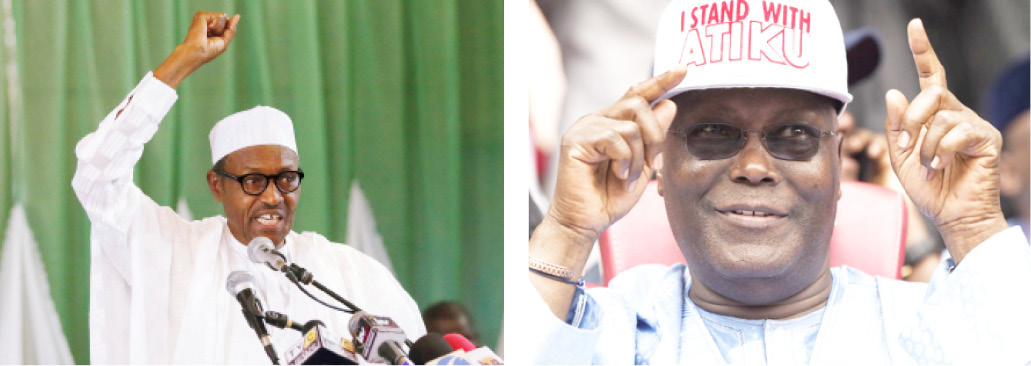
As the 2019 general elections approach, the International Crisis Group warned that the risk of violence is widespread, particularly in six states. The Brussels-based organisation, however, said the government and its foreign partners could limit campaign-related violence by enhancing security and promoting dialogue among rivals.
Nigeria’s elections have historically been tense. Over the eight years from June 2006 to May 2014, there were about 915 cases of election violence in the country, resulting in about 3,934 deaths, according to Nigeria Watch, a research project that monitors lethal conflict and human security.
The 2011 vote was also deadlier, with more than 800 people killed in post-election violence in some northern states.
In 2015 elections, according to the National Human Rights Commission, at least 108 people were killed – 58 in pre-election violence, and another 50 or so on polling day and afterwards, as fights broke out between the major parties’ supporters in nine states.
The International Crisis Group (ICG), in its latest report on Nigeria’s elections, observed that already there have been incidents of violence, with some states displaying particularly troubling signs ahead of the vote.
Headquartered in Brussels, Belgium, ICG carries out field research on violent conflict and advances policies to prevent, mitigate or resolve conflict.
In the report, titled “Nigeria’s 2019 Elections: Six States to Watch”, the group warned that risks of violence appear to be highest in six states: Rivers, Akwa Ibom, Kaduna, Kano, Plateau and Adamawa.
The report, published on 21 December 2018, said dynamics in each state vary, but all feature at least two of four major triggers.
The triggers, it said, were, “an intense struggle between the APC and PDP for control over states with large electorates, vast public revenues or symbolic electoral value; local rivalry between former and incumbent governors; tension resulting from ethno-religious or herder-farmer conflict; and the presence of criminal groups that politicians can recruit to attack rivals and their constituents.”
“Local violence is not only a problem for the areas affected. It can have wider implications, with pre-election bloodshed undermining the vote’s credibility and aggravating risks of disputes, and local protests after the ballot potentially ballooning into a national crisis,” it added.
Rivers: Reigniting an old rivalry
In 2015, Rivers state recorded the most election-related fatalities of any state, mostly occurring around the gubernatorial vote. Counting down to 2019, ICG said the factors fuelling the past attacks are still in place.
It said, “First, the state remains a major theatre of the national contestation between the APC and PDP.
“Because Rivers state, as a major oil producer, is the second highest recipient of federal fiscal transfers (after Akwa Ibom), as well as the second highest generator of internal revenues (after Lagos), it is widely believed to be a main source of PDP funding. The PDP will go to any lengths to retain control, and the APC will spare no effort to capture the state, so as to deny its chief adversary this vital revenue stream, at least for the next four years.
“A second risk stems from the state’s internal politics, particularly the bitter rivalry between Nyesom Wike, the incumbent governor, and Rotimi Amaechi, his predecessor who served from 2007 to 2015.
“A third threat stems from armed gangs and cults. As in previous elections, many of them are offering their services to politicians to intimidate opponents and rig the polls. They could contribute significantly to election violence, particularly in remote riverine villages with little or no law enforcement – or where the overstretched federal police fear to tread.”
Akwa Ibom: Dimming prospects for peaceful polls
The report said Akwa Ibom, like Rivers, is emerging as a major battleground in the APC-PDP battle for revenue. It receives the most federal money of any state, and it is widely believed to be a pillar of PDP finances.
A second factor is partisan rancour in the state, aggravated by the split between PDP Governor Udom Emmanuel and his predecessor Godswill Akpabio, as well as the struggle for control of the state House of Assembly.
The state, in November, witnessed political crisis when some lawmakers “sacked” the speaker of the State House of Assembly and attempted to impeach the governor. That action invited a police siege of the House.
ICG said the developments in November signal that the state could suffer violence between the two parties’ supporters before, during and after the elections.
Kaduna: New tensions aggravate old grievances
A number of factors make Kaduna a likely hotspot as the 2019 polls draw near, including increasing communal strife and political feuding, the report said.
Violent incidents in Kaduna – pitting ethnic rivals against one another, Christians against Muslims, herders against farmers, and bandits against community vigilantes – have killed more than a hundred since the beginning of 2018. Tensions generated by these incidents are running high and could turn ugly around the elections.
Governor Nasir el-Rufai’s selection of a fellow Muslim, Hadiza Abubakar Balarabe, as his running mate, has heightened tensions further, it said.
“Critics, mostly but not exclusively Christians, view this choice of a Muslim-Muslim ticket as insensitive, especially since religious tensions are already high.
“However noble the governor’s intentions may have been, his choice has further polarised the electorate along sectarian lines, heightening the risk of election-day disturbances,” it said.
Kano: Struggle for strategic battleground
With over five million registered voters, Kano is a crucial battleground heading into 2019.
“Current Governor Abdullahi Umar Ganduje has promised that the state will deliver five million votes for the president. Yet the PDP is seeking to undercut him, so as to at least reduce his margin of victory.”
Another risk, ICG said, lies in the feud between Senator Rabiu Musa Kwankwaso and Governor Abdullahi Umar Ganduje, running for a second term on the APC ticket.
“Though the Kwankwasiyya were weakened when some members switched to the APC on 25 November, they could still clash with Gandujiyya during the campaign,” it added.
Plateau: Continuing ethno-religious tensions
For the 2019 elections, a first risk of violence stems from the deterioration of security in parts of the state. “The raw feelings left by these killings could lead to renewed clashes around the elections,” the report said.
“Jos North local government area, which recorded incidents of electoral violence in 2002, 2008 and 2011, is a particular flashpoint. Locals allege that many young men from Tilden Fulani, a city in neighbouring Bauchi state, came to register for the elections in Jos North, in order to tilt the balance in the Fulani’s favour.
“Those who consider themselves “indigenes” are threatening to block ‘outsiders’ from casting votes. If they follow through with this threat, the result will be bloodshed,” it added.
Adamawa: Between President and Challenger
First, at the national level, Adamawa state is strategic territory in the APC-PDP power struggle, it said.
“Though under APC rule since 2015 and the birthplace of Buhari’s wife, Aisha, the state is also the home state of Atiku Abubakar. APC officials vow to retain control, for the symbolic purpose of showing that Atiku is unpopular even at home. Atiku, by the same token, sees a win in Adamawa as required if he is to credibly claim victory elsewhere in the country.
“Secondly, at the state level, the escalation of herder-farmer conflict, particularly since late 2017, adds to risks of electoral violence. There is a danger that politicians from all parties may whip up ethno-religious hostility to advance their partisan or even personal objectives.”
A number of factors heighten risks ahead.
According to the report, “The piecemeal release of funds for INEC and the security agencies, largely due to bureaucratic red tape, may be delaying election arrangements and could threaten the administration and security of the polls.”
“The perceptions among opposition politicians that the security forces are partisan could also trigger violence around the polls. The conduct of federally controlled security agencies in recent gubernatorial elections in Ekiti and Osun states and their apparent dislike of some opposition leaders raise doubts about their impartiality. Such mistrust could fuel disputes and protests over results,” it said.
Steps to reduce risks
ICG recommended that, “The federal government should speedily release all funds that are outstanding from the allocations that the federal legislature, the National Assembly, approved for the Independent National Electoral Commission (INEC) and security agencies but that are still stuck in the bureaucracy, to let them prepare for the elections properly.
“Political parties should fulfil commitments their leaders have recently made to avoid inflammatory rhetoric, campaign peacefully, pursue grievances lawfully and rein in any supporters in the event of their defeat.
“The electoral authorities should intensify outreach to political parties aimed at winning their confidence and firm up logistical arrangements, particularly for election day.
“Security agencies should act professionally, ensure neutrality between all parties, and finalise contingency plans for preventing or responding to violence.
“In addition to these national-level steps, the authorities should redouble efforts to prevent violence in hotspots.
“For their part, Nigeria’s international partners, through their diplomatic missions in the federal capital, Abuja, should set up a forum to coordinate their messaging, particularly to the main political contenders and electoral and security institutions.”