
Russia-Ukraine War: Four years after
In the early hours of February 24, 2022, Russian President Vladimir Putin appeared on state television to announce what he called a “special military operation” against Ukraine. Days earlier, he had recognised the breakaway regions of Donetsk and Luhansk as independent states. What followed was Europe’s largest land invasion since World War Two, a full-scale […]
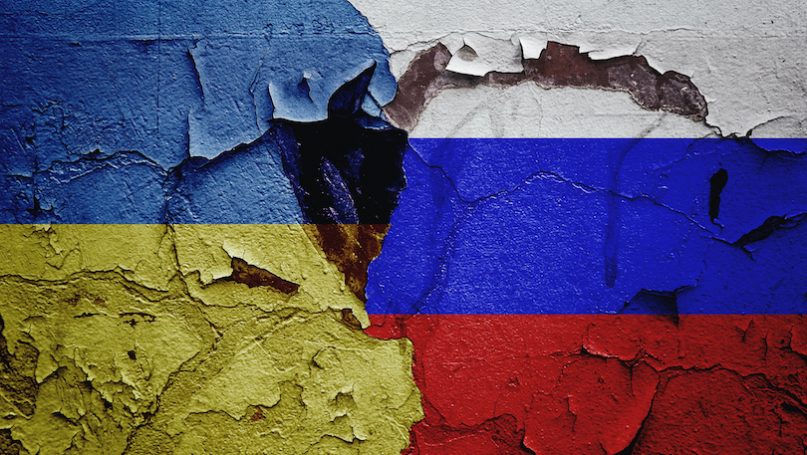
In the early hours of February 24, 2022, Russian President Vladimir Putin appeared on state television to announce what he called a “special military operation” against Ukraine. Days earlier, he had recognised the breakaway regions of Donetsk and Luhansk as independent states. What followed was Europe’s largest land invasion since World War Two, a full-scale assault that shattered decades of post-Cold War security assumptions.
Four years later, the war has become a grinding stalemate. The Russian advance, once feared to be swift, has slowed to a crawl, averaging just 70 metres a day.
By comparison, the Soviet Army needed two months less to push all the way to Berlin in 1945. Today, the front line sits close to where it was in late 2022, underscoring the limited territorial gains despite staggering losses.
Casualty figures remain contested, but the scale of human suffering is undeniable. Russia is estimated to have suffered 1.2 million casualties, including at least 325,000 soldiers killed. No major power has lost this many troops in any war since the Second World War.
Ukraine’s losses, though fewer, are equally devastating, with up to 600,000 casualties and 140,000 dead. The United Nations reports more than 15,000 civilian deaths and over 41,000 wounded, noting that last year was the deadliest for civilians as Russian long-range drones struck major cities.
The demographic toll is equally severe. Ukraine has lost one quarter of its pre-war population of 42 million. Nearly six million citizens have fled abroad, five million live under Russian occupation, and more than 19,000 children were taken from occupied territories to Russia – only 1,238 have been returned.
Russia’s losses are accelerating. Ukrainian authorities documented 26,000 Russian deaths in October 2025, 30,000 in November, and 35,000 in December – numbers that suggest Moscow lost as many soldiers as it recruited during that period.
Economic strain, shifting alliances
Beyond the battlefield, the war has drained national treasuries. Russia’s military budget more than doubled from 66 billion dollars before the war to 149 billion in 2024.
Facing mounting costs, Moscow cut its 2025 budget by 15 per cent and another seven per cent for 2026.
Ukraine spends less but relies heavily on allies. Since 2022, the European Union and the United States have contributed more than 300 billion dollars.
The dynamics of foreign aid shifted dramatically after US President Donald Trump took office. Washington pulled back much of its support, leaving Europe to fill the gap.
In 2025 alone, European countries contributed about 70 billion dollars, a sharp increase compared to previous years. Yet even this infusion of funds has not altered the battlefield realities.
At its peak in March 2022, Russia controlled 26 per cent of Ukraine. Four years later, that figure has dropped to less than 20 per cent. Despite the enormous expenditure of lives and resources, the territorial map has shifted only marginally.
For all the blood and treasure expended, the strategic picture remains largely unchanged from late 2022. Russia continues to hold significant territory in the east and south, including areas it had already controlled before the full-scale invasion, while Ukraine has managed to resist further advances. The result is a grinding stalemate: Moscow has lost ground compared to its early gains, yet the overall front line remains stubbornly static.
A war without end
The Russia-Ukraine war has become Europe’s most destructive conflict since 1945. It has rewritten the continent’s security order, strained economies, and inflicted immense suffering on civilians.
The numbers tell a grim story: millions displaced, hundreds of thousands dead, and billions of dollars spent with little to show in terms of strategic gains.
For Ukraine, survival has come at a heavy cost. For Russia, the war has become a quagmire, draining manpower and resources while isolating it internationally. For Europe, the conflict has underscored the fragility of peace and the price of defending sovereignty.
As the war enters its fifth year, the outlook remains bleak. The front lines are static, diplomacy is stalled, and both sides continue to bleed. What began as a “special military operation” has become a protracted war of attrition, with no end in sight.