
School Feeding: FG partners international organisations to restructure programme
The Nigerian Home Grown School Feeding Programme, on Thursday, got a boost with a partnership between the Federal Government and the Partnership for Child Development (PCD), Imperial College, London, to get value for money, end hunger and malnutrition among school children. Yetunde Adeniji, Senior Special Assistant to the President on the Home Grown School Feeding […]
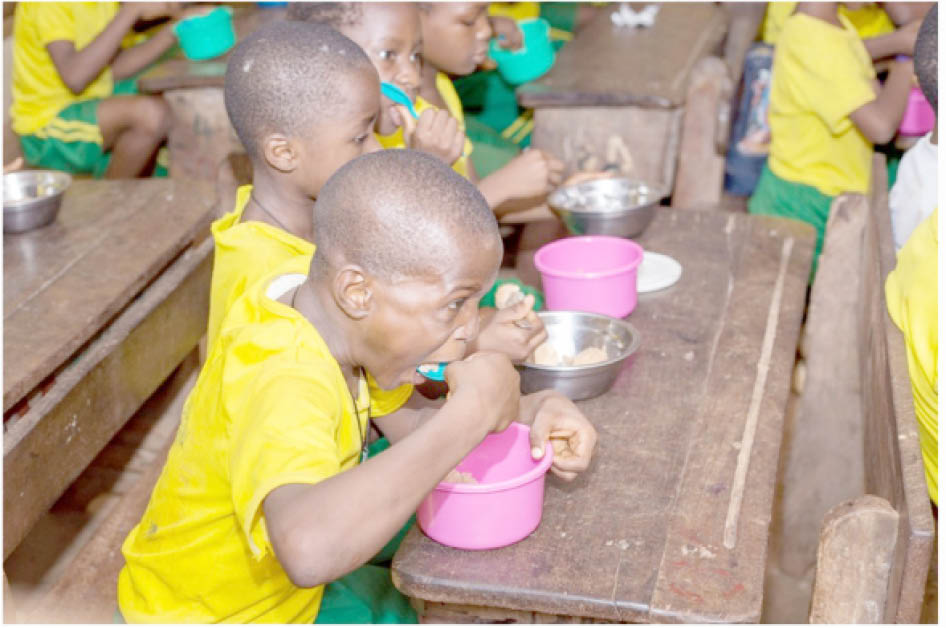
The Nigerian Home Grown School Feeding Programme, on Thursday, got a boost with a partnership between the Federal Government and the Partnership for Child Development (PCD), Imperial College, London, to get value for money, end hunger and malnutrition among school children.
Yetunde Adeniji, Senior Special Assistant to the President on the Home Grown School Feeding Programme, who disclosed this at a stakeholders’ workshop on Thursday in Abuja, said it was part of President Bola Tinubu’s Renewed Hope Action plans.
Adeniji said that the workshop was to launch the Value for Money Study, which seeks to estimate the cost of the National Home Grown School Feeding Programme, in order to reflect on its multi-sectoral benefits and its impact on socio economic, as well as human capital development of the country.
She noted that the objective of the study was also to determine the effectiveness of the school feeding programme in improving students’ attendance and academic performance, in other words, she said it was comparative analysis of the benefits of investing in school feeding, versus other education interventions.
“This study, fully sponsored by the Imperial College, is a research that improves the level of school feeding within the states. It will help evaluate the programme to know issues, indices, and whatever challenges the programme has or had in the past.
“This programme or research will also help us when it comes to our international partners. Once Nigeria is certified, we know that we will be able to get more value, especially when we are talking to our foreign partners, foreign development agencies and NGOs.
She said the study, which will first be launched in Kaduna and Osun states, will subsequently extend to six states, one from each geopolitical zone of the country, and fully cover the whole 36 states by the end of the year.
According to her, data for the study will be through primary and secondary sources, and youths in the states will be recruited to collect the primary data from relevant stakeholders including schools, state ministries, departments and agencies relevant to school feeding, cooks, farmers, and community members.
According to her, the stakeholders’ meeting marks the take-off of the programme, which will then be taken to the states, then to the local government areas.
She also said teachers, principals, traditional rulers, and community members, would be carried along in the implementation process that would be fully monitored by state governments.