
Scientists helping farmers beat potato, root pests in Africa
Experts in nematology research in Africa, under NemAfrica, a joint nematology laboratory between the International Institute of Tropical Agriculture (IITA) and the International Centre of Insect Physiology and Ecology (icipe), are working to tackle nematode pests – microscopic worms that attack a wide range of key crops, including potatoes. Dr. Danny Coyne, Nematologist and co-lead […]
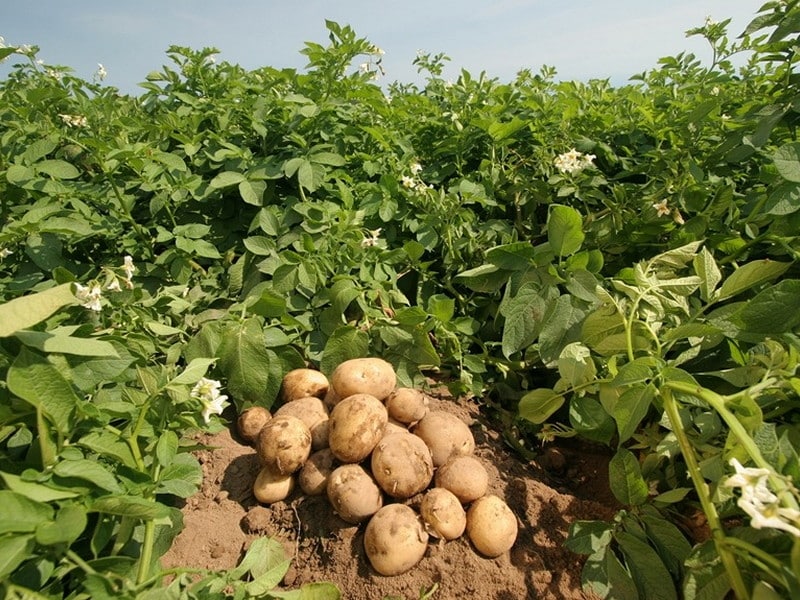
Experts in nematology research in Africa, under NemAfrica, a joint nematology laboratory between the International Institute of Tropical Agriculture (IITA) and the International Centre of Insect Physiology and Ecology (icipe), are working to tackle nematode pests – microscopic worms that attack a wide range of key crops, including potatoes.
Dr. Danny Coyne, Nematologist and co-lead of NemAfrica at the International Institute of Tropical Agriculture (IITA), shares reflections on the work of NemAfrica, which he co-leads alongside Solveig Haukeland at the International Centre of Insect Physiology and Ecology (icipe)in Kenya.
According to him, awareness is the main obstacle keeping smallholder farmers from implementing sustainable management techniques or nematode-resistant crops.
“An initial major barrier is that farmers are mostly unaware of nematodes and so do not understand the reason for a nematode resistant variety. A big barrier to adoption of new pest and disease resistant varieties, however, is their possible unsuitability to consumers, who may not like the taste, texture or colour even. Adoption and acceptance of new varieties relies on the combination of several preferred traits, including agronomic traits. Introduction of new crops can take time for farmers (and consumers) to become familiarized with them, and that they have a value, ultimately a financial one. New management options require demonstration of their benefits to crop production and returns to farmers, and that they are readily applicable or easy to use,” he said.
Speaking about the difficulties in addressing the nematode problem in Africa, the scientist stated that these difficulties stem from the pest’s covert nature, lack of awareness, and the fact that many farmers lack the necessary pest knowledge.
“A major challenge remains their hidden nature and lack of visibility and knowledge by farmers in the first instance. Thereafter, limited nematology expertise further drags progress in creating awareness of nematodes. So, it is a slow march effectively, to create more nematology expertise – towards improving nematology knowledge at large. It takes time. This includes the integration of nematology in undergraduate studies – as a standalone topic in agriculture and biology programs. Normally, nematology is tagged onto the back of pathology or entomology,
Regarding the possibility of completely eliminating the pest, the scientist stated that they are very “difficult to eradicate, and essentially impossible.”
He said: “It is therefore a case of managing the problem to reduce the losses and reduce population densities. But by employing a combination of tactics or technologies, we can hopefully provide the guidance and tools to do this. A cross-cutting nematode problem, however, is the root knot nematode problem. They can be devastating to many crops and are also very difficult to control. There are a few key species that have very wide host ranges, reducing the impact of crop rotation. There is some resistance in some varieties of crops, though, but this generally does not work against all root knot nematode species.
“Effectively, it requires a basket of options to overcome root knot (and nematode pests in general), but we need more resistant varieties to help with this. They are very damaging, but if we can make progress in reducing the impact of PCN in East Africa over the next 10 years, then this would be a key goal. But it would no doubt take more than 10 years.”