
Shettima calls for unified action against malnutrition
Vice President Kashim Shettima says malnutrition is depriving about 40 percent of Nigerian children below the age of five of their full physical and cognitive potential. He spoke on Tuesday in Abuja at the National Summit on Nutrition and Food Security. Represented by Senator Ibrahim Hadejia, Deputy Chief of Staff to the President (Office of […]
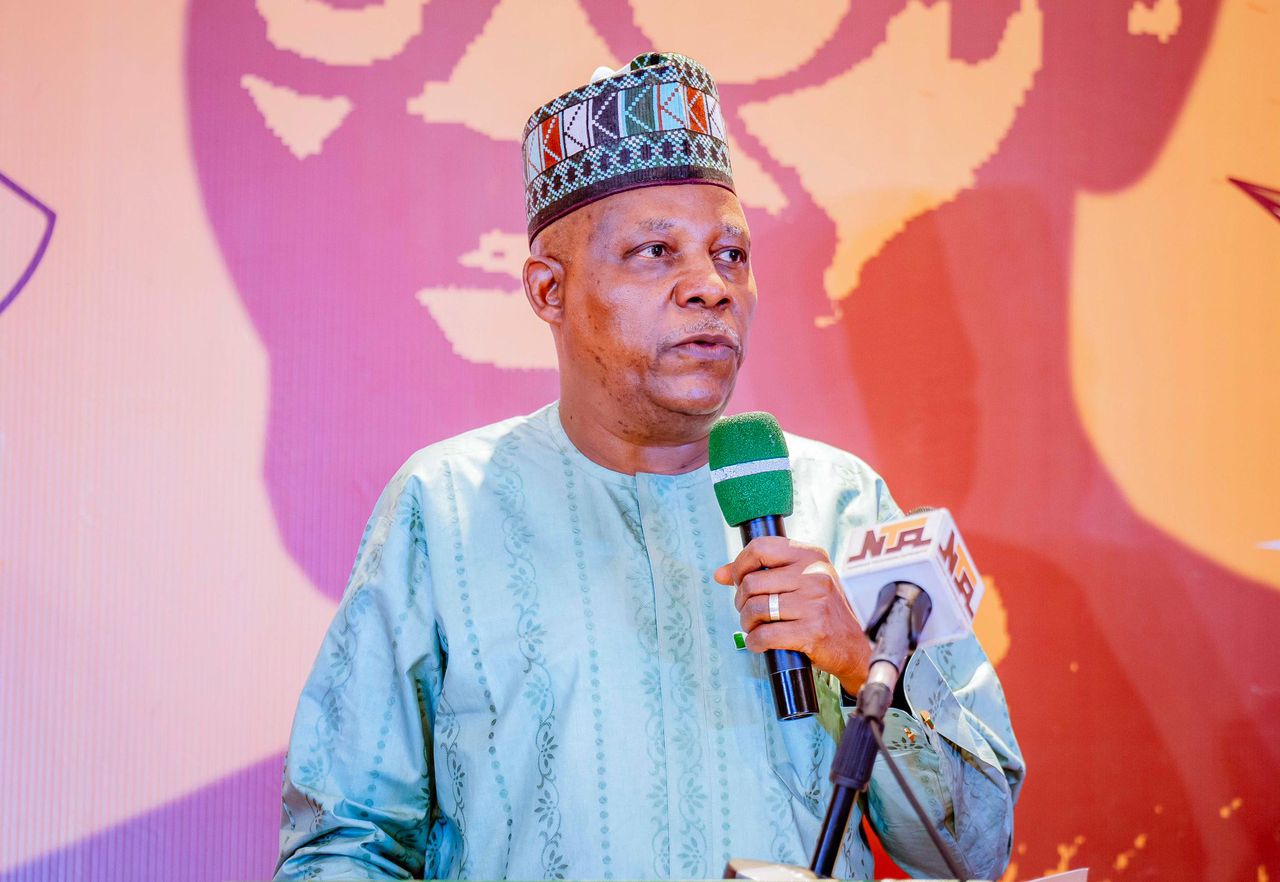
Vice President Kashim Shettima says malnutrition is depriving about 40 percent of Nigerian children below the age of five of their full physical and cognitive potential.
He spoke on Tuesday in Abuja at the National Summit on Nutrition and Food Security.
Represented by Senator Ibrahim Hadejia, Deputy Chief of Staff to the President (Office of the Vice President), Shettima said the federal government has launched the Nutrition 774 Initiative, a grassroots-focused programme aimed at addressing malnutrition in the country’s most neglected communities.
He said President Bola Tinubu’s administration has repositioned nutrition as a core pillar of Nigeria’s national development agenda.
While noting that the Nutrition 774 Initiative has been approved by the National Council on Nutrition, which he chairs, he commended both the National Assembly and State Houses of Assembly for establishing a National Legislative Network on Nutrition and Food Security.
“The Initiative is designed to have a direct impact in the most forgotten corners of our nation,” Shettima said, adding that urgent, coordinated action is needed to address Nigeria’s alarming nutrition crisis.
He said, “We have witnessed the establishment of the National Legislative Network on Nutrition and Food Security and the replication of this committee across all 36 State Houses of Assembly. This is, without question, an unprecedented stride in our legislative engagement. Yet we must admit that the occasion that brings us here today is not a celebration.
“It is a reminder of the burden that we bear, a malnutrition crisis that continues to rob nearly 40% of Nigerian children under five of their physical and cognitive potential. It is a reminder that food insecurity is not only about hunger. It is also about whether our people can afford, access, and accept the food that meets their nutritional needs.
“It is about the economy. It is about education. It is about the very building blocks of human capital that this nation so urgently needs.”
“But in the face of this adversity, we have chosen not to lament, but to lead. Under the Renewed Hope Agenda of His Excellency, President Bola Tinubu, nutrition has been repositioned as a central pillar of our national development strategy. At the heart of this strategy lies the Nutrition 774 Initiative, our flagship grassroots framework designed not for elegance on paper, but for impact in the most forgotten corners of our nation.
“Nutrition 774 is a living strategy. One that drives political commitment, secures sustainable financing, demands accountability, and galvanises collaboration across federal, state, and local governments. Its genius lies in its simplicity to empower every local government area in this country to act based on its unique needs, its cultural dynamics, and its resource realities. The National Economic Council and the National Council on Nutrition have both endorsed this framework.
“And to anchor it further, we have inaugurated the Nutrition 774 Strategic Board, a high-level governance body tasked with overseeing and steering the implementation of this initiative. It is a board of doers. It includes legislators, civil society actors, and government technocrats.
“This is how we institutionalise accountability. This is how we end the season of rhetoric and usher in a season of results. In this quest, we are not alone.
“We are grateful to the World Bank for the Accelerating Nutrition Results in Nigeria program, strengthening community-based nutrition systems in several states. We appreciate UNICEF and Médecins Sans Frontières for the community-based management of acute malnutrition CMAM program, reaching the most vulnerable with lifesaving interventions. We recognise the ICAM project by GAIN, which marries nutrition with climate-smart agriculture, and the Multiple Micronutrient Supplementation Program, MMS, by Nutrition International, combating maternal anaemia and improving pregnancy outcomes.
“To all our other developmental partners, civil society actors, and private sector allies, we thank you. But let me say this clearly: the era of fragmented interventions is over. We can no longer afford parallel systems that dilute our collective strength.
“It is time to align. Align with Nutrition 774, align with the national strategy, and align with the urgency of our national purpose. Nigeria needs one plan, one voice, one framework, and unified accountability. Anything less is a betrayal of the children who depend on us. To our distinguished legislators, this is your call to leadership.
“Budgetary allocations for nutrition must be consistent, adequate, and safeguarded. Oversight functions must transcend audits. They must measure impact. Policies must not die in chambers. They must live in communities. And legislation must guarantee that nutrition financing is not a matter of charity, but that of justice. Let this summit not be remembered for its attendance, but for its resolve.”