
Shettima: Tinubu taking difficult decisions to fix Nigeria’s economy
The Vice President, Kashim Shettima, has said the “Difficult but very crucial decisions” taken by the present administration are targeted at engineering an economy that works for the people. He said, like “Engineers who must rely on the power of numbers with consummate exactitude, efficiency and alignment,” the administration is taking accurate measurement of revenues, […]
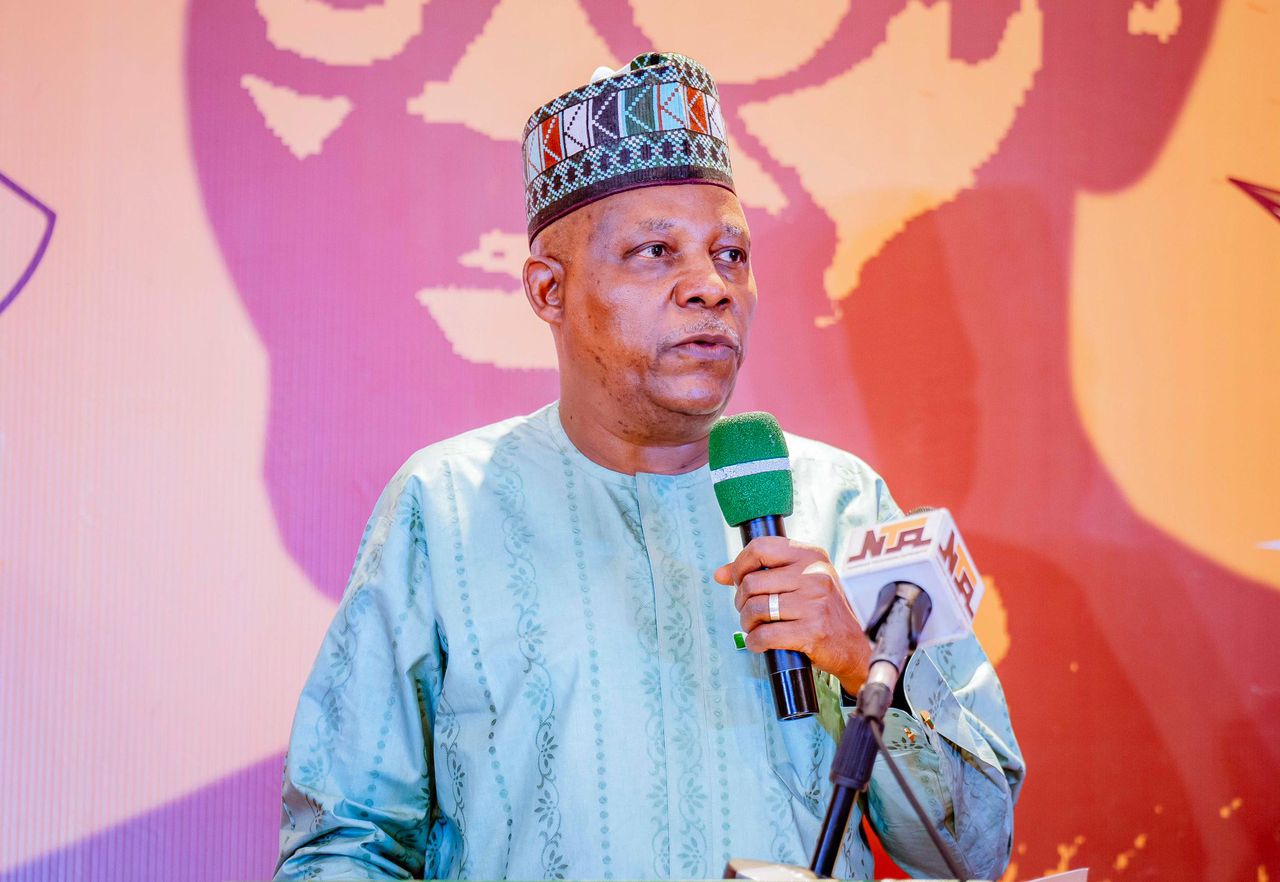
The Vice President, Kashim Shettima, has said the “Difficult but very crucial decisions” taken by the present administration are targeted at engineering an economy that works for the people.
He said, like “Engineers who must rely on the power of numbers with consummate exactitude, efficiency and alignment,” the administration is taking accurate measurement of revenues, deficits and prospects to move the nation forward.
The vice president who spoke on Wednesday during the 15th Mechanical Engineering Distinguished Lecture (MEDL) at the Shehu Yar’Adua Centre, Abuja, likened the art of governance to the dexterity of engineers who work with machines and structures to transform theories into measurable outcomes.
He said, “President Bola Ahmed Tinubu, is himself a man of numbers. An accountant extraordinaire, a thinker grounded in the discipline of evidence, and a leader governed by the clarity of facts.
- Don’t hold more than 60,000 Riyals for Hajj, NAHCON cautions pilgrims
- Web3 ai, Aptos, Sui: 3 Crypto Projects That Raised Millions Overnight & Are Still Climbing
“He understands the peril of building policies on the sands of assumption. He knows, as you do, that the nation cannot move forward without accurate measurement of its revenues, its deficits and its prospects,” the VP said.
Reflecting on the theme of the Lecture, “The Imperative of Engineering Strategies for the Planning of National Budget,” Shettima said it aligns with the thinking being institutionalised by the Tinubu administration, which he said is not just budgeting for survival but also for transformation and reality.
“We are budgeting for transformation. We are building systems that speak to productivity, to sustainability, and to prosperity,” he added.
For President Tinubu, the vice president said, it is the “Fidelity to facts that has guided his difficult but necessary decisions to fix the Nigerian economy”.
He continued: “From confronting the longstanding subsidy regime that had become an enduring shackle around the nation’s ambitions, to facing the grim realities of a debt-to-revenue ratio that threatened the very foundation of our fiscal stability.
“These are not decisions of convenience. They are decisions of courage. They are born of a commitment to engineer a nation that works for its people,” he said.
Delivering the 15th Mechanical Engineering Distinguished Lecture, Senator Iyiola Omisore, spoke about current efforts and opportunities across diverse areas of the Nigerian economy, particularly, energy and power generation; oil and gas; automotive, aerospace and aviation; construction and infrastructure development, as well as healthcare and security.
He noted the tremendous potential for socio-economic development in the country and the need for the government, in collaboration with other stakeholders like the Institution of Mechanical Engineers, to address challenges and seize existing opportunities to achieve sustainable development and inclusive growth.
On his part, chairman of the occasion, Chief Bisi Akande, emphasised the impact of engineering on national development, urging leaders to sustain current efforts to maintain integrity and professionalism in the industry.
Akande noted trends in the profession, just as he highlighted the impact of digital technology on engineering practice and urged practitioners to embrace the paradigm shift in order to remain relevant in the industry.
On her part, the President of the Nigerian Society of Engineers (NSE), Engr. Margaret Oguntala, who was represented by a former president of NSE, Engr. Kashim Abdul Ali, said the theme of the 15th Mechanical Engineering Distinguished Lecture, aligned with the reality in the polity.
He noted that an era of complex challenges amidst declining resources requires a meticulous re-examination of national priorities and optimal utilisation of scarce resources, deploying engineering expertise.