
Should you pop that blister?
Imagine fluid collecting in pockets under the top layer of your skin. Blisters pop—filled with pus, blood, or serum. They can itch or hurt, (depending on the cause), come in single bubbles or in clusters. But should you pop them? Friction. Friction blisters are the most common and are, well, caused by friction. Imagine wearing […]
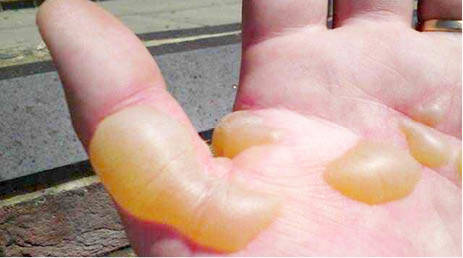

Imagine fluid collecting in pockets under the top layer of your skin. Blisters pop—filled with pus, blood, or serum. They can itch or hurt, (depending on the cause), come in single bubbles or in clusters. But should you pop them?
Friction. Friction blisters are the most common and are, well, caused by friction. Imagine wearing a new pair of shoes or handling a shovel without gloves. The blisters form on your heel, toe, thumb or palm.
Cold, heat. Handling frozen goods or touching your stove burner can both cause blisters. Extreme temperatures can hurt your skin. Blisters are a sign of a type of second-degree burn called partial thickness.
Contact skin inflammation. Contact dermatitis has one sign—a blister that occurs when you touch something you are allergic too. And not just poison ivy. Some people react to soap, perfume, detergent, latex gloves, even jewelry.
Insect bites. Fleas and bedbug bites can cause little blisters. So too can scabies, the tiny mites that drill into your skin, sometimes leaving curved lines of blisters.
Some viral disease—like herpes virus, common in chickenpox—cause blisters.
You may also get fever blisters on your lips, mouth or gentials—a sign of herpes simplex virus. The fluid in these sores carries and spreads the virus through sex, or by kissing or sharing utensils. Many people don’t know they have herpes because symptoms are usually mild. If you have fever blisters or you think you’ve been exposed to herpes, talk to your doctor. There’s no cure, but certain drugs can prevent or shorten outbreaks.
Hand-foot-and-mouth disease also causes blisters on the named body parts.
Clean and dry. Some blisters go on their own. Your skin absorbs the fluid, and the blister flattens and peels off. Until that happens, you can use a doughnut-shaped piece tape to help keep it from breaking open.
To pop or not. Resist the urge to pop a blister unless it’s so large (bigger than a coin) or painful that you can’t get around. If that’s the case, your doctor might decide to puncture it with a sterile needle to let the fluid drain out. Once it’s popped, whether your doctor does it or it breaks on its own, gently wash the area with soap and water and apply antibiotic ointment. Cover it with a bandage to keep it clean during the day, but take the bandage off at night to let it dry
Go to the doctor if you have a fever, chills, or other flu-like symptoms at the same time you have blisters. You could have a virus or an infection. Other symptoms of infection can include: pain, swelling, redness or warmth, red streaks leading away from your blister, or pus coming from it. Blisters around your eyes or on your genitals are also cause for concern.