
Silencing the press: Governor Bago’s reckless abuse of power must end
The Governor of Niger State, Mohammed Umaru Bago has come under heavy criticism for directing the State Commissioner of Police and the Commissioner for Homeland Security in the state, to shut down Badeggi FM; a private radio station in Minna, the state capital. The governor had alleged that the station was publicly inciting the public […]
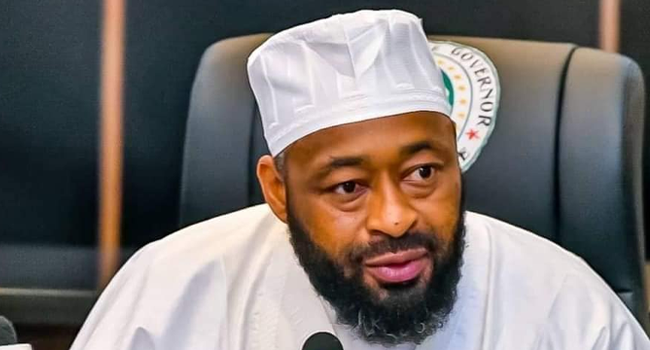
Bago
The Governor of Niger State, Mohammed Umaru Bago has come under heavy criticism for directing the State Commissioner of Police and the Commissioner for Homeland Security in the state, to shut down Badeggi FM; a private radio station in Minna, the state capital. The governor had alleged that the station was publicly inciting the public against his administration and therefore directed that its licence be revoked and the owner of the station be profiled.
Governor Bago’s directive had come through a press statement by his Chief Press Secretary, Bologi Ibrahim which stated that the governor had given the directive during the expanded Niger State APC caucus meeting held at the Government House, Minna.
Since then, the Niger State Urban Development Board has marked the building of the radio station and directed the management to visit the board’s office.
But what Governor Bago was not prepared for was the barrage of condemnation that came after his thoughtless directive. Civil Society Organisations, Amnesty International, the Nigerian Guild of Editors (NGE), International Press Institute (IPI) and members of the public have since condemned the governor and described his directive as an executive over-reach aimed at suppressing freedom of expression.
- El-Rufai, APC clash over Tinubu’s re-election bid
- The silencing of Badeggi FM: A symptom of Nigeria’s democratic erosion
Even the Minister of Information and National Orientation, Mohammed Idris who is from Niger State and was at the meeting when the governor gave the directive, has reminded the governor that he has no powers to revoke the license of a broadcast station, as such powers lie with the National Broadcasting Commission (NBC), which is by law mandated to investigate and sanction broadcast stations. Idris had instead urged the governor to follow the legal process by lodging a formal complaint with the NBC, the lawful regulatory body.
Going by media reports, this attempt by the Niger State Government to clamp down on free press is not an isolated case. There are reports of threats and intimidation of journalists for reporting on the security situation in the state to the extent that journalists who report on attacks by bandits and insurgents are accused of working for the terrorists. This form of cheap blackmail, aimed at inciting fear among journalists not only stereotypes them but also exposes them to danger.
From the statement released by the Niger State Government, it was clear that between the time the governor made the pronouncement at the APC caucus meeting and the time it took the Chief Press Secretary to issue the statement, no member of his cabinet had bothered to advise the governor on the limits of his powers and that such directives would not fly.
This kind of assertive energy to control the security narrative in the state should have been channeled to the fight against bandits and insurgents that are ravaging parts of the state. It has therefore become pertinent to explain to Governor Mohammed Umaru Bago and other governors that the press is not an extension of government, neither is it an image maker of the government. Journalists work for the people, they report on the plight of communities, give voices to the marginalised and hold those in power to account.
Therefore, the Niger State governor should know that he has no authority to stop journalists from reporting on the insecurity in the state. Apart from Section 39 of the 1999 Constitution that guarantees freedom of expression, section 22 of the Constitution is equally clear: “The press, radio, television and other agencies of the mass media shall at all times be free to uphold the fundamental objectives contained in this Chapter and uphold the responsibility and accountability of the Government to the people.”
This simply means that the press is vested with the powers to scrutinise public office holders and hold them to account. No governor, senator, minister or even the President of the Federal Republic of Nigeria is above such scrutiny. Scrutiny is vital in governance as it enhances democratic accountability and improves decision making. That being the case, anyone who does not want to be scrutinised or held accountable has no business with public office.
We at the Daily Trust stand with Badeggi Radio Station and caution all public office holders against abuse of powers or any attempt to create a hostile environment for journalists in the country. We support the statement of the Director of Operations at Badeggi FM, Abubakar Shuaibu that the governor should channel his complaint through proper channels rather than directing security operatives to harass the staff and owner of the radio station.
We also commend the swift condemnations and intervention of the Minister of Information and Orientation as well as Civil Society Organisations, Amnesty International, the NGE, IPI and the Nigerian public for speaking in defence of freedom of expression and our democratic principles.
We advise Governor Bago to call off any directive to demolish Badeggi FM Radio and withdraw any threat against journalists in Niger State. We expect that professional journalists and lawyers who form part of the governor’s cabinet should be able to advise him to exercise restraint. Any attack on press freedom is an attack on democracy. This is not a battle Governor Bago wants to start and surely, it is not one he can win.