
Smallholder farmers gain climate-smart agriculture skills in Bauchi
The Foundation for Sustainable Smallholder Solutions (FSSS), in partnership with the Heineken Africa Foundation, has launched a three-year agricultural programme to equip 14,000 smallholder farmers in Bauchi North Senatorial District with regenerative and climate-smart farming skills. The initiative, titled Empowerment of Smallholders to Thrive and Build Climate Resilience through Regenerative Agriculture (ESTRRA), will target at […]
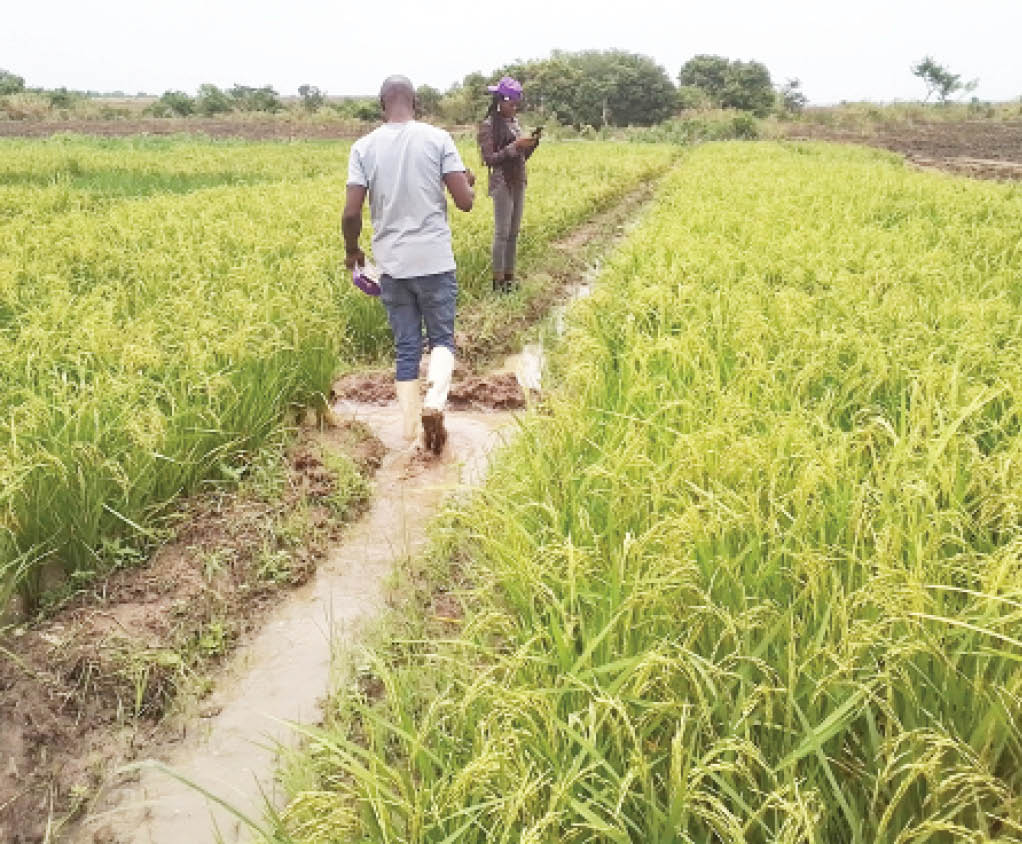
FILE PHOTO: Benue farmers walk around thier field
The Foundation for Sustainable Smallholder Solutions (FSSS), in partnership with the Heineken Africa Foundation, has launched a three-year agricultural programme to equip 14,000 smallholder farmers in Bauchi North Senatorial District with regenerative and climate-smart farming skills.
The initiative, titled Empowerment of Smallholders to Thrive and Build Climate Resilience through Regenerative Agriculture (ESTRRA), will target at least 60 percent women and 30 percent youth. It is also expected to reach more than 50,000 indirect beneficiaries, including households and community members who stand to benefit from improved food systems and economic opportunities.
Speaking at the launch of the programme in Bauchi, the Executive Director of FSSS, Dr. Isaiah Gabriel, said the aim is to enhance the capacity of smallholder farmers and strengthen their role in Nigeria’s food production landscape.
“We are here to make smallholder farmers big players,” he said. “At the centre of this initiative is our Farmers’ Hub Model—a one-stop commercial platform where farming becomes easier, smarter, and less stressful. Farmers will access improved seeds, climate-smart information, extension services, mechanisation, and market linkages under one roof.”
Gabriel said the programme seeks to increase farmers’ incomes by at least 30 percent, noting that long-term sustainability is a key priority. The intervention will cut across seven local government areas—Katagum, Shira, Jama’are, Giade, Itas-Gadau, Zaki, and Gamawa.
He emphasised that women and youth are central to the project. “They are at the heart of this intervention because the future of agriculture depends on their strength, creativity, and leadership,” he said.
According to him, beneficiaries will receive hands-on training through farmers’ field schools and demonstration plots covering regenerative and climate-smart agriculture, soil and water conservation, pest and disease management, crop diversification, post-harvest handling, agribusiness management, and financial literacy.
Also speaking, the Head of Public, External and Government Affairs at the Heineken Africa Foundation, Chukwuemeka Aniukwu, said the investment in Bauchi was deliberate, given the resilience and importance of local smallholder farmers to Nigeria’s food security.
“The strength of your farming communities, combined with the natural potential of this land, gives us confidence that meaningful and lasting impact can take root here,” he said. “This project will strengthen livelihoods by enhancing capacity, improving access to quality inputs, building stronger market linkages, and opening opportunities along the agricultural value chain.”
Aniukwu said the programme aims to directly support 14,000 farmers and indirectly reach more than 70,000 others. He added that the intervention is designed to deliver measurable economic, environmental, and social benefits.
Representing the Governor of Bauchi State, the Commissioner for Agriculture, Iliyasu Aliyu Gital, commended the foundations for supporting farmers with the skills and knowledge needed to boost production and resilience.
He assured that the state government would continue to provide enabling support for agricultural development, including inputs such as subsidised fertiliser and rural infrastructure.
Gital noted that the state is also constructing rural and semi-urban roads to enhance agricultural activities and improve the welfare of farmers and residents.