
Sri Lanka’s Easter Day terror
The world was horrified by the terror attacks on churches and five-star hotels across Sri Lanka on Easter Sunday, leaving over 200 persons dead and over 500 others wounded. Occurring 10 years after peace was restored from three decades of ethnic and sectarian war in Sri Lanka, the attack was a serious setback for a […]
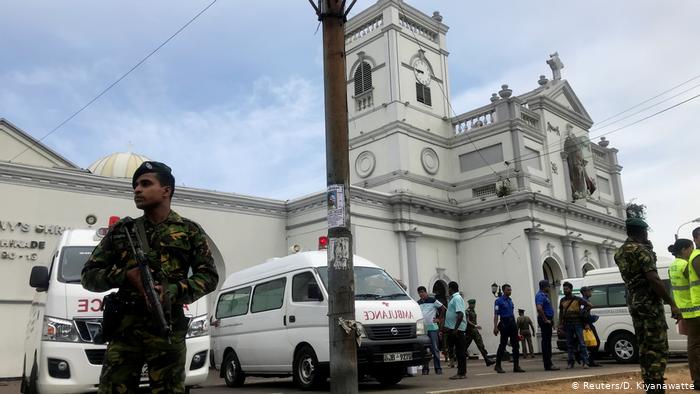
A photo of Sri Lanka church attack on Easter Sunday.
The world was horrified by the terror attacks on churches and five-star hotels across Sri Lanka on Easter Sunday, leaving over 200 persons dead and over 500 others wounded. Occurring 10 years after peace was restored from three decades of ethnic and sectarian war in Sri Lanka, the attack was a serious setback for a country that had thought that the worst had been buried in its brutal history. The killings on Easter Sunday were dubbed as the worst violence to hit the country since its civil war ended a decade ago.
Though Sri Lanka has been enmeshed in religious conflicts, as Sinhala Buddhist nationalism overrides other religions, including Islam, Christianity and Hinduism, terror attacks by Jihadists on Christians and churches in the South-East Asian country are a new phenomenon. Previously, there used to be Sinhala Buddhist nationalist attacks on Muslims, Christians and Hindus, worsening the living conditions of non-Buddhists in a country that prides itself as a state destined “to protect and foster” Buddhism.
The responses of the government, led by Prime Minister Ranil Wickeremesinghe, to the attacks are commendable. The government declared an emergency immediately after the attacks, while surviving victims were given quick medical attention. Security agencies swung into action and in less than 24 hours after the attacks, several suspects were captured. In a space of one week, so much has been achieved as many members of the extremist Muslim group, National Tawheed Jamath (NTJ), affiliated to the Islamic State in Iraq and Syria (ISIS), were arrested. The terror group’s headquarters was destroyed.
Perhaps one of the shocks that emanated from the Sri Lanka bombings emanates from the fact that some of the bombers came for the elite class of Sri Lankan society. Sri Lanka’s junior defence minister, Ruwan Wijewardene, said the attackers appeared to be mostly middle-class. “They’re quite well-educated people. We believe one of them studied in the UK and then later on did his post-graduation in Australia before coming back to settle in Sri Lanka.” Reports said some had links to the richest families in Colombo.
Also worth commending was government’s sack of defence secretary Hemasiri Fernando and Inspector General of Police Pujith Jayasundara because they failed to act promptly on an intelligence report about an impending terror attack on churches in Sri Lanka. It is unfortunate that the inaction of these individuals has led to the avoidable killings.
We strongly condemn the NTJ sect members who have shed innocent blood in the name of retaliating for the killing of Muslims in a mosque in New Zealand last month. ISIS had claimed that “The perpetrators of the attack that targeted nationals of the countries of the coalitions and Christians in Sri Lanka before yesterday are fighters from the Islamic State.” Islam does not support the kind of revenge that ISIS claimed that Sri Lankan bombers have carried out. Neither does the religion of peace approve of the killing of innocent souls who went to church or stay in hotels. What the suicide bombers did were criminal acts. We encourage the government of Sri Lanka to fish out all collaborators and ensure they are punished according to Sri Lankan laws.
From the mayhem in the South Asian country many countries, including Nigeria, should learn some lessons. First, security agencies should not ignore intelligence reports. Every information about terror attacks should be thoroughly investigated in order to intercept plotters and prevent the kind of killings that took place in Sri Lanka. Secondly, it is clear that anyone could be involved in terrorism. The previous impression that only dirty, illiterate and unemployed persons could be recruited into terror groups has been defeated by the calibre of persons linked with Sri Lankan bombings. Also, security agencies should beware that no part of the country is insulated from terror attacks. There could be terror cells in big cities, as the world saw in Colombo and other cities.