
Stakeholders seek tougher action on fake fertiliser producers, distributors
Stakeholders want the federal government to take concrete steps to safeguard Nigeria’s agricultural future by enforcing tougher penalties against the manufacturing, distribution, and sale of substandard and adulterated fertilisers. Fake producers and distributors are offering less expensive solutions to defraud poor farmers, especially in rural and peri-urban areas, as the demand for fertiliser rises during […]
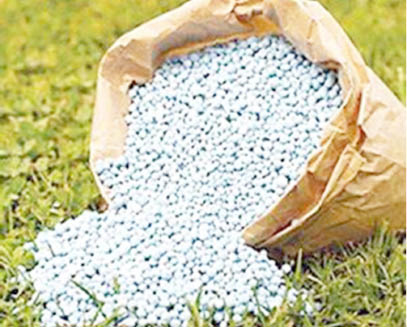
Fertiliser Application
Stakeholders want the federal government to take concrete steps to safeguard Nigeria’s agricultural future by enforcing tougher penalties against the manufacturing, distribution, and sale of substandard and adulterated fertilisers.
Fake producers and distributors are offering less expensive solutions to defraud poor farmers, especially in rural and peri-urban areas, as the demand for fertiliser rises during this wet season.
The National Fertiliser Quality Control Act, 2019 outlines clear guidelines, enforces labelling and branding standards, and provides strict punishments for violators, aiming to protect both farmers and the ecosystem.
Experts say poor-quality fertilisers have significantly affected crop yield, depleted soil nutrients, and caused financial losses for smallholder farmers.
“Adulterated fertilisers pose not only an economic threat but also an environmental one.
“We have documented cases where plants failed to thrive due to toxic inputs labeled as certified fertilisers,” Dr Oloyin Ibrahim, a soil scientist and policy analyst, said, adding that, “Farmers are unknowingly applying fertilisers that are nutrient-deficient or contaminated. This law is not just timely; it’s necessary.”
The act, enacted on October 15, 2019, replaces the repealed Fertiliser Control Act Cap, F25, and provides an enhanced framework for fertiliser quality regulation in Nigeria.
Under the act, individuals or businesses found guilty of manufacturing, distributing or selling adulterated or underweight fertilizers are now liable to five years imprisonment without the option of a fine. For distributors operating without a valid permit, the law imposes daily fines of up to ₦500,000, while manufacturers face penalties ranging from 5,000,000 (five million naira) to 10,000,000 (ten million naira).
The act prohibits a range of activities, including the sale of unbranded or misbranded fertilisers, conversion or diversion of fertilisers meant for public programmes, and obstruction of government inspectors. It also empowers officers of the Ministry of Agriculture and food security to inspect warehouses, seize suspected products, and prosecute.
An in-depth look at the act reveals clear benchmarks. For example, a fertiliser product labeled with 20% potassium must not fall below a 1.08% deviation. Any product below this is considered nutrient-deficient and illegal for sale under Section 18 of the act. Violators may face both criminal charges and civil compensation to affected farmers, as provided in section 24 of the act.
The Fertiliser Producers and Suppliers Association has called for stiffer enforcement because the adulterated market was ripping off members who spent billions to invest in the sector.
From a chat with a regional distributor in Niger State, who requested anonymity, it was discovered that the challenges of regulation enforcement were evident.
“There are still gaps in monitoring, especially in remote areas. But with this act in place, it’s only a matter of time before the black market is wiped out. I can still remember when I was sold a fake NPK fertiliser when I started this business, after offloading the fertilisers of over 200 bags I noticed that some was mixed with sand and ash. It looked real, but after running some samples, I discovered that I had been duped,” he said.
Authorities are now empowered to act decisively. Section 13 authorises government inspectors to enter and search facilities, vehicles, or warehouses where fertilisers are produced and sold. They can seize any product suspected of being substandard and send samples for laboratory analysis as specified in the act.
Although there have been a number of arrests in some states since 2022, stakeholders want the federal government to step up monitoring efforts because perpetrators are coming up with tactics to avoid detection and arrest.
For Nigerian farmers, many of whom are smallholders living at the mercy of weather and markets, the enforcement of this act offers a long-overdue shield.
It not only sets a legal standard but also signals a shift towards agricultural integrity. And for those who trade in deceit, it’s no longer business as usual. The days of bagging sand as fertiliser are over.