
Starting your fish farm
As fish becomes more popular on our tables, so also is its farming gaining more ground in our society. A fish based business could easily generate good returns on investment. You could easily make a steady income from your home, using aquaculture fish farming techniques. However, Muhammed Shuaib, a fish farmer and consultant said before […]

As fish becomes more popular on our tables, so also is its farming gaining more ground in our society. A fish based business could easily generate good returns on investment. You could easily make a steady income from your home, using aquaculture fish farming techniques.
However, Muhammed Shuaib, a fish farmer and consultant said before you go into fish farming, you need to know the components that are involved for proper planning.
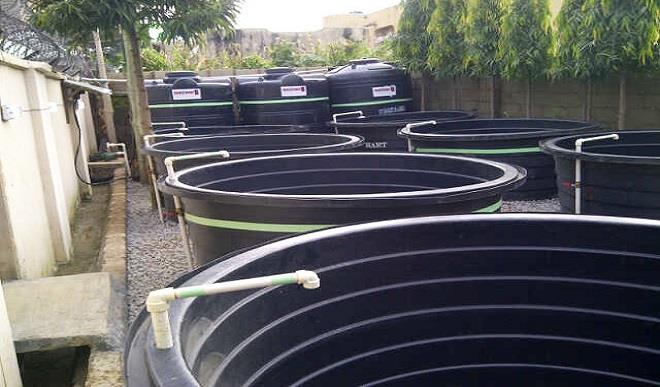
“Determine whether you want to go into big or small-scale commercial venture. Secondly, the pond system to adopt; whether it is a flow-through system or recirculatory system using either earthen pond, concrete, or plastic tanks respectively.” Shuaib explained.
Getting knowledge
You must also know the different types of fish farming.
There are two types of fish farming, Shuaib said – the “nursery operations and primary operations. Nursery operations involve the inducement of the female fish to lay eggs which are then fertilised, incubated and hatched thereafter. The newly hatched fish are known as fries. These fries are then nurtured for between three to four weeks into fingerlings which are the size suitable for use in the fish grow-out operations.”
In between the nursery and grow-out operations is the primary operation. The primary operation involves the nurturing of the three weeks old fingerlings for between one to 10 weeks within which they could grow into post fingerlings, mini juveniles and post juveniles. These can then grow between four to five months to a table size fish suitable for sale and ready for consumption.
Land
“This is very important. If land is available then you are good to go. You can go ahead to apportion it,” Shuaib explained further.
But if you want to start small, you can setup a fish pond right in your backyard. It is also possible to raise fish in a fish tank in your garage. You can easily get all the supplies you need to set up your small fish farm and start fish farming.
Water
“For fishes, water is life,” according to Mr Felix Mbuk, another fish farmer.
“Water supply must come from a good source e.g borehole, tap or any spring of water that is flowing around your pond. This will help guarantee steady water supply for filling the pond and draining waste respectively. On my farm, I have a reservoir where I store water, so I don’t lack water,” Mbuk said.
Feeding
Again, feeding the fish is very important.
“Without this, they cannot gain weight. And when they are hungry, they can become wild. So, you must have money for their food handy at all times. Fish feed is a very vital component in operating a fish farm. You must feed the fish to attain required weight gain,” Mbuk said.
Cost of investment
“This varies depending on the type of fish farming systems you are willing and ready to invest on. With a minimum of N150,000, you can start the production of fingerlings to grow to three weeks then you can advertise for sale to other farmers at an average price N25 depending on the size,” Shuaib said.
Analyse your market
Once you know what your options are and how much money you need, the next step should be analysing the market. Who are your buyers? What type of fish is most profitable? How much can you supply? Have you contacted anyone for your special needs or should an emergency arise? Have you considered all expenses associated with your business?
You need to think it through.
On how lucrative the business is, Shuaib says yes. “The average cost of fish in the market is N600, so if you have a pond and you are able to stock 10,000 fish, I guess you know how much your return on your investment will total up to. That will be about N6 million,” he explained.