
Stiffer penalties for traffic offenders
Corps Marshal of the Federal Road Safety Corps [FRSC] Dr. Boboye Oyeyemi said recently that the FRSC Act is being reviewed by the National Assembly in order, among other things to increase fines for convicted traffic offenders. He said, “You cannot arrest somebody for using a phone while driving and he pays N4,000 penalty. And […]
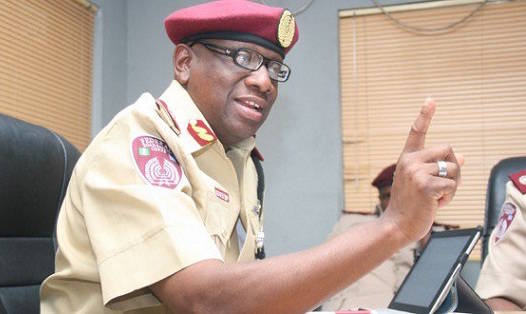
Corps Marshall of the Federal Road Safety Corps (FRSC), Dr. Boboye Oyeyemi

Corps Marshal of the Federal Road Safety Corps [FRSC] Dr. Boboye Oyeyemi said recently that the FRSC Act is being reviewed by the National Assembly in order, among other things to increase fines for convicted traffic offenders. He said, “You cannot arrest somebody for using a phone while driving and he pays N4,000 penalty. And almost immediately he goes back to commit same offence. I was not the one that initiated it. It is the National Assembly that initiated it and I am in support and I will make sure that before the middle of next year this is passed into law. I believe that by the time traffic offenders start paying between N50,000 to N100,000 for a single traffic offence, they will not want to commit such offence again.”
The Corps Marshal is right that the current rate of fines for traffic offences is so low as to be laughable. This is actually a general problem with Nigerian laws because they remain unchanged for years, even decades and given our high rate of inflation, the amounts become almost trivial. Many laws have not been updated to correspond with current realities. One of the functions of the Law Reform Commission at the federal level and in the states is to forward draft bills to the National Assembly to update laws which from all indications is not happening regularly. N4,000 for a traffic offence may have been a big amount when the law was enacted but it is paltry these days.
Although we agree with Oyeyemi that there is need to increase the fines and penalties, we must point out that not all traffic offences are of the same gravity. Among the commonest and most dangerous these days are using the phone while driving, which can cause nasty accidents. Phone using drivers also frustrate other motorists by driving too slowly and erratically.
Even more dangerous perhaps are drivers who jump to opposing lanes and they drive against the traffic. This very bad habit causes traffic jams and nasty accidents. Over-speeding is however still the commonest and most dangerous aspect of Nigerian driving and the cause of most accidents. In the cities, another troubling offence is those drivers that beat the red light at traffic lights. Taxi, bus, tricycle and okada drivers and riders are particularly notorious in this regard. Their action often portrays law-abiding motorists who wait for the green light from traffic lights as fools while they are the clever ones.
The nature of traffic offences also varies from place to place. In Abuja for example, taxi drivers completely disregard the order to pick up passengers only at designated stops. They screech to a halt wherever they see a passenger and in the process cause hold-ups and even accidents on the road. In the more rural states of the country, motorcyclists and tricycle drivers constitute the biggest menace on the roads due to their unwillingness to obey traffic rules and their determination to do everything they can to make a fast buck. Yet another nightmare of Nigerian roads is that too many vehicles are driven without headlights, rear lights, parking lights or signals. Trucks and articulated vehicles are particularly guilty of these and they cause many causing accidents on the highways.
Adequate fines and imprisonment for the most incorrigible offenders would help FRSC to check these bad road habits. FRSC should pay more attention to these offences that constitute dangers on the road, rather than expend too much time on revenue yielding ventures such as checking vehicle particulars. Then also, an upward review of the fines for traffic offences would aggravate the tendency of offenders to try to bribe officials in order to get away with their deeds. Which means the Corp Marshal must also step up measures to ensure that his men do not accede to such temptations by unscrupulous drivers.