
Still awaiting the CNG revolution
Perhaps I was too hasty in applauding the government for introducing and spearheading the use of compressed natural gas (CNG). In my piece of September 2, 2024, captioned ‘Awaiting the CNG Revolution’, I hailed the launching ceremony that simultaneously took place in both Lagos and Abuja. Twelve conversion centres were commissioned: eight to be used […]
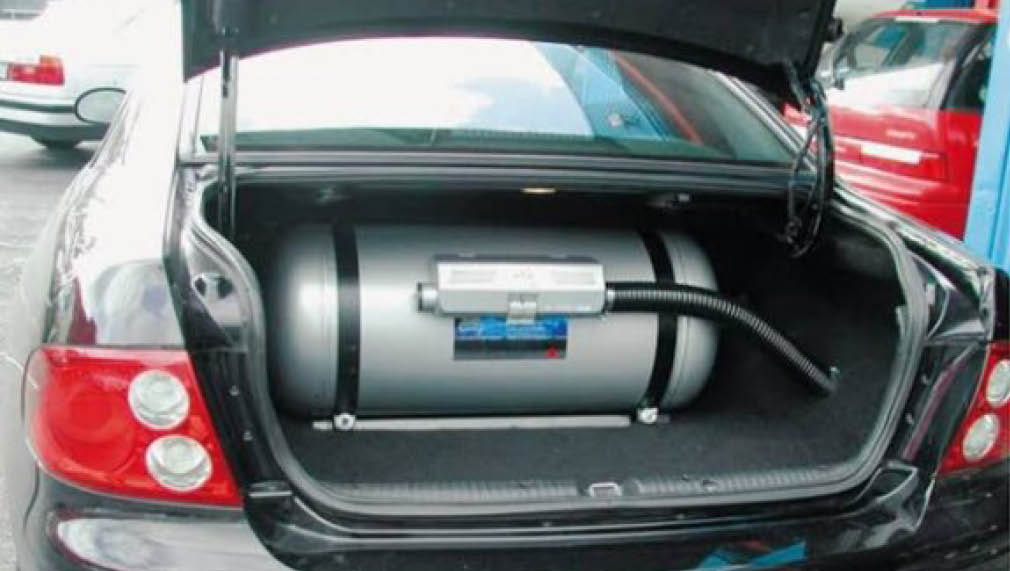
boost for autogas cng
Perhaps I was too hasty in applauding the government for introducing and spearheading the use of compressed natural gas (CNG). In my piece of September 2, 2024, captioned ‘Awaiting the CNG Revolution’, I hailed the launching ceremony that simultaneously took place in both Lagos and Abuja. Twelve conversion centres were commissioned: eight to be used in Abuja and four in Lagos. I wrote: ‘The CNG is a game-changer of sorts. Touted as such from the outset of his administration, President Ahmed Bola Tinubu views the CNG as a key pillar of the country’s energy future. It is intended to be an alternative to petrol usage, whose price has continued to rise. Perhaps even more than that, CNG is known to be odourless, tasteless, and cleaner and is abundantly available in the country. It is also a far, far more affordable alternative to all the traditional fuels.’
The cost benefit of using CNG is substantial. In that September, I did some legwork to ascertain the true benefit of using the CNG, and as I found out, the advantages were outstanding. I wrote: ‘I learnt that a vehicle fitted with a 4-cylinder engine and invariably a 65-litre tank during conversion can hold about 20 SCM of gas, enough to power it for roughly 300 kilometres. In contrast, covering the same distance with petrol of the equivalent of about 25 litres would cost N17,500, while CNG costs just N4,600—a staggering over 70 per cent savings.’
‘This is not just a theoretical calculation. On a recent visit to the NIPCO station in Kubwa, I spoke with a Keke rider using a tricycle with a follow-come tank who shared his personal experience. “Before, I spent about N6,000 every day just on fuel,” he recounted. “But now, with CNG, I only spend N1,200 —N700 in the morning and N500 in the afternoon.” The difference is life-changing.’
However, nearly two years to the date, the policy to roll out the CNG was announced, and seven months after its launch in Abuja and Lagos, the initiative appears to have stalled. My attention was drawn to the CNG matter by two incidents. The first was a media briefing by the Programme Director/CEO of the Presidential CNG Initiative (PCNGI), Michael Oluwagbemi, during which he extolled their efforts in establishing 200 new conversion centres so far, up from the initial seven. In a self-laudatory acclamation, the CEO of the Presidential CNG Initiative said that was an increase of 3000 per cent.
Secondly, there was a rash of videos accusing the government of concentrating the conversion centres in the southern parts of the country. In one of the videos, there was a mention of Lagos having 68 conversion centres, 18 in Ibadan and 11 in Delta State, while none has been established in any of the cities of the north.
No, I wouldn’t go along with such accusations because the problems facing the CNG seemed to be hydra-headed. There is indeed a concentration of the conversion centres in the southern part of the country, but that could be because that’s where the gas, the main ingredient of the CNG, is piped and readily available.
So far, in the North where the conversion centres are, in Abuja and recently in Kaduna, the gas is transported there in special trucks, incurring additional costs. For the northern part of the country to enjoy the CNG, the Ajaokuta-Kaduna-Kano (AKK) Gas Pipeline must be completed and commissioned. It is meant to transport natural gas from Ajaokuta all the way to Kano through Abuja and Kaduna.
I understand that to hasten the completion of the project, it was subdivided into three and was handed over to three contractors under a build and transfer model in public-private partnership (PPP). This all-important project began in 2020, but its completion date is obscured in mystery. It was envisaged to last 24 months, meaning it would have been delivered in 2022. Nevertheless, the former GMD of NNPC, Mele Kyari, was under pressure to deliver the project, and he kept on giving dates that became untenable. Before he left office, Kyari Mele gave the completion dates to be the end of the 1st quarter of 2025. However, the new NNPC GMD, Bashir Ojulari, on assuming duty, announced that the AKK gas pipeline is about 72 per cent completed. This might translate into a completion date of some months away or even years to come.
Nevertheless, there seems to be a silver lining on the horizon. Realising that the AKK project might not come on stream soon, the PCNGI is planning a short-term measure to transport gas to many cities in the north from Ajaokuta. This is a joint effort between the PCNGI and LNG Arete to develop a mini liquefied natural gas (LNG) plant in Ajaokuta for the transportation of gas to other parts of the country, especially the far north. The project, costing $27.3million, is expected to be completed between 12 to 18 months.
There are a host of other problems bedevilling the PCNGI. For the northern parts of the country, the availability of gas is central. But it doesn’t look like it will be available shortly. I bet this will continue to fuel the feelings of exclusion that have already been expressed.