
Subscribers task telcos on transparency, service quality as USSD billing begins
Telecommunications subscribers have tasked their service providers on transparency and good quality networks as they commenced the new USSD billing yesterday. Telecommunications operators announced that beginning Wednesday, June 18, 2025, mobile subscribers in the country would begin to pay directly for USSD services through their airtime. This marks the formal migration to the End-User Billing […]
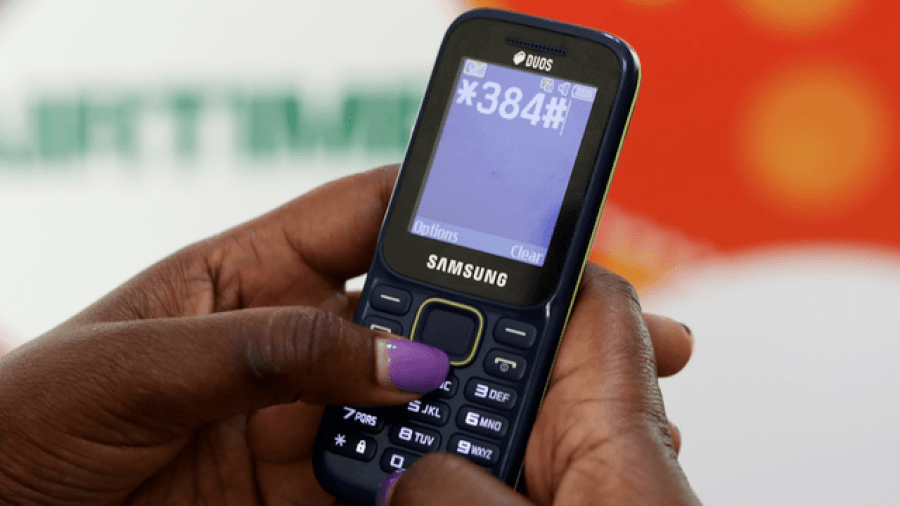
Telecommunications subscribers have tasked their service providers on transparency and good quality networks as they commenced the new USSD billing yesterday.
Telecommunications operators announced that beginning Wednesday, June 18, 2025, mobile subscribers in the country would begin to pay directly for USSD services through their airtime.
This marks the formal migration to the End-User Billing (EUB) model, in line with a new directive from the Nigerian Communications Commission (NCC).
The Association of Licensed Telecom Operators of Nigeria (ALTON) said the announcement overrides the notice issued by some banks earlier this month, claiming that the deduction would start on June 3.
- Leveraging intra-African trade to boost Nigeria’s manufacturing sector
- Govs, FG move to eliminate illegal checkpoints, multiple levies
ALTON said the migration to end-user billing follows the Determination of USSD Pricing and Services issued by the NCC, which was developed in collaboration with the Central Bank of Nigeria (CBN) and other key stakeholders.
‘95% of N180bn USSD debt cleared by banks’
Just yesterday, ALTON disclosed that commercial banks in the country have now cleared 95% of the debt owed to telecom operators for Unstructured Supplementary Service Data (USSD) services.
ALTON Chairman, Engr. Gbenga Adebayo disclosed during a virtual chat on the migration to end-user billing for USSD services that the debt, which stood at about N180 billion as of January this year, has now been cleared up to 95%, with only three banks left to pay up their debt.
He, however, noted that the migration is not compulsory, as some banks may choose to remain on the old corporate billing system.
“Those who may not want to migrate to the new method can continue to use corporate billing as long as they have paid all their debt and they will not owe telecom operators as they are deducting the money from their customers,” Adebayo said.
The ALTON Chairman also assured that the telecom operators will, on their part, do everything to ensure that the transactions are seamless, but noted that failure of transactions could come from the banks.
“If there’s a failure from the network, the customer will not be billed, but if it’s from the bank, they will be billed because it is successful from the operator’s side.
“I must also clarify that if people see a deduction from their bank account after they have been charged for their airtime, they should go to the bank because the bank is not supposed to charge them for the service, that is double billing,” he said.
Banks to notify their customers
To qualify for migration to the new model, ALTON says banks must meet specific regulatory and operational conditions, including notifying customers about the change in billing well in advance.
It added that customers must also be educated on how the charges will be applied.
The telcos said this migration aims to create a more sustainable, transparent, and customer-friendly framework for delivering USSD services, especially in Nigeria’s growing digital financial landscape.
Under the new arrangement, USSD session charges will now be deducted directly from users’ airtime at a rate of N6.98 per 120 seconds.
Customers will receive a prompt to opt in before the charge is applied, and only successful sessions will be billed, a move ALTON says will eliminate double billing and improve customer experience.
Previously, telcos billed the banks for USSD services in a corporate billing model that led to frequent disputes over unpaid charges.
To qualify for migration to the new model, ALTON says banks must meet specific regulatory and operational conditions, including notifying customers about the change in billing well in advance.
It added that customers must also be educated on how the charges will be applied.
Subscribers task telcos on transparency
But the National Association of Telecommunications Subscribers of Nigeria (NATCOMS) said the telcos must ensure transparency in the new USSD billing and that subscribers must not be overcharged.
“We commend the NCC for this new billing system. But we call on telecommunications operators to ensure transparency in their billing system. They should not overcharge the subscribers. They should also ensure good quality network. To whom much is given much is expected,” said NATCOMS president, Chief Deolu Ogunbanjo.
Ogunbanjo said NCC should equally ensure that the banks aren’t charging subscribers indirectly.
He called on subscribers to report any abnormal charges when they use USSD.
However ALTON has issued support guidelines to ensure a seamless transition:
For issues accessing USSD codes, customers should contact their mobile network provider.
For transaction errors, customers are advised to reach out to their banks.
Both telcos and banks are mandated to provide responsive customer support.
While the change is expected to impact how users interact with mobile financial services, ALTON has assured that alternative digital banking channels, including mobile apps, internet banking, and ATMs, remain fully operational.
“USSD remains critical in deepening financial inclusion across Nigeria, especially for underserved and low-income populations. ALTON is committed to working with regulators and financial institutions to ensure this transition benefits all users,” ALTON said in a statement.
For years, Nigerian banks and telcos have been having a running battle over USSD debt as the former often fail to remit to the latter after deducting from customers’ accounts.
To resolve the matter, in December 2024, the Central Bank of Nigeria (CBN) and the NCC directed mobile network operators (MNOs) and DMBs to resolve the long-standing N250 billion USSD debt.
Following threats by telcos to withdraw services over the debt accumulated by banks, the NCC, in January, threatened to suspend the USSD service and publish a list of banks still owing telcos.
On January 15, the regulator directed telcos to disconnect the USSD codes assigned to nine banks by January 27 due to unpaid debts.
On February 28, MTN Nigeria said it received N32 billion out of N72 billion from banks as part of payment for the USSD debt.
NCC issues EUB policy for USSD banking transactions
The Nigerian Communications Commission (NCC) last week officially issued a change in how telecom customers are charged for their USSD transactions.
NCC in a notice on its website seen by our reporter said the End User Billing (EUB) policy for USSD emerged as a consensus option between banking and telecommunications services sectors and their respective regulators (the Central Bank of Nigeria and the Nigerian Communications Commission) to address challenges around the seamless provision of USSD services.
“It is also designed to enhance customer experience and transparency”, the telecom industry regulator said.
Some banks had sent email messages to their customers informing them of a directive from NCC ordering them to stop deducting USSD transactions fee from customer’s bank account.
Instead, they said NCC directed that the fee should now be deducted from customers’ airtime by their telecom operators.
“With the EUB, now you get to pay for USSD with your airtime like you do on other transactions via your mobile phone. This gives you several advantages, like:
“Clarity of your billing: You determine what you will spend before a USSD session, and you know exactly what you have spent immediately you conclude the transaction. Just like with your calls, SMS and data sessions. You do not have to wait till deductions are made from your bank account.
There will be no more issues around USSD deductions from your bank account.
Opt-in/Opt-out Options: You are free to opt-in or out of using USSD services for banking transactions.”
Meanwhile, the NCC has said the telecom industry which recorded low investments into it in the last three years is now bouncing back.
Daily Trust reports that the telecom sector which is a key contributor to Nigeria’s Gross Domestic Product (GDP) experienced an acute foreign exchange crisis two years ago, forcing the operators to stop investment in the sector.
Speaking to journalists in Abuja yesterday, the NCC’s executive vice chairman/CEO, Dr Aminu Wada Maida said from available statistics and projections, the industry has proven its resilience and progressive milestones as huge funds are now being invested in the sector by investors and operators.
“About two years ago, we noticed a situation where some of our key operators were recording massive losses. Despite increasing revenues, they were struggling with heavy forex-related obligations that ate into their revenue. This led to poor quality of service.
“However, with the recent tariff adjustment exercise, these operators are now back on the path to profitability. As a result, they’re able to reinvest in their networks, which will lead to better quality of service and experience.
“We expect investments in the industry to increase significantly this year, more than what was seen in the last two years. The Nigerian telecom industry has great promise, evident in its revenue growth and service delivery, despite the recent challenges,” Dr Maida said.
The EVC made the remarks at the Digital Economy Complex, Mbora, during an interactive session with newsmen.
Maida who was represented by the Acting Head of Public Affairs, Mrs Nnenna Ukoha, said the industry has over the years faced some critical challenges such as Rights of Way (RoW), issues, fibre cuts and thefts, infrastructural vandalism, energy and forex related problems.
“One major issue affecting the quality of services and smooth operation of service providers is fibre cuts. When we look at the fibre cuts that occurred between 21st and 31st May, 2025, we recorded almost 147 cases in just a week. Such damage significantly affects smooth operations in that particular area,” he said.
He added that the NCC and other stakeholders have worked out mechanisms to address the challenges, assuring that Nigerians would in about two months time begin to experience improved quality of services and quality of experience.
To address the challenges of fibre cuts due to road construction and rehabilitation across the country, the EVC said a Memorandum of Understanding would soon be signed by the Federal Ministry of Works and the NCC.
He added that the NCC is also working in partnership with the Nigerian Governors Forum to address the issue of Rights of Way, while fears about possible disruptions of services due to the construction of Lagos/Calabar Coastal Highway have been taken care of.
The NCC boss said the Commission would soon begin to name and shame individuals behind fibre cuts and theft of its critical infrastructures, while it would partner with office of the Attorney General of the Federation, (AGF) and the Nigerian Security and Civil Defence Corps, NSCDC, to prosecute those responsible for infrastructure vandalism and damage.
“Telecommunication services are crucial for ensuring national security, particularly for addressing security issues that require effective communication. Without effective telecommunication, achieving national security would be impossible.
“Telecommunication also plays a vital role in public welfare, contributing to the growth of a digital society. It provides an enabling environment for socialization and access to services. Without a robust telecommunication infrastructure, the public cannot fully enjoy the services provided.
“Furthermore, a stable telecommunication infrastructure is essential for every sector of the economy”, Dr Maida said.
While he appealed to the media for support and partnership, the EVC noted that discussions were yet on-going on other critical areas in the industry. projections, the industry has proven its resilience and progressive milestones as huge funds are now being invested in the sector by investors and operators.
“About two years ago, we noticed a situation where some of our key operators were recording massive losses. Despite increasing revenues, they were struggling with heavy forex-related obligations that ate into their revenue. This led to poor quality of service.
“However, with the recent tariff adjustment exercise, these operators are now back on the path to profitability. As a result, they’re able to reinvest in their networks, which will lead to better quality of service and experience.
“We expect investments in the industry to increase significantly this year, more than what was seen in the last two years. The Nigerian telecom industry has great promise, evident in its revenue growth and service delivery, despite the recent challenges,” Dr Maida said.
The EVC made the remarks at the Digital Economy Complex, Mbora, during an interactive session with newsmen.
Maida who was represented by the Acting Head of Public Affairs, Mrs Nnenna Ukoha, said the industry has over the years faced some critical challenges such as Rights of Way (RoW), issues, fibre cuts and thefts, infrastructural vandalism, energy and forex related problems.
“One major issue affecting the quality of services and smooth operation of service providers is fibre cuts. When we look at the fibre cuts that occurred between 21st and 31st May, 2025, we recorded almost 147 cases in just a week. Such damage significantly affects smooth operations in that particular area,” he said.
He added that the NCC and other stakeholders have worked out mechanisms to address the challenges, assuring that Nigerians would in about two months time begin to experience improved quality of services and quality of experience.
To address the challenges of fibre cuts due to road construction and rehabilitation across the country, the EVC said a Memorandum of Understanding would soon be signed by the Federal Ministry of Works and the NCC.
He added that the NCC is also working in partnership with the Nigerian Governors Forum to address the issue of Rights of Way, while fears about possible disruptions of services due to the construction of Lagos/Calabar Coastal Highway have been taken care of.
The NCC boss said the Commission would soon begin to name and shame individuals behind fibre cuts and theft of its critical infrastructures, while it would partner with office of the Attorney General of the Federation, (AGF) and the Nigerian Security and Civil Defence Corps, NSCDC, to prosecute those responsible for infrastructure vandalism and damage.
“Telecommunication services are crucial for ensuring national security, particularly for addressing security issues that require effective communication. Without effective telecommunication, achieving national security would be impossible.
“Telecommunication also plays a vital role in public welfare, contributing to the growth of a digital society. It provides an enabling environment for socialization and access to services. Without a robust telecommunication infrastructure, the public cannot fully enjoy the services provided.
“Furthermore, a stable telecommunication infrastructure is essential for every sector of the economy”, Dr Maida said.
While he appealed to the media for support and partnership, the EVC noted that discussions were yet on-going on other critical areas in the industry.