
TB bacteria get deadly by tricking your immune system
Mutation that makes tuberculosis resistant to first-line drugs may also cause changes in the body’s immune system, according to new research published in journal Nature Microbiology. Around one in three people with drug-resistant TB may die. Antibiotics of first choice don’t kill the bacteria. Drugs of second choice are more toxic and less effective. While […]
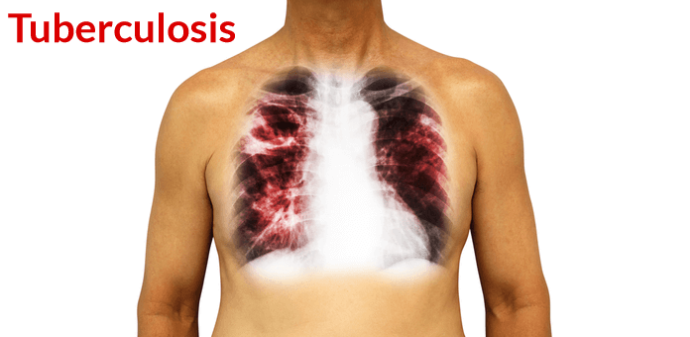
Tuberculosis TB
Mutation that makes tuberculosis resistant to first-line drugs may also cause changes in the body’s immune system, according to new research published in journal Nature Microbiology.
Around one in three people with drug-resistant TB may die. Antibiotics of first choice don’t kill the bacteria. Drugs of second choice are more toxic and less effective.
While the bacteria grows resistant to the drugs, it may also undermine the body’s ability to defend itself, according to researchers at Washington University School of Medicine in St. Louis
Using mice, they found the same mutation that makes the bacteria resistant also weakens the immune system by “tricking it to behave differently,” said Shabaana Khader, PhD, an associate professor of molecular microbiology and senior author of the study.
“If we’re going to fight TB bacteria effectively, we’re going to have to understand what the drug-resistant bacteria are doing to the immune system to elicit protection.”
The researchers analysed immune response in mice infected with Mycobacterium tuberculosis, the bacteria that cause TB.
They compared a strain that is resistant to all first- and many second-line antibiotics with a drug-sensitive strain of TB.
The mice’s immune systems battled the sensitive bacteria by releasing a powerful immune molecule known as IL-1 beta and ramping up the ability of their immune cells to burn sugar. Both actions are crucial for an effective immune assault on the TB bacteria.
But when infected with the drug-resistant strain, the mice failed to fight back.
Their immune cells did not burn more sugar, and they failed to produce much IL-1 beta.
Instead, they released a different immune molecule, IFN beta, which is associated with a feeble and sometimes detrimental immune response to TB.
“People always thought that development of drug resistance just meant that there’s a change in how bacteria respond to antibiotics,” Khader said.
“But this shows that the whole immune environment is changing in ways that we haven’t been fully aware of.”
To find out why drug-resistant bacteria elicit a different immune response, the researchers scanned the whole genomes of several drug-resistant strains.
They found that a change of one letter in the genetic code gave bacteria the ability to withstand rifampicin, an important first-line antibiotic, and also altered the immune response.