
That Disturbing 800 Deportations
By Ahmed Balarabe Sa’id From published reports across credible news sources, Nigerian authorities have received 800 deported citizens from the Republic of Niger at the Jibia-Magama border in Katsina State last Sunday. The deportees comprised 345 males and 185 females according to official counts, hailing from at least 14 Nigerian states including Kano, Jigawa, Katsina, […]
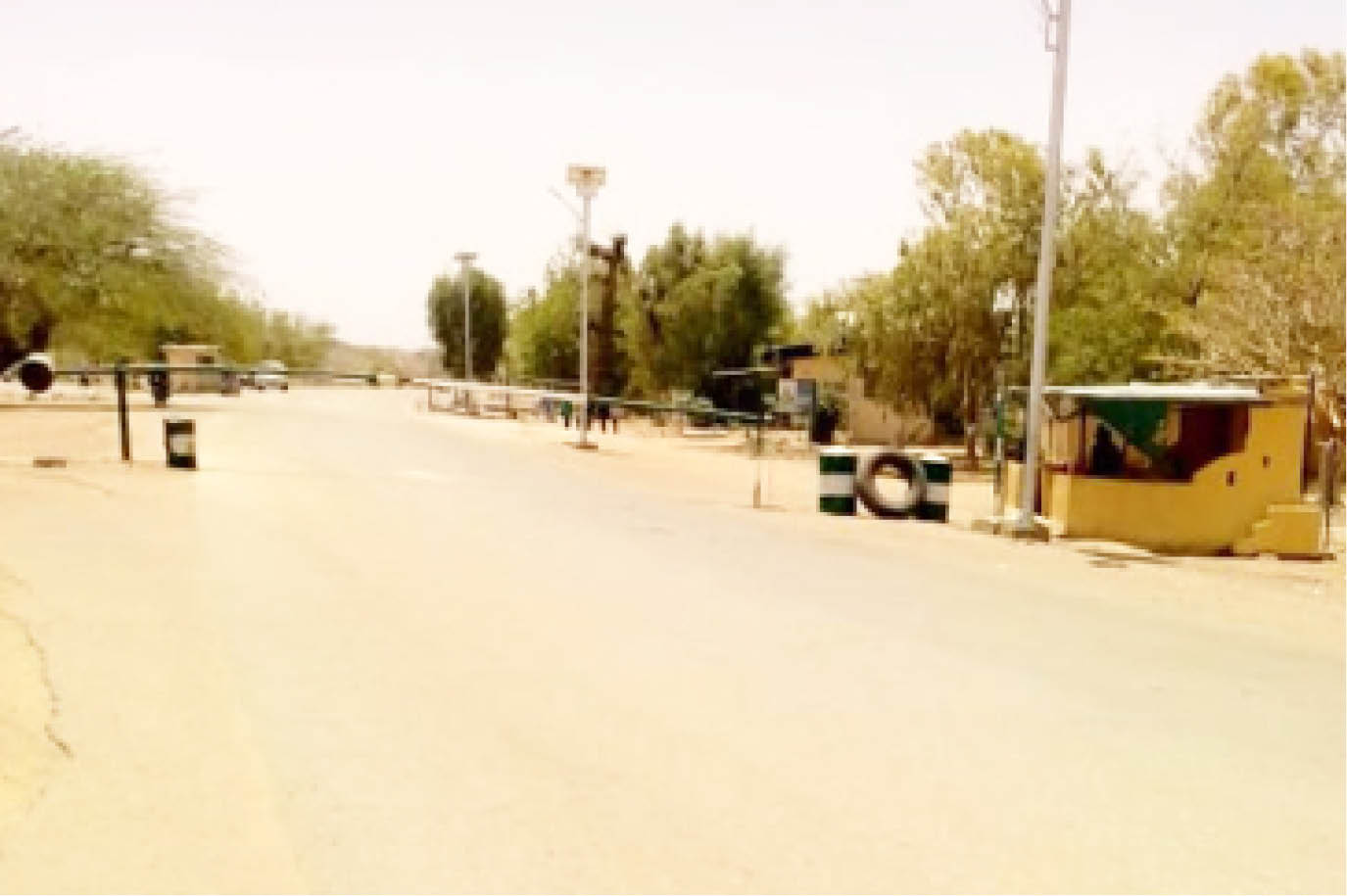
Nigeria/Niger border through Faru village
By Ahmed Balarabe Sa’id
From published reports across credible news sources, Nigerian authorities have received 800 deported citizens from the Republic of Niger at the Jibia-Magama border in Katsina State last Sunday. The deportees comprised 345 males and 185 females according to official counts, hailing from at least 14 Nigerian states including Kano, Jigawa, Katsina, Niger, Taraba, Adamawa, Enugu, Sokoto, Ebonyi, Gombe, Plateau, Delta, Lagos, and the Federal Capital Territory.
The Nigerian Embassy in Niamey confirmed the deportation via an official letter dated March 27, 2026, noting that the returnees were transported in vehicles operated by Rimbo Transport Voyageurs, with 12 drivers and attendants assigned to the convoy.
This is unfolding between two nations sharing one of the deepest and most complex bonds in West Africa. Modern Nigeria and Niger were carved from the same pre-colonial civilisations of the Hausa States and Kanem–Bornu Empire, before French and British colonialists arbitrarily split Hausaland in the Scramble for Africa. The 1,500-kilometre border now cuts through families. In a historic 2025 move, Niger adopted Hausa as its national language, spoken by most of its 26 million people, effectively mirroring northern Nigeria’s linguistic heart. Culturally, Hausa, Fulani, and Kanuri populations flow across both sides of the line, bound by shared Islamic traditions, similar chieftaincy systems, and cross-border marriages that make the international frontier secondary to daily life.
It is why this mass deportation is disturbing, given the diplomatic landscape between the two countries a couple of weeks ago. Just February, President Bola Ahmed Tinubu’s administration announced the formal reopening of the Kamba and Tsamiya border corridors along the Nigeria-Niger frontier. The Presidency described the development as “both timely and strategic.” The decision was explicitly framed as restoring economic life to border communities, reviving trade valued at approximately $900 million annually, and reinforcing “people-to-people ties and mutual trust” between nations bound by “deep cultural, historical, and family bonds.” The February border reopening was presented as a model of pragmatic economic diplomacy, acknowledging that “functional and regulated borders offer better oversight, intelligence coordination, and cooperation than prolonged closures.”
The Nigerian Customs Service, under Dr. Bashir Adeniyi, reportedly ensured both nations’ commitment to international trade protocols before reopening. Against this backdrop of deliberate rapprochement, the deportation of 800 Nigerian citizens coming barely six weeks after these celebrated diplomatic gains, raises profound questions about the asymmetry of Nigeria’s regional relationships.
Nigeria’s self-conception as West Africa’s leader carries corresponding obligations. The United Nations Secretary-General, António Guterres, recently affirmed this role, stating in February 2026 that Nigeria “stands a real chance of leading Africa to becoming the next superpower in the evolving global architecture.” Guterres specifically commended Nigeria’s “leadership in stabilising the Sahel and ECOWAS regions.” Leadership, however, is not measured in declarations but in outcomes. When a neighboring state that relies on Nigerian ports for its import-dependent economy and receives Nigerian electricity can expel 800 Nigerian citizens without prior bilateral consultation or apparent diplomatic notification, it signals a power asymmetry that contradicts Nigeria’s claimed regional preeminence.
To even think that the deportation occurred through official channels, with the Nigerian Embassy in Niamey facilitating the process, makes it more embarrassing. This distinguishes the incident from arbitrary expulsions. In other words, the embassy was aware and involved. Yet the very mechanism of “facilitation” raises questions: Was Nigeria given advance notice? Were the circumstances of each deportee individually assessed? Did any qualify for protection under ECOWAS protocols on free movement? And the crucial matter of the deportees’ geographic diversity, spanning from Lagos, Adamawa, Enugu, and Sokoto, suggesting this was not merely a border community adjustment but a systematic removal operation affecting Nigerians from across the federation.
The Economic Community of West African States (ECOWAS) Protocol on Free Movement of Persons, Residence, and Establishment, to which both Nigeria and Niger are signatories, guarantees citizens of member states the right to enter, reside, and establish economic activities across borders. While deportation remains permissible under specific legal grounds, mass expulsions without due process contradict the community spirit ECOWAS was founded to foster. As global affairs analyst Dr. Victor Okhai recently warned, “Nigeria, as ECOWAS’s most influential member and major funder, should lead by example by enforcing rulings domestically so others can follow.” Selective compliance with regional protocols by Nigeria’s neighbors or by Nigeria itself undermines the entire integration project.
Niger’s dependence on Nigerian infrastructure creates a strategic paradox. As a landlocked nation, Niger relies on Nigerian ports, Apapa, Tin Can, and others, for the vast majority of its imports. Nigeria supplies Niger with electricity, a critical resource that was severed following the 2023 coup, but now being restored. There is approximately $900 million in annual trade flows between the two nations. This dependency should afford Nigeria diplomatic leverage. That 800 Nigerians were deported regardless suggests either that Niger calculated Nigeria would not retaliate, or that Nigeria’s deterrent credibility has eroded.
The Niger incident does not exist in isolation. Recent data indicates at least 974 Nigerians face deportation from Canada. The United Kingdom has signed agreements to expedite removal of failed Nigerian asylum seekers. In October 2025, NEMA repatriated 131 Nigerians from Agadez under an Assisted Voluntary Return programme. Collectively, these patterns suggest Nigerian citizens abroad are increasingly viewed as randomly deportable, a perception that, once entrenched, carries reputational and economic costs beyond the immediate human impact.
For strategic reputation management, Nigeria should take immediate actions. Bilateral diplomatic engagement is essential. Nigeria should demand formal clarification from Niamey regarding the legal basis and decision-making process behind the deportation. Was this a routine immigration enforcement action or a policy shift? For each deportee, Nigerian authorities should document the circumstances of their removal, including any due process violations, to establish a factual record for potential ECOWAS legal action. The Federal Government should issue a clear statement acknowledging the incident, affirming consular protection as a non-negotiable principle, and outlining steps taken to prevent recurrence.
Beyond these immediate steps, structural reforms are necessary. Nigeria should pursue a bilateral labour migration agreement with Niger regulating cross-border movement, documentation requirements, and deportation procedures, including advance notification and individual case review. Nigeria could also refer the mass deportation to ECOWAS mediation mechanisms, testing whether regional institutions can enforce community protocols against a member state. Finally, Nigeria should champion a comprehensive ECOWAS migration protocol that establishes binding standards for deportation, including prohibitions on mass expulsions and requirements for due process.
Sa’id is a Communications Strategist and writes from Abuja.