
The China’s world: Where is Nigeria?
The global balance of economic and geopolitical power is changing before our eyes. For decades, the West dominated international finance, trade, technology, and diplomacy. Today, however, the rise of President Xi Jinping has introduced a new reality: the world is steadily moving toward a multipolar order in which China occupies a central political, economic, and […]
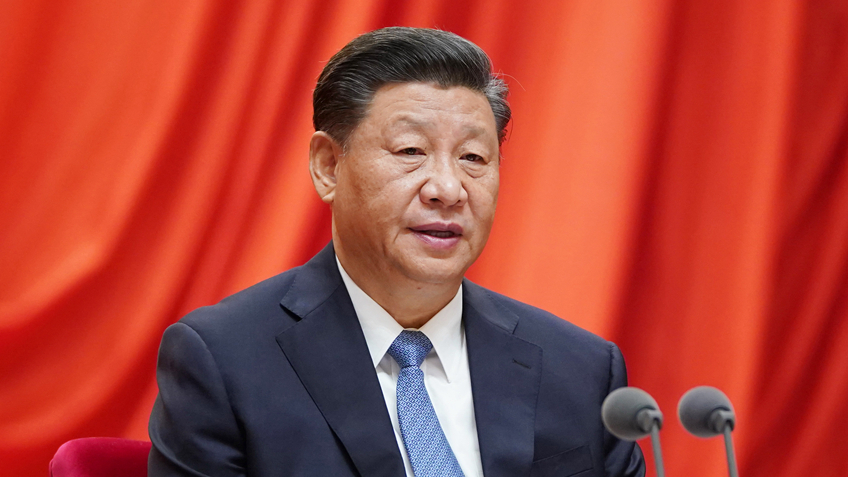
Chinese President Xi Jinping
The global balance of economic and geopolitical power is changing before our eyes. For decades, the West dominated international finance, trade, technology, and diplomacy. Today, however, the rise of President Xi Jinping has introduced a new reality: the world is steadily moving toward a multipolar order in which China occupies a central political, economic, and technological position.
This transformation is no longer theoretical. It is visible in global diplomacy, trade flows, infrastructure investments, technology competition, and strategic alliances across continents. Increasingly, world leaders now see Beijing not merely as an Asian power, but as one of the defining centres of global influence in the 21st century.
Over the last two years, China has hosted an extraordinary parade of world leaders. Among those who visited Beijing were Vladimir Putin of Russia, Narendra Modi of India, Anwar Ibrahim, Prabowo Subianto, Shehbaz Sharif, Pedro Sánchez, Aleksandar Vučić, Ursula von der Leyen, and António Costa.
China also welcomed leaders from Central Asia, the Middle East, Latin America, and Africa, including Kassym-Jomart Tokayev, Shavkat Mirziyoyev, Sadyr Japarov, Emomali Rahmon, Masoud Pezeshkian, Miguel Díaz-Canel, Robert Fico, Nikol Pashinyan, Ilham Aliyev, Mohamed Muizzu, Thongloun Sisoulith, Luong Cuong, and Kim Jong Un. Other prominent figures included Felipe VI and Maha Vajiralongkorn. African leaders who visited China included Emmerson Mnangagwa and Denis Sassou Nguesso.
Even U.S. President Donald Trump visited China from May 12 to 15, 2026 for high-level talks with President Xi Jinping, underscoring China’s growing strategic importance in the emerging global order. The visit reflected broader international recognition of Beijing’s expanding influence and highlighted the dramatic shift in the global balance of power over the past two decades.
This diplomatic traffic is not accidental. It reflects a growing recognition that China is now one of the defining economic and political powers of our era. China’s rise is not merely political rhetoric or ideological propaganda; it is supported by hard economic realities. According to the World Bank, China has lifted more than 800 million people out of extreme poverty over the last four decades — one of the greatest economic transformations in human history. China’s poverty reduction alone accounted for nearly three-quarters of global poverty reduction during that period.
In 1978, China’s economy represented less than two per cent of global GDP. Today, it stands among the world’s largest economies, competing directly with the United States in manufacturing, trade, infrastructure, artificial intelligence, renewable energy, and technological innovation. China is now the largest trading partner for more than 120 countries worldwide. It dominates significant sections of the global electric vehicle supply chain and remains one of the world’s largest investors in infrastructure development. Nigeria cannot afford to ignore these realities.
As Nigeria remains Africa’s most populous country and one of its largest economies, it should naturally occupy a strategic place in China’s African engagement. Yet Nigeria often appears hesitant, reactive, or insufficiently visible within Beijing’s evolving diplomatic and economic architecture. This should concern policymakers in Abuja because the future global economy is increasingly tied to China’s industrial expansion, technological advancement, and financial influence.
At the same time, the future demographic and developmental frontier of the world is undoubtedly Africa. By 2050, Africa’s population is projected to approach 2.5 billion people, making the continent one of the world’s most important future markets and labour forces. In many respects, the future belongs to a productive partnership between China and Africa, and Nigeria can strategically position itself at the centre of that relationship.
Nigeria should not wait for China-Africa summits before engaging Chinese leadership. Successful countries rarely wait for ceremonial gatherings before advancing their national interests. Nigeria can build sustained bilateral engagement with Beijing through economic diplomacy, technology partnerships, educational exchanges, industrial cooperation, infrastructure development, and security collaboration.
Nigeria urgently requires infrastructure modernisation, rail expansion, energy investments, industrial parks, technology transfer, pharmaceutical manufacturing, agricultural mechanisation, and digital transformation. China possesses extensive expertise and financing capacity in many of these sectors. At the same time, Nigeria offers China access to Africa’s largest consumer market, strategic Atlantic access, entrepreneurial talent, and enormous agricultural and natural resources.
However, Nigeria may benefit far more by engaging China strategically, not merely as a borrower or commodity exporter, but as a confident partner pursuing industrialisation, local manufacturing, technology transfer, and job creation. Bilateral agreements should increasingly prioritise Nigerian employment, skills development, local production, and sustainable economic growth. Nigeria’s private sector, universities, technology firms, and research institutions can also become more proactive in building long-term partnerships with Chinese counterparts.
Nigeria’s leadership could further utilise respected global Nigerian figures to expand the country’s diplomatic and economic influence toward China, the Middle East, Asia, and beyond. Nigeria possesses the human capital, entrepreneurial energy, intellectual depth, and geopolitical relevance required to become a major global economic player. Its future remains promising if backed by industrial growth, ambitious economic expansionism, strategic diplomacy, and visionary leadership.
I also hope Nigeria’s new ambassador to China, Abdulrahman Dambazau, will leverage his vast administrative, security, intellectual and international experience to help bridge the existing gaps in Nigeria-China relations. At a time when Beijing is expanding its influence across the Global South, Nigeria would benefit from stronger diplomatic engagement, strategic clarity, and sustained economic outreach in China.
The reality is simple: the world is changing rapidly. New economic centres are emerging. Supply chains are shifting. Strategic alliances are evolving. President Xi’s diplomacy demonstrates that China is actively building long-term partnerships across the globe. From Moscow to Madrid, Islamabad to Jakarta, world leaders are positioning their countries within China’s expanding economic orbit.
Nigeria cannot afford strategic hesitation. The real question is no longer whether China will shape the future global economy. It already is. The real question is whether Nigeria will claim its rightful place within that future.
Adam, Ph.D., wrote from Abuja.