
The crisis of the Kano Emirate and a call for reconciliation
The ongoing tussle surrounding the Kano Emirate is not only disheartening but represents a painful slap in the face of our cherished traditional systems. It calls for immediate intervention to preserve this revered institution from further decline and political manipulation. Kano, one of Nigeria’s most ancient cities, is known globally for its rich cultural heritage […]
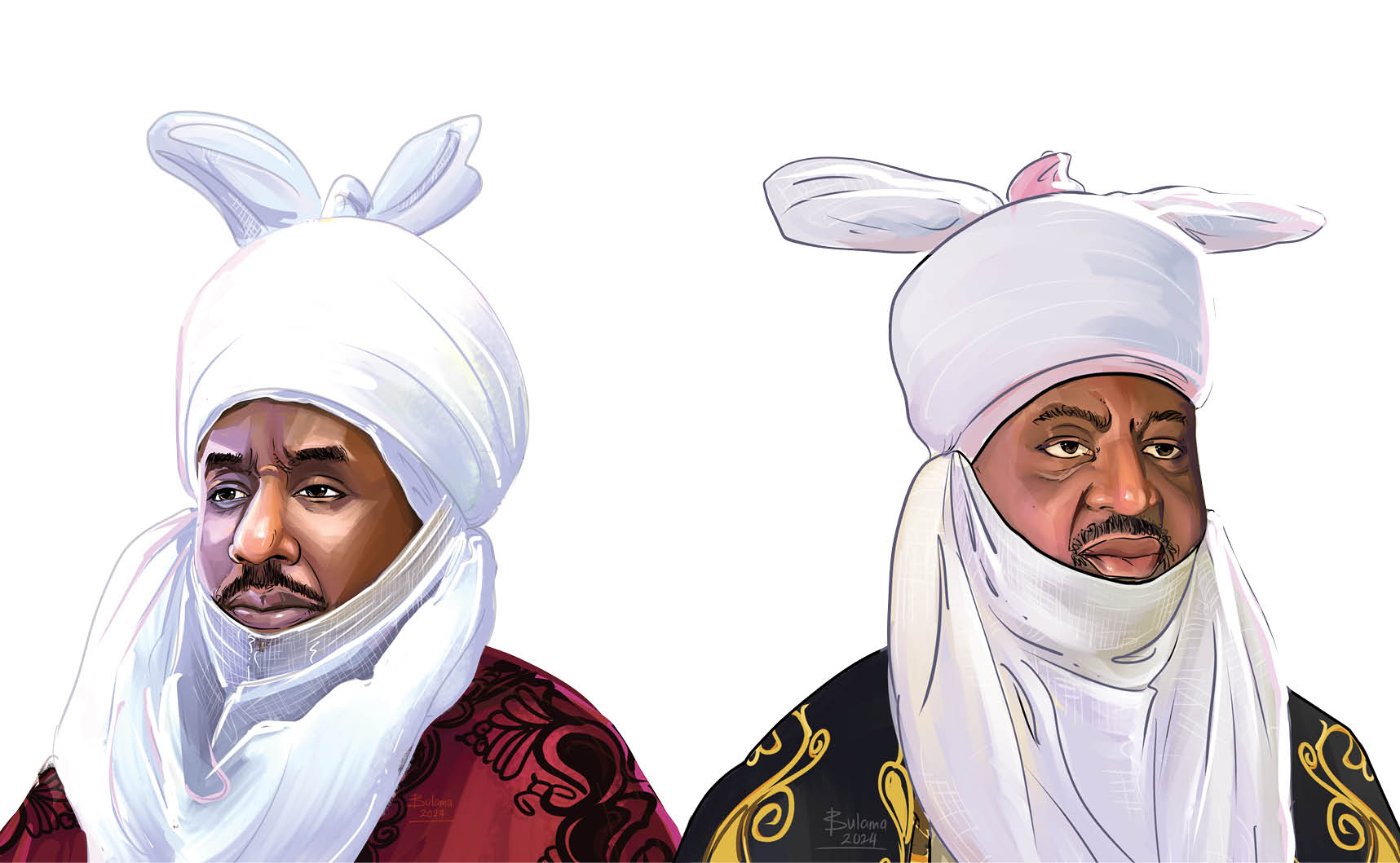
sanusi, bayero
The ongoing tussle surrounding the Kano Emirate is not only disheartening but represents a painful slap in the face of our cherished traditional systems. It calls for immediate intervention to preserve this revered institution from further decline and political manipulation.
Kano, one of Nigeria’s most ancient cities, is known globally for its rich cultural heritage and historical legacy. At the heart of this heritage lies the Kano Emirate—an institution that, for centuries, has been a beacon of traditional leadership and pride.
The death of Alhaji Ado Bayero, the 13th Emir of Kano, who ruled from 1963 to 2014, marked the beginning of a complex and deeply politicised chapter in the history of the Emirate.
Despite widespread sentiment, Sanusi Lamido Sanusi, a former Central Bank governor, scholar and advocate for reform, was appointed as the 14th Emir of Kano in 2014 by then-Governor Rabiu Musa Kwankwaso. Many saw this move as politically motivated, especially given Sanusi’s prior fallout with President Goodluck Jonathan, which led to his suspension from the CBN.
- Insecurity: Return home from France to take charge, Obi tells Tinubu
- How thousands of Nigerians lost N1.3trn to scam
Sanusi’s reign, while impactful, was also controversial. He spoke boldly on issues of education, poverty, social injustice, and governance—stances that often put him at odds with powerful political figures. Eventually, his outspoken nature led to his dethronement in March 2020 by Governor Abdullahi Umar Ganduje, who appointed Aminu Ado Bayero, the son of the late Emir, as his successor.
In May 2024, the situation took a dramatic turn when Governor Abba Kabir Yusuf—an ally of Sanusi—amended the Emirate law and deposed Aminu Ado Bayero. His move was widely interpreted as politically charged, possibly part of a larger plan to reinstate Sanusi in a retaliatory gesture against Ganduje’s administration. Unlike Sanusi, who peacefully left Kano after his removal, Aminu Ado Bayero refused to vacate Kano, and moved to the Nasarawa mini palace, leading to court battles and an escalating power struggle.
The unprecedented situation now sees two figures—Sanusi and Aminu—both laying claim to the revered title of Emir of Kano. The matter is now before the courts, making any definitive public judgment premature. However, this dual claim has cast a long shadow over the Emirate, eroding its long-standing prestige.
Today, the Kano Emirate stands at a crossroads. Its once unshakable influence has been deeply undermined. Political interference has sown division, leaving the throne in crisis and its legitimacy questioned.
In my humble opinion, a fresh start is needed. For the sake of unity and peace, both Sanusi and Aminu should be respectfully set aside. The throne should be offered to Nasiru Ado Bayero, former Emir of Bichi and a son of the late Alhaji Ado Bayero. Nasiru, with his pedigree and absence from the political drama, represents a middle path—one that could restore dignity, neutrality, and peace to the Kano Emirate.
The survival of our traditional institutions depends on our ability to shield them from partisan interests and uphold the integrity of their legacies. The future of the Kano Emirate—and by extension, the heritage of Northern Nigeria—rests in our collective wisdom to do what is just and right.
Nazir Musa S Fada can be reached via [email protected]