
The day General Murtala Muhammed was assassinated
Friday, February 13, 1976, will remain infamous and one of the darkest days in the annals of this country. That was the day, now 50 years on, a beloved Nigerian Head of State, General Murtala Mohammed, was ambushed in a busy street of Lagos and assassinated. Readers of some age group would have their own […]
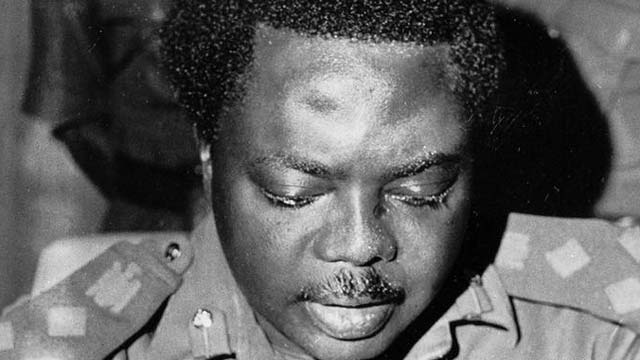
General Murtala Mohammed
Friday, February 13, 1976, will remain infamous and one of the darkest days in the annals of this country. That was the day, now 50 years on, a beloved Nigerian Head of State, General Murtala Mohammed, was ambushed in a busy street of Lagos and assassinated. Readers of some age group would have their own recollections of that day when gloom pervaded the entire length and breadth of the country. I had mine, too, which I shared with readers five years ago.
That day, I was about halfway into my final year in the School of Business, Kongo campus, ABU, Zaria. We have become accustomed to coups, having lived through three in the preceding 10 years. The two coups in 1966 were as violent as they came. In the first, the country lost the lives of the prime minister, two regional premiers, top-notch officers of the Nigerian Army, and a very senior federal minister. In the second putsch, the Head of the Military Government, along with a military governor, was killed. In contrast, the 1975 coup that installed General Murtala as Head of State was a peaceful one and could be likened to a palace coup.
But this one caught everyone off guard, taking place in broad daylight as the stalkers took advantage of a Head of State who, in his humble reasoning, refused heavily armed security and/or clearance of paths for his movement. After killing the Head of State, along with his ADC, the coup leader, Col Suka Dimka, headed to the Nigerian Broadcasting Corporation in Ikoyi to beam an exultant speech over the national radio heralding their new order.
On the Kongo Campus that morning, we were already engrossed in our various classes when these dastardly acts were unfolding in faraway Lagos. That morning, Zaria was still in the throes of the harmattan weather. It was a typical February morning, cool, windy and dusty. It was only after the first few lectures, when I came out to walk towards the dining hall, near hostel one, hoping to get a bite before the next round of lectures, that I got an inkling of what was happening. While walking past the adjacent Law Faculty grounds, I noticed an unusual grouping of students and tutors chatting. It was usual to see such groupings, particularly outside the Law Quadrangle, where law students hang out to chat, sometimes with a great deal of agitation.
My friends from the Law Faculty, with whom I usually hung out, Yisa Abraham, Ibrahim Bala Mairiga, Abdu Aboki and Chrysanthus Senlong spotted me and walked up to join me. It was from them that I learnt of the sad happenings in Lagos. I was immediately devastated. Like most students, I had emotionally connected strongly to Murtala. We walked on towards the dining hall and, while there, huddled over our food and remonstrated against this reckless interference in governance. Throughout the day, things remained unclear, even though a broadcast later that evening would confirm that the coup attempt had been quashed.
Meanwhile, after the Juma’at prayers, with academic activities shelved, we, as students, regrouped to chat and strategise about what to do. Already, the President of the Students Union Government, Sule Shehu Allahbamulafiya, and his cabinet members have been meeting to plan a move. Similarly, we heard that in the Samaru campus, the student union leader, Abba Dabo, along with his cabinet members, had been managing the tense atmosphere. Already, our colleagues at the universities of Ibadan and Lagos, in a courageous move, had braved the situation and taken to the streets to condemn the coup attempt, even as the renegade soldiers were yet to be routed.
In the 1970s, students around the world liked to think of themselves as opinion leaders, and many went on to become revolutionaries in several countries. Nigerian students in higher institutions have always been anti-establishment, yet they would embrace and celebrate the coup that brought General Murtala to power as Head of State. Probably, the preceding regime of General Yakubu Gowon, which had won the civil war and united the country, had remained too long in power and had continued to garner more enemies than friends.
And then Murtala arrived on stage, looking angry on prime-time television, promising to fix most of the ills afflicting the country. He had rolled out an impressive to-do list: deal with corruption; establish a new capital to replace congested Lagos; decongest the port, which was drowning under an armada of imported cement and rice; create states; hand over to an elected government, etc. And he went about doing it with alacrity. As students, we were mesmerised by his no-nonsense leadership style.
But nothing endeared him more to the generality of students than his fiery speeches against Western and American interferences in African affairs, particularly their wholesome support for apartheid regimes in South Africa, Namibia and Angola. Whenever he spoke and acted, we applauded. For the first time, students and the government were on the same page, sharing a vision for the country and Africa.
His memory will remain green until, from my perspective, we find another leader with his charisma, drive, and vision for the country.