
The Economist: Contemporary Nigeria is not the one of years past
The Economist magazine has finally lost the battle of pretence in which it seeks to project itself as a respectable, objective, balanced and unbiased international publication that elites can trust to make decisions. It took President Muhammadu Buhari to precipitate the Economist’s defeat in the war the publication has been fighting against some countries of […]
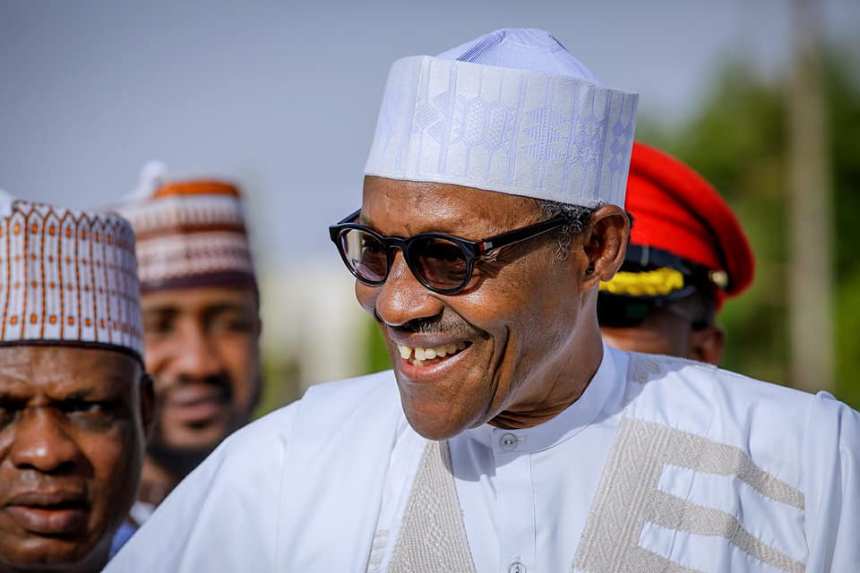
President Buhari.
The Economist magazine has finally lost the battle of pretence in which it seeks to project itself as a respectable, objective, balanced and unbiased international publication that elites can trust to make decisions. It took President Muhammadu Buhari to precipitate the Economist’s defeat in the war the publication has been fighting against some countries of the world.
The battle at which the Economist lost the war was with its headline “Nigerians got poorer in Muhammadu Buhari’s first term,” a report that is apparently targeted at inciting the country’s population to an uprising. This objective tallies with the hatchet job that western publications and networks did with catalysing world damaging events like the “Arab Spring”, Ukrainian Orange Revolution, the disaster unfolding in Syria and a host of others.
Contrary to the expected reaction of peeving Nigerians to burn up their country, only die hard and contextually challenged opposition loyalists ranted online about the report and that did not do much to translate into disaffection on the streets. Somehow, the same Nigerians that have been reported as becoming poorer have a better perspective of what the issues are and where the “economic crisis” if any is coming from.
To better understand what the Economist was playing at, its report must be considered in a wider context than it projected on its readers. Take the rider to its headline, “Baba go-slow,” for instance: it is a derogatory reference to President Buhari, a term that the opposition in Nigeria can take credit for coining. One may be tempted to accuse the magazine of taking sides with the opposition on that account but the use of that expression has the wider implication of confirming the publication as racist, imperialist and even ageist. It signposts a lack of objective in whatever it is that the Economist has to write about, not just Buhari but Nigeria as whole, a bias that is equally applied on the African continent as whole.
The report in question also serves as a sort of payback or jab of sorts, targeted at President Buhari, whose win in Nigeria’s 2019 General Elections rubbished the Economist ability at making any noteworthy or significant predictions. In the course of most of the president’s first term of four years, it published stories that implied that his austere economic approach, which the country sorely needed given years of misrule, would turn Nigerians against him when it was time to vote. It continuously dished negative reports until it became glaring that more Nigerians support the anti-corruption drive that is being blamed for the hardship than there were those opposed to it.
Only then did the Economist begin publishing a few face-saving projections, tepid and more of an organization that was edging its bet. While presenting itself as then aligned to a Buhari win, it used its subsidiary, The Economist Intelligence Unit (EIU) Africa, to insist on a win by Atiku Abubakar, the main opposition challenger.
For the Nigerians, particularly the opposition members, who are shopping for negative contents about President Buhari’s government, there is an urgent need to rouse from their slumber. Being intellectually awake will enable them appreciate that the Economist is currently running reports to set up developing and emerging economies of the world to take the blame for a global economic disaster that is about to make landfall. The so-called advanced economies are in trouble, on a scale worse than the 2008 economic meltdown, and it is important that the countries that are responsible for the impending disaster not be seen as being responsible for the global turmoil that is increasingly proving to be inevitable. It becomes a double whammy for the Economist if it can successfully add Nigeria to the list of countries that will take the blame while also settling political score in addition to continuing with its decolonization agenda.
For a sense of what is brewing, the Euro Zone’s leaders, Germany and France are not doing as well as is required to keep Europe’s economy on sound footing.
Germany’s near recession in the fourth quarter of 2018 is a reality and slower Chinese growth and the woes of its auto industry have kept the country on the path of recession. France faces its own economic challenges in the form of unemployment rates with sluggish economic growth. These two are the strength of the Euro Zone so what is happening with the other member countries can be better imagined. The brouhaha over is masking the parlous economic woes in stock for the United Kingdom, it is facing its largest slump in decades. The United States – China tariff spat is already threatening economic stability of not just the two countries but presents risks of contagion to other countries with domino effect that will only amplify as it spreads around the world.
These variables, like the decades of misrule in Nigeria, have already impacted the economic outlook in Nigeria. They have taken many years in the making but the Economist has reduced the current economic situation in the country as being caused by a single factor of President Buhari’s four years in office. It is instructive to note how measures taken to mitigate the hardship on Nigerians are presented as wasteful, yet the countries that the Economist holds up as models have welfare packages and social security interventions for their own vulnerable populations, which are not small.
To the extent that the report relied on the neocon benchmarks and vacuous statistics it must have missed the actual points. Perhaps the folks at the Economist and the powers they report to will one day develop the conscience and humanity to think of Gross National Happiness (GNH) as opposed to the soulless GDP and other empty figures they are touting around.
In contemporary Nigeria, under the government of President Buhari, the figures that the Economist is throwing around may, in its own perception, translate into increased hardship, but citizens that are interested in the emergence of a stronger Nigeria see sense in severing ties with the years past, the years when those that deploy the Economist for manipulation were calling the shots.
Agbese writes from the United Kingdom.