
The making of a human being: A Ramadan reflection on Surah Al-Mu’minun
There is something about Ramadan that slows the rhythm of life just enough to make you notice what you would otherwise rush past. The days are structured around restraint, the nights around reflection. Hunger sharpens awareness. Fatigue humbles the ego. And in that softened state, certain verses of the Qur’an begin to feel less familiar […]
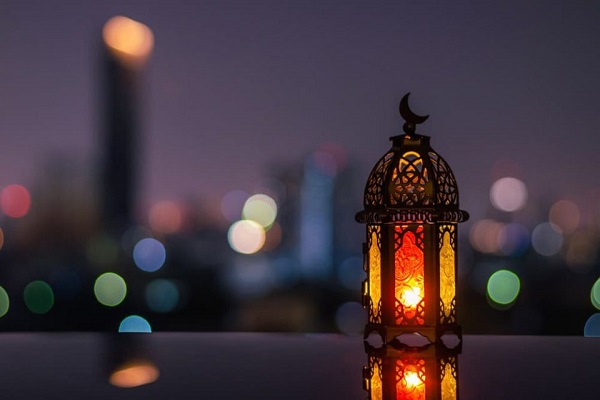
Ramadan lantern
There is something about Ramadan that slows the rhythm of life just enough to make you notice what you would otherwise rush past. The days are structured around restraint, the nights around reflection. Hunger sharpens awareness. Fatigue humbles the ego. And in that softened state, certain verses of the Qur’an begin to feel less familiar and more intimate.
This Ramadan, I found myself returning to an ayah in Surah Al-Mu’minun that I have read many times before, but never quite like this: “And certainly did We create man from an extract of clay. Then We placed him as a drop in a firm lodging. Then We made the drop (nutfah) into a clinging clot (‘alaqah), and We made the clot into a lump (mudghah), and We made from the lump bones (‘idham), and We covered the bones with flesh (lahm); then We developed him into another creation…” (23:12–14). As a physician, it is difficult to read these verses without pausing at their structure. The Qur’an did not describe human creation as a single dramatic event. It describes stages, each distinct, each sequential.
The first term used is nutfah, a drop. In biological language, we would describe fertilization as the fusion of sperm and ovum to form a zygote, followed by rapid cellular division. It begins microscopically, invisible to the naked eye, a single cell carrying the entire genetic blueprint of a human being. The Qur’anic description of a “drop” captures both the smallness and the concentration of that beginning. From something minute, complexity unfolds.
The next stage described is ‘alaqah, often translated as something that clings. In embryology, implantation is precisely that. After several days of division and movement, the blastocyst attaches itself firmly to the endometrial lining of the uterus. It embeds, establishes vascular connections, and secures its survival. Without this act of attachment, development cannot continue. The language of clinging is not metaphorical; it is descriptive of a critical biological event.
Then comes mudghah, a lump. As development progresses, somites begin to form along the embryonic axis, giving it a segmented appearance. The once simple cluster of cells begins to take on shape and organisation. Structure emerges from apparent formlessness. Differentiation intensifies. Cells begin to specialise. What was undifferentiated becomes purposeful.
The verse then speaks of bones, ‘idham, and their being clothed with flesh, lahm. In modern embryology, mesenchymal tissue differentiates into cartilage models that later ossify to form the skeletal system. Myogenesis follows as muscle tissue develops and envelops the emerging framework. The body’s architecture is established first, then reinforced and enabled for movement. The language of clothing bones with flesh conveys layering and completion, not randomness.
Yet perhaps the most striking part of the passage is its conclusion: “then We developed him into another creation…” After the structural stages comes a transformation that the verse distinguishes from what preceded it. From a medical standpoint, there is indeed a point in gestation when the developing fetus transitions from rudimentary form to integrated organism. The heart has been beating since early in development, neural connections are expanding rapidly, limbs are moving, reflexes are emerging, and the human form is unmistakable. Organ systems are no longer merely forming; they are functioning in coordination.
But the phrase “another creation” suggests more than anatomy. It signals emergence. It invites reflection on identity, consciousness, and the unseen dimension that distinguishes a living human from a collection of tissues. The Qur’an does not reduce human origin to biology alone, even as it outlines biological stages with remarkable clarity.
Ramadan is a month that reminds us that we are not merely physical beings. We abstain from food and drink not because they are inherently forbidden, but because restraint refines us. Discipline reveals dependence. In fasting, we become acutely aware of our fragility. A missed meal alters mood and concentration. A few hours without water reminds us how limited we are. The verses of Surah Al-Mu’minun reinforce that humility by taking us back to our beginning.
We began as a drop. Placed in what the verse calls a “firm lodging,” a stable and protected environment. In medical terms, the uterus is indeed a remarkably secure space, layered and regulated. Nutrients are delivered with precision through the placenta. Oxygen exchange is constant. Waste is efficiently removed. Hormonal signals maintain equilibrium. Development unfolds within carefully maintained boundaries.
Embryology teaches one humbling lesson: timing is everything. Organogenesis occurs within critical windows. If disruption happens at specific stages, the consequences can be permanent. Chromosomal abnormalities, vascular insufficiency, or metabolic disturbances can alter the trajectory of development. The process is resilient, but it is not invulnerable. Life is both robust and precarious.
And yet most of us passed through these stages uninterrupted. Nutfah to ‘alaqah to mudghah. We emerged into the world with beating hearts and functioning lungs, often without ever considering the precision that preceded our first breath.
Ramadan is a season of returning to origins. We return to the Qur’an. We return to prayer with renewed intention. We return to self-examination. Reflecting on our biological beginnings during this month deepens that return. It dismantles the illusion of self-sufficiency. It reminds us that we were formed in darkness, dependent and unaware, sustained by a system we did not design and could not control.
The Qur’an’s presentation of embryonic development is not framed as a scientific argument, but as a sign and a call to reflection. It emphasises sequence, protection, and transformation. It highlights process rather than spectacle. Creation unfolds step by step, in layers, under careful orchestration.
There is a parallel here with spiritual growth. Just as physical development is staged, spiritual refinement is gradual. No embryo becomes fully formed in a day. No character is purified overnight. Ramadan itself is structured in stages, from the first fast to the last night. Each day builds upon the previous one. Each prayer reinforces discipline. Each act of restraint strengthens intention.
“Then We produced him as another creation.” Perhaps that line carries a Ramadan message as well.
In medicine, we respect process. We monitor it carefully. We intervene when necessary. We trust its design. I will invite us to do that same this Ramadan with our lives, to recognise that reform does not happen instantly, but layer by layer. If the One who formed us through precise biological stages can bring forth a fully developed human from a drop, reforming a distracted heart is not beyond His power.
In remembering how carefully we were made, we are invited to consider how carefully we live. These verses of Surah Al-Mu’minun remind us that our very existence is layered with intention.
We were not created abruptly. We were formed deliberately. And perhaps the month that calls us to renew ourselves is an annual reminder that growth, whether biological or spiritual, is always purposeful, always staged, and always under the care of the One who began our creation in a drop and completed it in perfection.
From clay to drop. From drop to attachment. From attachment to form. From form to integrated life. From heedlessness to awareness. From habit to discipline. Creation after creation.