
The National Assembly, the nation-state and the “National Question” (Part I)
“And as in private life one differentiates between what a man thinks and says of himself and what he is and does, so in historical struggles one must distinguish still more the phrases and fancies of parties from their real organism and their real interests, their conception of themselves from their reality”, Karl Marx The […]
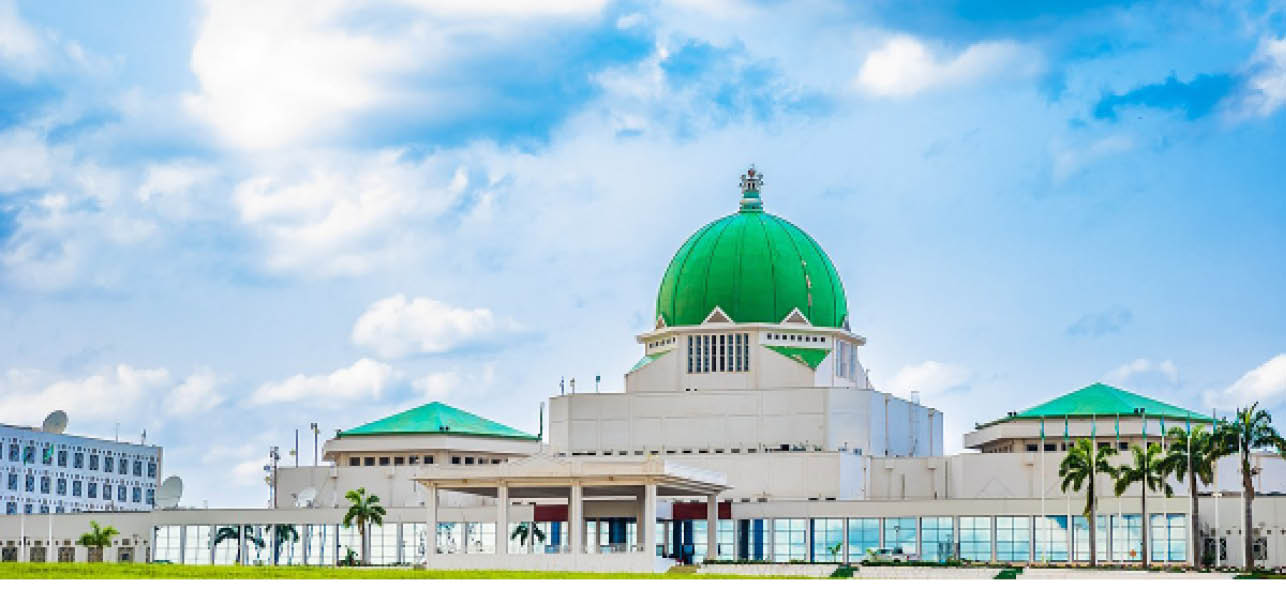
National Assembly
“And as in private life one differentiates between what a man thinks and says of himself and what he is and does, so in historical struggles one must distinguish still more the phrases and fancies of parties from their real organism and their real interests, their conception of themselves from their reality”, Karl Marx
The “National Question” in Nigeria is not an issue that will vanish from our discourse on nationhood after sixty-five years of independence. This is because the construction of both the edifice of state and the substance of nationhood is not a time-bound activity but a continuing effort at renewal and reaffirmation. The survival of any modern state is a delicate undertaking. It requires the ceaseless balancing of institutional structures with the people’s aspirations for justice, dignity, development and relevance.
In Nigeria, the reality of this effort has long been captured in the recurring debate over the “National Question.” At its core, this is the puzzle of how diverse peoples, with distinct histories, cultures, faiths and aspirations, can live together in one political entity and share the burdens and blessings of statehood. It is a question that has defined Nigeria since 1914, when the North and South were forcibly amalgamated. It intensified at independence in 1960, deepened in the trauma of the civil war, persisted through decades of military rule, and continues to resonate in the rituals of our often-faltering and desultory democracy.
At the heart of this unresolved inquiry stands the National Assembly. Conceived as the supreme law-making body and the living symbol of our democracy, it ought to be the forum where Nigeria’s multiplicity converges into a consensus of reasoned opinion. The Assembly is not merely another branch of government. It is the embodiment of popular sovereignty, where elected members chosen by the people are expected to translate their mandate into laws, reforms and oversight that safeguard the republic.
- Senate proposes 10-year passport ban on Nigerians convicted abroad
- Trump predicts end of Gaza war as Israel marks Oct 7 anniversary
In its bicameral form consisting of the House of Representatives and the Senate, it reflects the federal principle of separation of powers and amalgamation of interests. The House embodies the weight of numbers, ensuring that population translates into representation. The Senate guarantees equality of the states, giving even the smallest state a voice equal to the largest. This design was meant to harmonise Nigeria’s two contradictory impulses – the pull of diversity and the push for unity.
Yet, this arrangement has generated its own frictions. The Senate’s equal representation means that a state with millions of people carries the same legislative weight as one with barely a fraction of that population. It also means that the states with larger landmasses must have equal representation with those a fraction of their sizes. This incongruity has fed the feeling of imbalance and unfairness in representation and remains a thorny issue at the heart of the “National Question.”
It exposes the fragility of our federalism and fuels calls for restructuring, devolution and constitutional reform. The Assembly is expected to make decisive pronouncements on such matters, yet it has largely shied away from doing so. In theory, the legislature is designed to provide balance and equality in our democratic composition. In practice, it has too often mirrored the fissures of the larger polity. Instead of becoming the midwife of reconciliation and cohesion, it has become a mirror of division.
Debates on revenue allocation, taxation, constitutional amendment, or the creation of states and local governments, frequently degenerate into contests of sectional advantage. What is at stake in such deliberations is not always the national interest but the perceived survival or benefit of regions, religions or ethnic groups. The result is a chamber that amplifies discontents rather than transcends them.
A poignant absence in this picture is the proper recognition of Nigeria’s minority groups. The equal representation of ethnic nationalities should ideally be the foundation of our constitutional democracy. The failure to guarantee such inclusion has eroded confidence in the system and perpetuated a sense of alienation among many groups. Unless and until the Assembly addresses this dysfunctionality, the settlement of the “National Question” will remain deferred perpetually.
This failure runs contrary to the spirit of Article 14 of Chapter Two of the 1999 Constitution, which envisaged a government composition reflective of Nigeria’s diversity so that no group dominates another. Yet more than two decades after the return to democracy in 1999, the Assembly has failed to make Chapter Two, especially its provisions on fundamental objectives and directive principles of the state, justiciable and enforceable.
In failing to do so, it has weakened one of the constitution’s most transformative promises. The economic dimension of this transformation is equally critical. Article 16 of Chapter Two makes it clear that Nigeria’s economy should be arranged to reflect the interests and meet the needs of all Nigerians. Yet successive governments, under the watch of the National Assembly, have failed to fulfil this mandate. Instead of focusing on how to transform these provisions into tangible policy and legislation, the legislature has occupied itself with endless constitutional tinkering that yields reports in volumes but delivering few meaningful reforms.
This has left fundamental issues unsettled especially with regards to who owns the country’s resources, how are they to be distributed, and how will wealth be equitably shared? The Assembly has been conspicuously hesitant to address these class questions and the broader issue of the ownership and control of the means of production. In the absence of clarity, the gulf between the privileged few and the rest of the citizenry has only widened, fuelling grievances that threaten national cohesion and stability.
The very essences of federalism which are equal representation and genuine devolution of powers, are constantly called into question by the Assembly’s ambiguity. Rather than becoming the crucible where corrective action is forged, it has been reduced to a theatre of patronage. Legislators too often prioritise constituency projects, committee privileges, or their personal survival over the structural transformation that Nigeria desperately requires.
The periodic constitutional review exercises have become rituals of postponement and diversion of resources. Nigerians have grown weary of reports that gather dust while grievances remain unresolved. And so, the “National Question” keeps recurring in multiple dimensions – political, economic, cultural and security without hopes of it getting resolved. At this juncture, it is clear that the National Assembly has not fulfilled the responsibilities for which it was created.
Instead of answering the “National Question,” it has become the stage where the unresolved contradictions of Nigeria are replayed without conclusion. Whether it can yet rise to its historic duty remains an open question of the “National Question”.