
The neem trees of Maiduguri (II)
It was by a quirk of fate that neem trees came to Borno and spread to the rest of Nigeria. It is this much that was related by Musa Daggash, a first-generation forester of the old Northern Region, to his biographer, Yakubu Mukhtar and published in the superbly written book titled: Musa Daggash (The Story […]
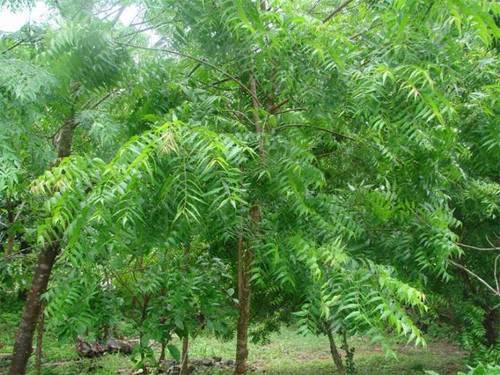
neem tree
It was by a quirk of fate that neem trees came to Borno and spread to the rest of Nigeria. It is this much that was related by Musa Daggash, a first-generation forester of the old Northern Region, to his biographer, Yakubu Mukhtar and published in the superbly written book titled: Musa Daggash (The Story of a Shuwa Arab Boy). In 1927, a colonial Conservator of Forest, A H M Weir, was assigned to Borno to specifically boost the production of Gum Arabic, a crop that was doing well in the northernmost part of the province.
To make a success of that enterprise, Weir felt that a visit to Sudan, which had advanced a lot in Gum Arabic production, would be beneficial. It was while performing that assignment in Sudan that Weir saw the columns of neem trees along the banks of the Nile. He was so impressed that he decided to bring their seeds back to Borno. He was surprised at how rapidly the seedlings grew and recognised that the neem would prosper in Borno. It did and was grown speedily all over Maiduguri and its surroundings.
The colonial officers sent to administer Borno in those days all made the planting of neem trees a priority, not only in Maiduguri but in all the towns and villages of the province. The tree became widely accepted not only for its beautification effect but also for the alluring shade it provided. The tree was also a source of fuel, building poles and a protection against devastating winds. And it was a survivor in that environment. Termites hardly attacked the neem because of its bitter taste.
With time, the neem came to be known as Dogon Yaro. Musa Daggash provided an insight into how that also came about. He related that there was a forest guard called Dogon Yaro, originally from Lokoja, who played a significant role in the propagation of growing neem in the province, to the extent that his name and that of the plant gradually became synonymous and interchangeable in the locality. The popularity of the neem in the local community, in part, arose from an intensive government campaign to promote the growing of the trees in houses and in front of houses. And because Dogon Yaro was responsible for giving out the seedlings, anybody looking for neem locally was sent to him; thus, his name stuck to the plant.
An interesting addition to the Dogon Yaro phenomenon is that his son, MBG Dogonyaro, rose to become famous in his own right. He was a trained teacher who taught in several schools in Maiduguri and grew to become a headmaster. He was my headmaster at Hausari Junior Primary School in the early 1960s. MBG Dogonyaro subsequently moved to Kaduna, where he became an industrialist. He prospered, becoming the Chairman of the Kaduna Chamber of Commerce and went a notch further by becoming the Chairman of the Northern States Chamber of Commerce and Industry. He was also the Nigerian Ambassador to Japan in the late 1980s. He died over 20 years ago.MBG Dogonyaro was the husband of Laila Dodonyaro, a famous female activist based in Kaduna who died in 2011. One of their sons, Isa Dogonyaro, was the member who represented Babura/Garki Federal Constituency in the 10th National Assembly. He died in May this year.
Musa Daggash relished his time as the Borno Province Forestry officer. He was posted to Borno from Kano in 1949. He was said to have left an indelible mark on the planting of neem trees in Borno. He was reputed to have planted some 43,000 trees in Maiduguri alone and a further 100,000 neem trees in other parts of the province. This quite extensive Maiduguri nursery was greatly expanded in 1950. The acreage almost extended from the present Lagos Street area in the north to the vicinity of the Alau River in the south. It was also during his time in Borno that the one millionth neem tree was planted in front of the Shehu’s palace.
This would be a challenge to present efforts at reforestation, particularly the grand plan to build a great green wall of trees across the far north of the country. The great green wall is a UN initiative to combat desertification and land degradation in sub-Saharan Africa. It involves building a wall of trees right across from Djibouti in East Africa to Senegal in West Africa. Within Nigeria, the green wall would be from Borno to Kebbi. The Great Green Wall Agency tasked with that assignment is now over 10 years old, but we have yet to see the green wall rising anywhere on the route from Birnin Kebbi to Maiduguri.
Probably teething problems that affect every new agency, coupled with a lack of sufficient funds, are what are affecting its productivity. Nevertheless, we are getting anxious to see the great green wall come up. Hopefully, the plan by the agency to distribute five million date seeds to individuals and families to nurture will be a game-changer.
In any case, this agency and all others involved in afforestation will need to go back in time and study how the neem tree phenomenon was successfully executed.