
The rotten seed: Why Nigeria keeps electing failure and expecting progress
Farmers once believed that planting seeds from any harvest — no matter how shriveled, diseased, or worm-eaten — would still yield a healthy crop the next season. Year after year, they watered these seeds, fertilized the soil, prayed for rain and sunlight, and waited. But the harvest rarely changed. It was always stunted, bitter, or […]
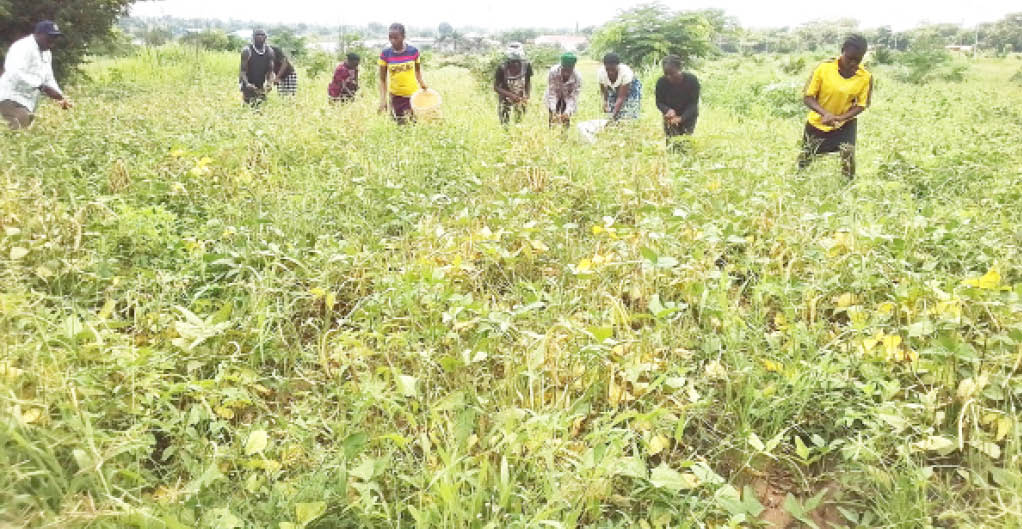
Farmers picking cowpea in one of the farms
Farmers once believed that planting seeds from any harvest — no matter how shriveled, diseased, or worm-eaten — would still yield a healthy crop the next season. Year after year, they watered these seeds, fertilized the soil, prayed for rain and sunlight, and waited. But the harvest rarely changed. It was always stunted, bitter, or decayed.
What they refused to confront was brutally simple: you cannot grow a good harvest from a rotten seed.
While modern agriculture has since moved past such mistakes, Nigeria’s political culture remains stuck in that primitive logic. For over two decades, we’ve recycled the same kind of leaders — self-interested, unprepared, and unaccountable — and still act surprised when the nation continues to falter. With each election cycle, we plant the same seed of dysfunction and expect governance to flourish. We hope. We pray. We argue. But nothing fundamentally changes.
Since 1999, every political transition has been dressed in the garb of renewal. We’ve been promised reform, transformation, change, and more recently, “renewed hope.” But the essence of leadership in Nigeria has remained distressingly consistent: power is seen as conquest, governance as reward, and politics as a hustle — not public service.
And so, the outcomes are predictable. Our national wealth grows, yet poverty deepens. We have Africa’s largest youth population, yet millions are unemployed or underemployed. Our public hospitals are starved, and our public universities are either on strike or crumbling. Kidnapping, banditry, and terrorism now define life in states that were once peaceful. Corruption has become routine. Incompetence is not punished. And public trust, perhaps the most precious asset of any democracy, is in shreds.
Yet when the failures surface — and they always do — we act bewildered. We huddle around news reports and social media, asking: “How did this happen again?”
But the answer is simple: we planted rotten seed, again.
Each time, we choose leaders not by merit or vision, but by tribe, religion, wealth, or sheer familiarity. We overlook red flags, excuse mediocrity, and rationalise incompetence. We trust recycled names with no record of service, while mocking competent outsiders as unrealistic idealists. In the end, we convince ourselves to lower the bar — and then express outrage when our expectations are not met.
Some argue that Nigerians vote out of hope, not habit — that people are desperate for change. But this kind of hope, disconnected from history and evidence, becomes dangerous. It blinds us to patterns. It teaches us to suspend logic and expect transformation from the very instruments of dysfunction.
And the damage goes deeper. We are raising a generation of Nigerians who see politics as performance, not policy. Young people watch as campaign promises evaporate into excuses, budgets vanish into private pockets, and national tragedies are met with silence or spin. Disillusionment is hardening into apathy. Faith in democracy is eroding — not just because of corrupt leaders, but because the system seems impervious to change.
This erosion is not sustainable. A country cannot keep punishing its people for participating in democracy. If the ballot box delivers disappointment every cycle, citizens will eventually stop believing in the process — and when that belief dies, so does democracy itself.
So where do we go from here?
First, we must face the uncomfortable truth: bad leadership is not just a supply problem; it’s a demand problem. We must raise our standards. We must learn to interrogate candidates before they get power, not after. We must demand competence, not charisma; substance, not sloganeering. We must stop confusing familiarity with fitness to govern.
Second, civil society, media, and educational institutions must invest in civic education year-round — not just in the months before elections. Nigerians need to understand how power works, how policies are made, and why elections are not the end but the beginning of democratic engagement.
Third, we must build institutions that hold leaders accountable, no matter who is in power. Too often, our watchdogs become lapdogs once the ruling party changes. Without consistent oversight, corruption thrives — and the harvest, again, is failure.
Changing Nigeria will not happen in one election cycle. But nothing will change until we, the electorate, change what we reward and what we tolerate. We must stop planting rotten seeds and expecting a sweet harvest. Our soil — our country — is not cursed. But it demands more from those who till it.
Until we learn to sow better, Nigeria will keep reaping sorrow.
Salihu lives in Abuja