
The Strait of No Return: Trump’s Billion Dollar Iran Blunder.
“Never interrupt your enemy when he is making a mistake.” – Napoleon Bonaparte The Reckoning: Why an American-Israeli War with Iran Would Cripple the Global Economy and Catastrophically Backfire on Donald Trump The hum of drones over the Middle East has always been a sound that moves markets. But the full-throated roar of an American-Israeli […]
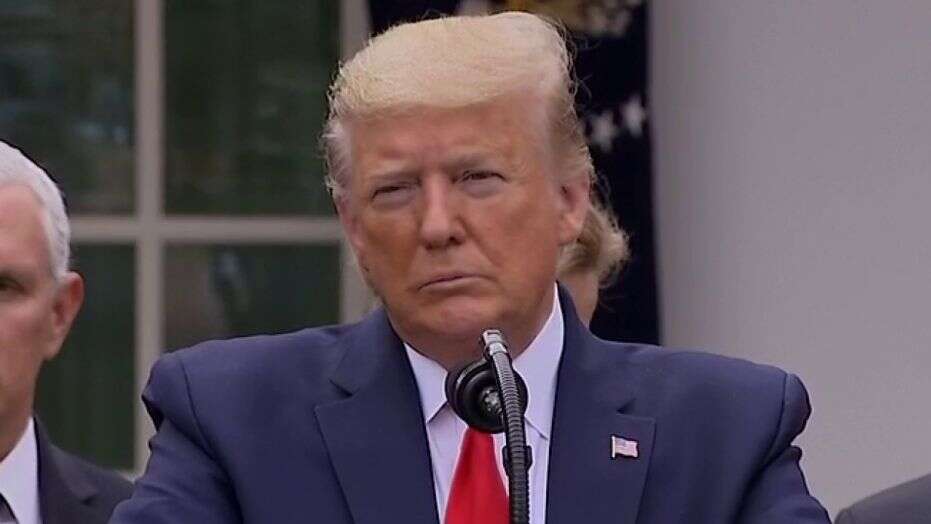
Donald Trump
“Never interrupt your enemy when he is making a mistake.”
– Napoleon Bonaparte
The Reckoning: Why an American-Israeli War with Iran Would Cripple the Global Economy and Catastrophically Backfire on Donald Trump
The hum of drones over the Middle East has always been a sound that moves markets. But the full-throated roar of an American-Israeli war with Iran would not merely move markets; it would shatter them. As of early March 2026, the unthinkable has become the actual. The conflict, which began with strikes on Iranian targets following the death of Supreme Leader Ayatollah Ali Khamenei, has already begun to redraw the lines of the global economy. While proponents may view this as a strategic necessity, the economic reality is stark: this war risks triggering the “mother of all oil shocks,” unravelling global supply chains, and igniting a political firestorm that could consume Donald Trump and the Republican Party.
The Global Chokepoint: A World Held Hostage
To understand why this conflict is different from past skirmishes, one must look at a map. The Strait of Hormuz, a narrow waterway bordering Iran, is the world’s most critical energy artery. Roughly one-fifth of the world’s oil and natural gas passes through this channel daily. This is not just about Iranian oil; it is the lifeblood of Saudi Arabia, the UAE, Kuwait, and Iraq. The moment the conflict escalated, Tehran made good on decades of threats, targeting shipping and energy infrastructure, effectively throwing a blockade across this vital passage.
The immediate result is a logistical and energy nightmare. Global shipping giants like Maersk have suspended routes through the Red Sea and Suez Canal, diverting vessels around the Cape of Good Hope—a detour that adds weeks to delivery times and millions to costs. Even more dire, oilfields in Iraq and Kuwait have been forced to cut production because the oil simply has nowhere to go, with storage facilities in the Gulf rapidly filling up. Qatar, the world’s top liquefied natural gas (LNG) exporter, has declared force majeure on its exports after facilities were damaged, threatening the energy supply of nations from Asia to Europe.
This supply shock has sent prices rocketing. Brent crude has surged past $90, with Goldman Sachs warning that a prolonged closure of the Strait could push prices past $100 a barrel imminently and potentially to $150.
For an already fragile global economy, this is a wrecking ball. Europe, still not recovered from the 2022 energy crisis and heavily reliant on imports, faces a brutal new inflationary wave. Japan and other energy-poor Asian nations are watching their currencies tumble as import bills explode. This is not merely an energy crisis; it is a tax on the entire world. Higher transport costs inflate the price of every good, from food to furniture, threatening to reverse the hard-won progress against inflation over the past two years and pushing the global economy toward stagnation.
The American Paradox: Energy Independence Isn’t Enough
The Trump administration has long touted American “energy independence” as a shield against such global turmoil. But this conflict is exposing that shield as dangerously porous. While the U.S. produces plenty of oil, the price of that oil is set on a global market. When the Strait of Hormuz closes, Brent crude spikes, and American gasoline prices follow suit like a rocket—a phenomenon economists call “rockets and feathers,” where prices shoot up overnight but float slowly back down.
By the first week of March, the national average gasoline price had already jumped to $3.41 per gallon, wiping out months of relief for American drivers. This is not just an inconvenience; it is a direct hit to consumer confidence and spending power. Analysts warn that if oil hits $100, U.S. inflation, which was just starting to cool, could roar back from 2.4% to over 4%. This puts the Federal Reserve in an impossible position. President Trump, who has nominated Kevin Warsh to lead the Fed, has made lower interest rates a key economic promise. But the Fed cannot cut rates into a new inflationary spike. As Minneapolis Fed President Neel Kashkari noted, a new energy shock hitting the global economy demands “close attention,” not immediate rate cuts. The war effectively sabotages the Trump administration’s own economic agenda, ensuring that borrowing costs remain high for businesses and homeowners.
Beyond the pump, the cost of the war itself is staggering. With the conflict costing an estimated $1 billion per day in its opening phase, the U.S. is haemorrhaging money. This comes on the heels of a dismal February jobs report showing a loss of 92,000 positions and a government already grappling with a massive fiscal deficit. The GOP is now facing the impossible task of funding a costly, protracted war while simultaneously trying to sell voters on a message of “affordability.”
The Trump Catastrophe: A Midterm Nightmare
For Donald Trump, this war represents a political perfect storm. He rode back into the White House on a wave of discontent over inflation, promising to bring down the cost of living on “day one.” Instead, the prices at the pump and the grocery store are spiking on his watch. The Biden-era inflation is suddenly “Trump’s inflation,” and it comes with the added baggage of body bags and foreign entanglements—precisely the kind of quagmire voters thought they were rejecting.
Senate Republicans are already expressing private panic. “There’s a lot of things that run the risk of undermining affordability, and I would say this is a piece of that puzzle,” admitted Sen. John Curtis (Republican-Utah), in a classic understatement. Democrats are gleefully framing the conflict as a choice between funding healthcare and funding an endless war, highlighting the $150 billion defence hike paired with cuts to Medicaid.
The president’s assurances that higher gas prices will be “short-term” ring hollow against the backdrop of history and the current escalation. Iran has every incentive to keep global prices elevated to fund its survival, and damaged energy infrastructure in the Gulf will take months to repair, not days. If the conflict stretches into the summer and fall—as Defence Secretary Pete Hegseth has reportedly raised as a possibility—the 2026 midterm elections will become a referendum on Trump’s war economy. Voters heading to the polls with empty wallets and full tanks of expensive gas are unlikely to reward the party in power.
In launching this war, Donald Trump may have believed he was projecting strength. Instead, he has lit a fuse under the global economy, reignited American inflation, and put his own political future on the line. The blowback from the Strait of Hormuz will be felt in every household budget and every voting booth, making this conflict not just a strategic gamble, but potentially a catastrophic political and economic miscalculation.