
The Untold Story Of Mai Mala Buni
For many years before I became a Commissioner, I had long and candid conversations with friends who had served in similar positions across various states. Their accounts were rarely inspiring. To many of them, the office of Commissioner meant surrendering independence, navigating unspoken pressures, and suppressing professional convictions in order to survive politically. Some even […]
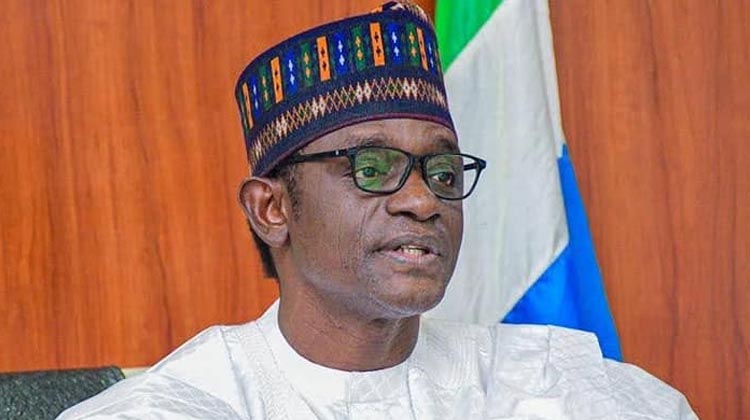
mai mala buni
For many years before I became a Commissioner, I had long and candid conversations with friends who had served in similar positions across various states. Their accounts were rarely inspiring.
To many of them, the office of Commissioner meant surrendering independence, navigating unspoken pressures, and suppressing professional convictions in order to survive politically. Some even described subtle humiliations that diminished the dignity of public office. From those stories, I quietly resolved that if leadership required mortgaging one’s integrity, then it was not a path I desired.
So when His Excellency, Governor Mai Mala Buni, appointed me Commissioner for Education in Yobe State, I hesitated—not out of ingratitude, but out of caution shaped by what I had heard.
What I encountered, however, was profoundly different.
From our very first meeting, Governor Buni said words that permanently transformed my perception of public leadership:
“Honourable Commissioner, thank you for accepting to serve the people of Yobe State. It is a sacrifice. I have entrusted you with the confidence of our people based on your mastery of the education sector. I am giving you a free hand to reform education in Yobe State—but lead with respect, sympathy, mercy, and compassion.”
There was no intimidation. No assertion of dominance. No political theatrics.
Only trust—and responsibility.
True to his word, he gave his Commissioners the freedom to think, innovate, and execute after proper consultation. He did not suffocate initiative; he stimulated it. He did not micromanage; he supervised with clarity and confidence. He expected performance—not blind loyalty.
One of his most admirable qualities is his listening culture. He listens attentively and patiently. He does not interrupt. He does not assume he knows everything. If correction is necessary, he guides you with reason and superior argument—not embarrassment. If your position is stronger, he adopts it without ego.
That humility is authentic. It is neither cosmetic nor strategic—it is character.
His generosity is equally transformative and deeply human.
Across the 17 Local Government Areas of Yobe State, petty traders—including women frying akara by the roadside—received ₦50,000 capital injections to strengthen their businesses. There were no cameras, no elaborate ceremonies—only quiet impact.
Shoe shiners who once depended on polishing officials’ shoes were empowered with substantial capital to establish sustainable ventures. Many abandoned shoe shining entirely and built stable livelihoods. Empowerment replaced dependency.
He often says: “If you are not ready to be generous, you have no business being in politics.”
I personally witnessed a man riding a bicycle stop the Governor’s convoy. That single encounter ended in life-changing financial support for him. It was not staged. It was not orchestrated. It was compassion responding to need.
His depth of humanity is perhaps most evident in moments of discipline and conflict.
In one instance, a vice principal committed a serious and punishable professional offense within the education system. As Commissioner, I was prepared to apply firm disciplinary measures, including termination of appointment. The offense warranted strong action.
Governor Buni intervened—not to excuse misconduct, but to temper justice with wisdom. He emphasized that termination affects not only the individual but families and dependents. Discipline, he insisted, must be corrective and proportionate, not merely punitive. His intervention reflected leadership guided by conscience.
In a separate incident, a man spread falsehoods about his administration’s handling of the education sector on Facebook. The allegations were untrue and potentially damaging. I considered pursuing legal action.
Again, the Governor intervened.
“The boy is my son,” he said calmly.
“Have you seen a father take his son to court? I have forgiven him.”
That response was not weakness—it was strength anchored in maturity. He chose forgiveness over retaliation, reconciliation over revenge.
Another defining attribute of Governor Mai Mala Buni is his unflinching loyalty and uncommon gratitude. From his earliest days in politics as a Councilor to his present position, he has never spoken ill of those who supported him along his journey. Everyone who has observed his political trajectory is a witness to this. In a political climate where alliances are often discarded once power is secured, his consistency stands as compelling evidence of the tremendous weight of his loyalty, the goodness of his heart, and his deeply rooted gratitude.
It is therefore no surprise that when he served as National Chairman of the All Progressives Congress (APC), the party witnessed unprecedented growth. Under his leadership, over 40 million Nigerians were registered, and a numbers of governors defected to the party. His bridge-building capacity, calm temperament, and inclusive style of leadership inspired confidence across the nation.
Three years ago, he publicly declared that anyone who could produce his enemy would receive ₦10 million. Three years later, no one has been able to produce one. That statement was not arrogance—it was quiet confidence born of a life lived without malice, without vendetta, without bitterness.
Serving under Governor Mai Mala Buni did not diminish my professional identity—it refined it. It deepened my understanding of leadership as service, authority as responsibility, and power as a sacred trust.
This write-up is not merely to praise a man. It is written to encourage hope.
At a time when many Nigerians are tempted to lose faith in leadership, it is important to document living examples that challenge cynicism. Across this nation, cutting across all strata of life, there are still true and selfless personalities who genuinely carry the masses in their hearts—many of whom are not even known.
Governor Mai Mala Buni is one of them.
The incidents narrated here—the tempered discipline in the case of the vice principal, the forgiveness extended to a critic, the empowerment of petty traders and shoe shiners, the life-changing support to a man who stopped his convoy, the loyalty he has consistently demonstrated from his days as Councillor, and the national expansion of his party under his stewardship—are not isolated stories. They are among the numerous examples that demonstrate the depth of the Governor’s good heart, generosity, empathy, and human sensitivity. They reveal a leader who sees people not as statistics, but as lives; not as political instruments, but as human beings deserving dignity, opportunity, and compassion.
Join me in the next episode as we uncover another breathtaking chapter in the journey of Mai Mala Buni—a trailblazing leader whose resilience, strategic brilliance, and unrivaled resolve continue to shape destiny. Get ready for a story as powerful and inspiring as the man himself.
May Allah continue to uplift you, my hero and my Governor.
Idris is a former Commissioner for Basic and Secondary Education in Yobe State. He currently serves as the Executive Secretary of the National Commission for Almajiri and Out-of-School Children’s Education (NCAOOSCE) in Nigeria.