
Three hearts, One Broken System
Heart disease has quietly become one of Nigeria’s fastest-growing health threats, yet emergency cardiac care remains beyond the reach of millions. In this thought-provoking essay, Dr Jameel Ismail Ahmad, examines how gaps in infrastructure, financing, and emergency response turntreatable heart attacks into death sentences. Through his poignant clinical stories, he challenges policymakers towards building a […]
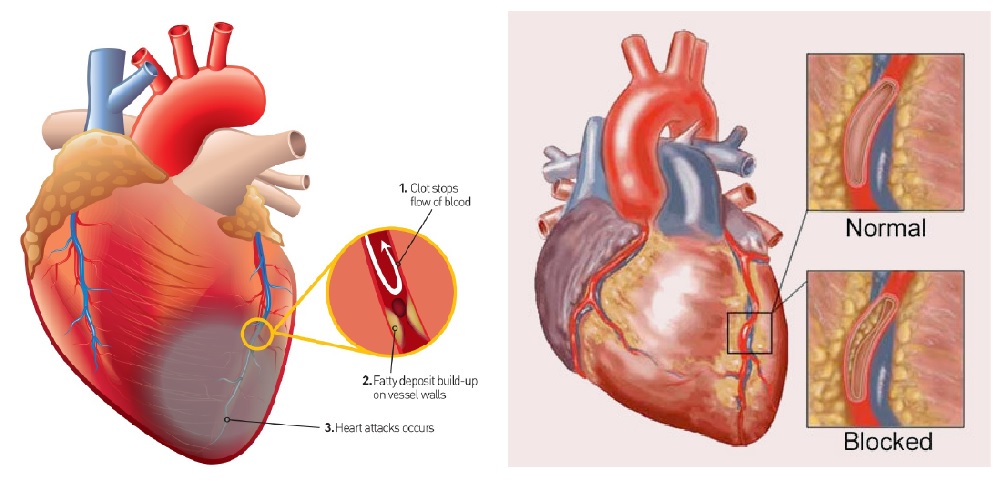
Heartache for Nigerians as heart diseases rise
Heart disease has quietly become one of Nigeria’s fastest-growing health threats, yet emergency cardiac care remains beyond the reach of millions. In this thought-provoking essay, Dr Jameel Ismail Ahmad, examines how gaps in infrastructure, financing, and emergency response turntreatable heart attacks into death sentences. Through his poignant clinical stories, he challenges policymakers towards building a functional, equitable cardiac care system. His message, simple but urgent: no Nigerian should die because the nearest life-saving treatment is hundreds of kilometres away and costs millions of Naira. For this reason, he writes this week, while I will be back next week, God willing. – Dr Fatima Damagum
Recently, I have watched four Nigerians die from conditions that modern medicine can treat. They didn’t die because medicine failed. They died because the Nigerian health system failed them.
The first, a former hospital chief executive whose vision transformed the institution she led. She championed the establishment of a cardiac catheterisation laboratory, submitting proposal after proposal. Before it became reality, she developed an acute myocardial infarction, travelled more than a thousand kilometres for a life-saving coronary intervention. Suffering another heart attack back home, there wasn’t any local catheterisation laboratory, interventional team and no realistic means of transferring her back in time. She died in the very institution she had worked tirelessly to improve.
The second, a successful businessman diagnosed with acute coronary syndrome, required emergency percutaneous coronary intervention (PCI), the internationally recommended treatment for a blocked coronary artery. The nearest PCI-capable centre was kilometres away. His family embarked on a desperate overnight journey. As the ambulance reached the city where care awaited, the cardiac monitor fell silent. He died.
The last, a young consultant, stepping out of his car, he collapsed, surrounded by colleagues, he received all that limited resources allowed. It wasn’t enough. Even healers aren’t safe.
These are not isolated tragedies. Cardiovascular disease remains the world’s leading killer, claiming almost 20 million lives every year. More than three-quarters of these deaths occur in low- and middle-income countries, where access to emergency cardiac care is limited and Nigeria is no exception. According to the World Health Organization, about 36% of Nigerian adults aged 30–79 years are living with hypertension, the single most important risk factor for heart attacks and strokes. Even more worrying, Nigerians face a 17.1% probability of dying prematurely from a major non-communicable disease between the ages of 30 and 70, largely from cardiovascular disease, diabetes, cancer and chronic respiratory diseases.
Nigeria is home to more than 220 million people, but access to primary percutaneous coronary intervention (PCI), the internationally recommended treatment for ST-elevation myocardial infarction (STEMI), (medical jargon for ‘heart attack’), remains available in only a handful of centres concentrated in a few urban cities. Large regions of the country have no catheterisation laboratory at all. For millions of Nigerians, geography alone determines whether a heart attack is survivable.
The tragedy is that myocardial infarction is one of the few medical emergencies where timing can make the difference between complete recovery and death. International cardiology guidelines recommend a door-to-balloon time of less than 90 minutes for patients undergoing primary PCI. In Nigeria, many patients spend longer than that simply trying to locate a hospital capable of offering the procedure.
Previous governments have invested in hospital buildings and expensive equipment with pop and pageantry, yet we all know that ribbon-cutting ceremonies do not save lives. Functioning systems do. A catheterisation laboratory without trained personnel, maintenance contracts, consumables, ambulance referral pathways and sustainable financing is little more than an expensive monument. Nigeria suffers not merely from an infrastructure deficit, but from a systems deficit.
The roots of this crisis are well known. Hypertension has quietly become one of Nigeria’s greatest public health threats. Recent modelling studies estimate that elevated blood pressure contributes to 13.2 per cent of all myocardial infarctions and nearly one in every four strokes in Nigeria. These are not inevitable deaths; they are largely preventable through early detection, effective treatment and timely emergency care.
And yet prevention remains weak. Thousands of Nigerians have never checked their blood pressure or blood sugar. Many discover they have hypertension only after suffering a stroke, heart failure or heart attack. Cardiovascular disease begins silently, often years before symptoms appear, making routine screening one of the most cost-effective interventions available.
Unfortunately, Nigeria’s emergency cardiac care pathway is fragmented. Unlike trauma or obstetric emergencies, there is no coordinated national STEMI network, no universal pre-hospital electrocardiogram (ECG) system, no nationwide ambulance protocol directing patients to PCI-capable centres, and no national registry tracking outcomes. As a result, precious minutes are lost at every stage—from recognising symptoms, to diagnosis, referral, transportation and definitive treatment. In acute myocardial infarction, every minute of delay translates into irreversible loss of heart muscle. In cardiology, we often say, time is muscle. In Nigeria, time is too often lost.
Just like the root cause, the solutions are equally clear
Firstly, government must move beyond episodic procurement of equipment and adopt a systems-based approach to cardiovascular care. Nigeria should establish a National STEMI Network with at least one fully functional 24-hour PCI centre in each geopolitical zone, linked to surrounding hospitals through tele-ECG services, dedicated cardiac ambulances and predefined referral pathways. Every tertiary hospital should be required to report internationally recognised quality indicators including door-to-ECG time (<10 minutes), door-to-needle time (<30 minutes) for thrombolysis, and door-to-balloon time (<90 minutes) for primary PCI as benchmarks for accountability.
A National Acute Cardiac Registry should capture every case of myocardial infarction, cardiac arrest, PCI and cardiac surgery, enabling continuous audit and quality improvement. Simultaneously, the National Health Insurance Authority should establish a dedicated Cardiovascular Care Fund to cover emergency PCI, coronary artery bypass grafting, cardiac rehabilitation and essential medications, ensuring that no Nigerian dies because life-saving treatment is beyond their financial reach.
The private sector also has a role. Public-private partnerships can accelerate the establishment and operation of regional cardiac centres, while corporate social responsibility investments from banks, telecommunications companies and the oil and gas sector can strengthen emergency cardiac care.
History will not judge us by the hospitals we commissioned, but by the lives we saved within them. If we continue to accept that a Nigerian experiencing a heart attack must travel hundreds of kilometres before receiving definitive care, then every preventable cardiac death becomes more than a medical tragedy, it becomes a policy failure.
The next victim is already somewhere among us: sitting in a boardroom, teaching in a classroom, driving home from work or seeing patients in a clinic. The only unanswered question is whether, when that moment comes, Nigeria will finally have built a system capable of saving them.
Every country is ultimately defined not by the diseases its citizens suffer, but by how it responds to them. Heart attacks are no longer rare in Nigeria; they are becoming commonplace. What remains unacceptable is that they continue to be fatal simply because the right treatment is hundreds of kilometres away.
Jameel Ismail Ahmad is a Cardio thoracic surgeon who writes on healthcare policy and health systems strengthening in Nigeria.