
Tinubu marginalising North in resources’ allocation – Kwankwaso
The presidential candidate of the New Nigeria Peoples Party (NNPP) in the 2023 general elections, Senator Rabiu Musa Kwankwaso, has accused the President Bola Ahmed Tinubu’s administration of neglecting the North and concentrating the country’s resources on developing the Southern region, where the president hails from. He spoke in Kano, yesterday during the stakeholders’ dialogue […]
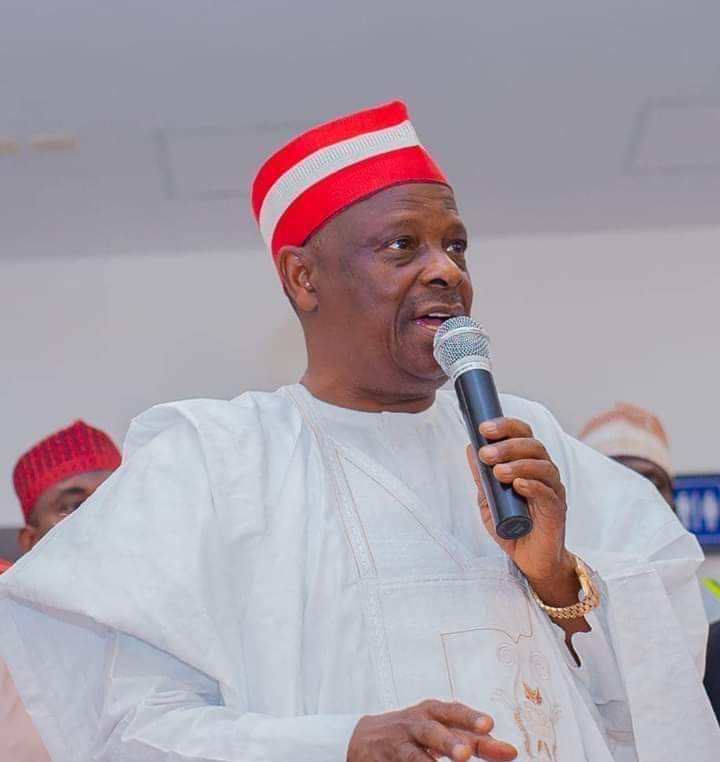
Senator Rabiu Musa Kwankwaso
The presidential candidate of the New Nigeria Peoples Party (NNPP) in the 2023 general elections, Senator Rabiu Musa Kwankwaso, has accused the President Bola Ahmed Tinubu’s administration of neglecting the North and concentrating the country’s resources on developing the Southern region, where the president hails from.
He spoke in Kano, yesterday during the stakeholders’ dialogue organised by the Kano State government to present the position of the state on 2025 constitution amendment proposals before by the National Assembly.
The event, held at the Coronation Hall of the Kano Government House, was attended by Governor Abba Kabir Yusuf, the emirs of the state, heads of the state ministries, department and agencies, members of the national and state assemblies from the state as well as civil society organisations and pressure groups.
This is coming days after credible sources dismissed a media report (not by Daily Trust) that Kwankwaso recently held a closed-door meeting with Tinubu at the president’s official residence.
- The Buhari principle, fools and their paradise
- Anambra approves N2.8b to finance developmental projects
Speaking at the stakeholders’ dialogue in Kano on Thursday, Kwankwaso accused the ruling All Progressives Congress (APC) of lopsided allocation of resources between the South and the North.
He alleged that Tinubu’s administration focused only on developing the southern part of the country where he comes from.
The two-term former governor of Kano State and former defence minister, said, “Let me advise the federal government on the distribution of federal resources. From the information available to us, it is like most of the national budget is now tilting in one direction in this country.
“Let me advise those who are struggling by all means to take everything to remember that some of the issues that we have in this part of the country today have to do with the lack of enough resources and mismanagement of the little that comes in.
“That is why we have insecurity, we have poverty and so on. It is happening here mainly, but like a desert, it would go everywhere,” he said.
Kwankwaso said most of the roads in the North were in a deplorable condition, while the APC-led government continues to allocate huge budgetary allocations to infrastructure development in the South.
“Yesterday, I was to come by air, but unfortunately, my airline decided to shift our takeoff from 3pm to 8pm. I had to come by road. From Abuja to Kaduna to Kano was a hell. Terrible. Very bad road. This is a road started many years ago, right from the beginning of the leadership of the APC.
“Now, we are told that there is a road from the South to the East. We support infrastructure anywhere in this country…and any other thing that is good for the masses. But a situation where government is taking our resources and dumping it in one part of the country and other parts of the country are left just like that, I don’t believe that is the right thing to do by the government itself,” Kwankwaso said.
He urged the Tinubu administration to ensure equitable distribution of resources for the development of all parts of the country.
“This is the time for the government to change, to convince our people that the government is not just on one side of the country,” he said.
Presidency mum
Efforts to get the Presidency to react to the allegations made by Kwankwaso, were not successful as at press time yesterday.
The Special Adviser to the President on Information and Strategy, Bayo Onanuga and the Special Adviser to the President on Policy Communications, Daniel Bwala, could not be reached on their mobile telephone lines.
The two presidential spokesmen also did not reply to WhatsApp messages sent to them.
Daily Trust reports that there are 13 major projects ongoing under the Tinubu administration with eight domiciled in the South. These include the 700km Lagos-Calabar Coastal Highway; the 107km dual-carriage Enugu-Onitsha Expressway; the 125km Benin–Asaba Superhighway; the Oyo-Ogbomoso Road; Enugu-Port Harcourt Expressway; the 17.55km access road to the Second Niger Bridge; the Lagos-Ibadan Expressway and the 34km Bodo-Bonny Road project in Rivers State.
The five key projects in the North are the 130km Bode Saadu-Kaima-Kosubosu Road in Kwara State; the 164km Abuja-Kaduna-Zaria-Kano dual carriageway; the dualization of the 9th Mile-Oturkpo-Makurdi Road; the 1,068km Sokoto-Badagry Highway and the Abuja-Lokoja-Benin Road.
Speaking further, Kwankwaso also alleged that the rich had compromised members of the National Assembly.
“We are seeing a situation whereby the rich in the country work so hard to raise enough money to buy members of the National Assembly, especially those who are representatives. And as a result of that, we now have a picture of individuals in the terms of this year’s share in the budget,” he said.
Kwankwaso maintained that Nigeria’s challenges, especially in the North, stemmed from poor resource management at both federal and state levels.
“There are people who feel bad about that. I don’t think so because I believe the issues that we have today in this country, especially in the first part of the country, have to do with a mismanagement of resources by leaders at the national and state levels,” he added.
According to him, the constitution amendment exercise presents an opportunity to correct the imbalances in the distribution of resources and prevent the wealthy from exploiting the poor.
“Now we have the opportunity again, and we are very much aware that the rich, once more, are working so hard to get from the poor,” he said.
Kwankwaso also spoke about the upcoming elections, highlighting the importance of bipartisan participation and the role of voters in making informed choices regardless of party affiliation.
“And what is going to happen is a bipartisan election. People will be able to ask whether in our party or any other party for that matter, must spend five and more dollars. And I want to ask people to decide on what they choose; which, fortunately, I was one of them.
Kwankwaso urged stakeholders to remain vigilant and proactive, saying the North’s development had been hindered by lack of resources and insecurity.
“Let me also advise all of us, taking into account this, that we have to remember that some of the issues that we have in this part of the country today have to do with the lack of resources, and of course, there is no other country that can do it. That is why we have to build security. We have to investigate and so on and so forth. And of course, it is up to the government to do it,” he added.
Kano constitution review c’ttee opposes diaspora voting, backs independent candidacy
The Kano State Constitution Amendment Review Committee, in its presentation during the dialogue, outlined a series of demands and recommendations.
It called for a more equitable revenue sharing formula, opposed diaspora voting and backed independent candidacy.
The presentation, delivered by Professor Auwalu Hamisu Yadudu, captured the position of the Kano State Government on various constitution amendment proposals being considered by the National Assembly.
The committee opposed the proposed the amendment to remove labour from the Exclusive Legislative List, arguing that such a move would weaken collective bargaining and lead to recurrent industrial unrest.
It recommended that labour be retained on the Exclusive List to maintain national labour standards and harmony.
The committee rejected the bill proposing diaspora voting, urging its deferment. It cited Nigeria’s ongoing difficulties in managing local elections as evidence that the country is not yet ready to extend voting rights abroad.
While supporting the bill that allows independent candidates to contest elections, the committee emphasised that it should be guided by clear and well-stipulated guidelines to ensure the integrity of the democratic process.
On derivation formula and revenue sharing, the committee rejected the proposed expansion of the derivation base to include vague provisions like “any other resources.” Instead, it proposed a detailed alternative revenue-sharing structure including vertical allocation and horizontal allocations.
On vertical allocations, it said that federal government should reduce from 52.68% to 40%; states should increase from 26.72% to 35%; while local governments should increase from 20.6% to 25%.
Looking at horizontal allocations, for equality, it suggested reduction from 40% to 30%; population increase from 30% to 40% and landmass, social development, and internally generated revenue should have 10% each.
On tax derivation formula, it suggested equality to have 50%; population should have 30%; place of consumption (derivation) should be 20%.
The committee also called for the Revenue Mobilisation Fiscal Commission to be constitutionally empowered to periodically review and revise the revenue allocation formula.
On state police, the committee advocated constitution provisions to enable interested and capable states to establish their own police services. It noted the increasing burden on the federal police and referenced Kano’s Neighbourhood Watch initiative as an example of proactive security development.
On traditional institutions, it demanded constitutional recognition of traditional institutions. It called for guaranteed appointment and tenure of traditional rulers in line with custom; protection from partisan interference; inclusion of state council chairmen of traditional rulers in the National Council of State; establishment of a National Council of Traditional Rulers and flexibility for states to form local government area traditional councils.
On state creation, citing economic constraints, the committee opposed the creation of new states. It, however, reiterated its longstanding demand for the creation of Gari State and Tiga State should the process become inevitable.
On local government creation, no fresh recommendation was made on this item, which the committee noted was already covered under the rationale for state police reforms.
For local government, the committee endorsed full local government autonomy, recommending recognition of local governments as the third tier of government in Section 2 of the Constitution; amendments to Section 7 and Section 162(5) to reflect this status and that autonomy be implemented within a framework ensuring fiscal prudence and accountability.
On the issues of electoral reforms, the committee proposed the following: fixing May 29 as the date for general elections; shifting the swearing-in date to October 1 to align with Nigeria’s Independence Day and ensuring all election petitions are resolved before swearing-in.
It also opposed multiple fragmented bills on electoral timelines, urging that overlapping bills such as SB 809, 307, 87, 794, HB 1212, and B 2169 be stepped down in favour of a unified and comprehensive judicial process.
Gov Yusuf urges inclusive, people-driven constitution amendment process
Earlier, Kano State Governor Abba Kabir Yusuf reiterated the importance of an inclusive, transparent, and people-driven constitution amendment process, calling on stakeholders to contribute meaningfully to shaping the future of Nigeria’s democracy.
“Let me say here that the constitution of this country is a supreme law. As such, its contents must reflect the realities, aspirations and values of the people it serves,” the governor stated.
He said the engagement was “not just a formality. It is a genuine effort by the government and all other stakeholders to make sure that the voices of our people are heard and reflected in the laws that govern our nation.
“The aim of this meeting is therefore to brainstorm, consult, and gather the views of our citizens from all walks of life. We want to arrive at a common position that truly represents the hopes and values of the people of this great state.”
The governor noted that the constitution amendment offers an opportunity to address longstanding concerns, modernise legal frameworks and plan for the future.
“Therefore, we must approach this task with great sense of duty, honesty, and commitment to the long-term benefit of our dear state, and the nation by extension,” he said.
Yusuf called for a “non-partisan consensus that is inclusive and forward-thinking, one that will strengthen Nigeria’s democracy and unity.”
“I also hasten to indicate the need for objective assessment of the needs of our people and for us also to strive to recommend possible adjustments which will greatly enhance our resolve to design hourly policies that will further unify our people as a family.
“Let me at this juncture seize this opportunity to thank all our stakeholders, our elites, the political class, lawyers and judiciary, academics, business community, traditional rulers, community leaders, civil society organisations, professional bodies, journalists, cross-religious leaders, youths and women’s groups, other security agencies, and all participants for accepting this invitation and for their willingness to contribute positively to this important cause.
“On this occasion, I want to extend our special appreciation to both the chambers of the National Assembly; that is, the Senate and the House of Representatives as well as the State Assembly, for heeding to the yearnings and aspirations of all Nigerians through the ongoing constitution amendment process.
“The state government and indeed all citizens of the state, welcome the Senate Committee on the Review of the 1999 Amendment Constitution to Kano State on Saturday, the 26th of July, 2025, for the Northwest public hearing.
Kano emirates back people’s demands
Speaking earlier on behalf of the emirs in Kano, Emir Muhammadu Sanusi said the emirates are in full support of what the people demanded.
“We are behind and in support whatever people demanded in this. From our part, we will contact the committee and extend our input to the committee before the day comes for final presentation.
“We commend the government for provide the platform for people to come and give their inputs and we endorsed it as emirs.”
Other representations of the sections of the community who spoke at the event included the Nigeria Labour Congress, the business community, women’s groups, civil society organisations, among others.