
Tinubu’s’s silence on US counter-terrorism assistance raises concerns – Akande
Former presidential aide Laolu Akande has urged President Bola Ahmed Tinubu to pay greater attention to the plight of ordinary Nigerians, noting that while the President is widely regarded as politically experienced, many citizens remain concerned about security and governance challenges. Speaking during the My Take segment of the television programme Inside Sources with Laolu […]
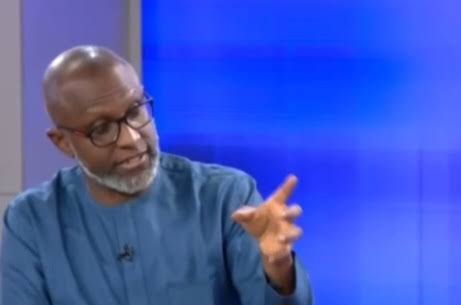
akande
Former presidential aide Laolu Akande has urged President Bola Ahmed Tinubu to pay greater attention to the plight of ordinary Nigerians, noting that while the President is widely regarded as politically experienced, many citizens remain concerned about security and governance challenges.
Speaking during the My Take segment of the television programme Inside Sources with Laolu Akande on Channels Television on Sunday, Akande said leadership attention should extend beyond political considerations to addressing the everyday concerns of Nigerians.
“We all know the President is keen and good at sorting himself out politically; it’s how Nigerians would be sorted out that we are now crying to him for,” Akande said.
Akande also drew attention to the impact of insecurity across parts of the country, citing media reports on ransom payments linked to kidnappings.
“Who will tell the President not to forget that media reports suggest ransom payments linked to abductions reached roughly ₦2.57 billion across more than 4,700 cases last year alone?” he asked.
He added that the statistics reflect the experiences of families affected by insecurity and the pressures faced by institutions responding to the situation.
“Please, those who have the ears of Mr. President must do us the favour of reminding him that beyond the statistics, these are real families suffering intensely and institutions facing significant pressure,” Akande said.
According to him, the scale of the security situation requires continued and sustained attention from the government.
“Someone has to tell the President he needs to do more, drastically and urgently,” he added.
Akande also referenced the widely discussed abduction of a military doctor in Kaduna, describing it as a case frequently mentioned in public discussions about security concerns.
“For instance, who will tell the President of the Kaduna military doctor’s case?” he asked, recounting that the doctor and her husband were abducted from their residence within a military facility.
According to him, an initial ransom of ₦50 million was reportedly raised through family members and public support. After months in captivity, the husband was released, but additional demands reportedly followed, eventually bringing the total amount raised to ₦100 million.
He said the doctor remained in captivity for several months until pressure mounted, including a strike by the Nigerian Association of Resident Doctors and intervention from the office of the National Security Adviser.
Akande also commented on the President’s limited public remarks regarding reports of United States assistance to Nigeria in the fight against terrorism.
“Who will tell the President that his silence on reports of U.S. assistance in helping Nigeria fight terror, including discussions around missile operations in Sokoto State, has raised questions among some observers?” he asked.
“For three months now, not a word from our national leader.”
According to Akande, the absence of direct communication from the President on the matter has generated discussion among many Nigerians.
“Who will tell the President that his refusal to communicate with Nigerians on such an unprecedented incident has left many people seeking further clarification?” he said.
While acknowledging the sensitivity of foreign military involvement, Akande noted that assistance reportedly provided by the United States has been described by some observers as significant.
“Who will tell the President that whatever is said up or down, what the Americans have reportedly done so far, including sending military and intelligence equipment and advisers, has been described as helpful in this fight?” he said.
He stressed, however, that the Nigerian government must remain vigilant while also maintaining communication with citizens.
“Yes, we have to be vigilant and be careful in all of this, but someone needs to tell the President that if he takes the Nigerian people seriously enough, this is not an issue he can afford to remain silent about or leave unexplained to the public,” he said.
Akande also stated on the programme that President Tinubu has been advised by some aides to approach engagement with the United States carefully.
“The fact we can report today on Inside Sources is that President BAT has been advised to carefully navigate his engagement with U.S. President Donald Trump, and he has taken the advice,” he said.
According to Akande, some advisers have expressed concern about diplomatic tensions that sometimes arise in interactions between the Trump administration and other world leaders.
“We have seen it in exchanges between President Trump and Ukrainian President Volodymyr Zelenskyy, and also in discussions involving South African President Cyril Ramaphosa,” he said.
However, Akande argued that diplomatic caution should not prevent communication with Nigerians on important national matters.
“But who will tell the President that there is a need for a more nuanced approach at a time like this?” he asked.
Akande concluded by stressing that leadership communication remains a critical component of governance, particularly during periods of national uncertainty.
“How can our President remain silent on such an extraordinary development unfolding before us?” he asked.
He added that reports of U.S. airstrikes targeting ISIS-linked groups in Sokoto have generated debate about sovereignty and national security.
“Someone should let the President know many are wondering why there’s been no direct communication from him on the matter,” he said.
Akande also advised that some government officials could benefit from improved communication skills when speaking publicly.
“While still on communication issues, who will tell the President that some of his appointees may benefit from further development in public communication?” he said.
“They don’t have to appear overly excited when speaking on international media platforms.”